
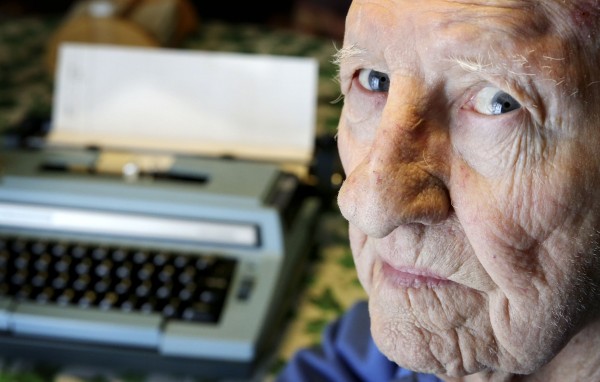
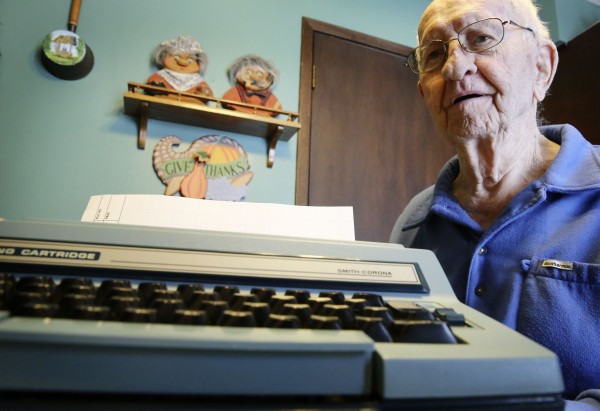
It could take Louis Bauernfeind as little as five minutes or up to a couple of hours to fix a typewriter depending on what's wrong with it.
The 86-year-old, of Sergeant Bluff, Iowa, repaired typewriters for an insurance company up until a couple of months ago.
"I just quit. I can't lift a typewriter anymore," Bauernfeind said, as he sat at a round table in his kitchen, which also served as his repair shop.
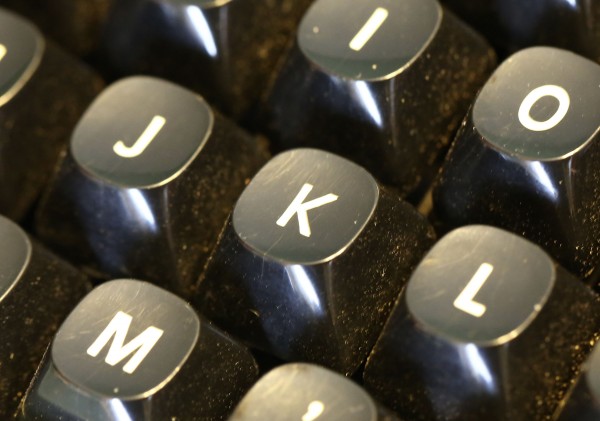
Bauernfeind, who can fix any make of typewriter, said the most common problems with them is they get dirty. Other times the issue might be something as simple as replacing the ribbon.
"You have to service it," he said. "They get dirty and the keys jam up."
Wife Carol added, "I know he's found paperclips and nickels and stuff that get down under the keyboard."
People are also reading…
Bauernfeind's interest in typewriters blossomed in the Air Force.
"They asked if anyone could type, and I said, 'Yes,'" he recalled.
He was sent to Denver to work in the special order department for two years. There he typed orders used to sending troops to various bases overseas.
After he left the service, Bauernfeind went to work at his older brother Joe's one-room typewriter shop "Bauernfeind Typewriters" in Marshfield, Wis.
"We started out mostly in the schools," he said. "We had about 25 schools we took care of."
The brothers also cleaned and bagged typewriters for the Army and Navy and then transported them to Chicago. The typewriters were sealed up and put in an unusual place.
"I asked them, what they do with them overseas," Bauernfeind said. "They put them in the bottom of the ocean for storage."
Bauernfeind moved to Sioux City in 1975, after his brother sold the business. Two years later, he was working for the civil directory when he met and married Carol. The two later opened an engraving business in Sergeant Bluff.
Bauernfeind continued to repair typewriters on the side, but business began to dwindle as typewriters were replaced with computers.
When the Sioux City Community School District auctioned off its supply of typewriters, Bauernfeind snatched them up. He took the broken ones apart, saving the parts to use in his repair business.
"It was therapy for him because he had a slight stroke with his right hand," Carol Bauernfeind said. "It was therapy taking out these screws, and he learned a lot about the parts too."
Bauernfeind said there were very few typewriters left for him to repair when he stopped servicing them. He's not terribly upset that people don't seem to have much use for typewriters anymore.
"We don't need them anymore," he said. "Everything changes in life. Sometimes it gets better. Sometimes it gets worse."