



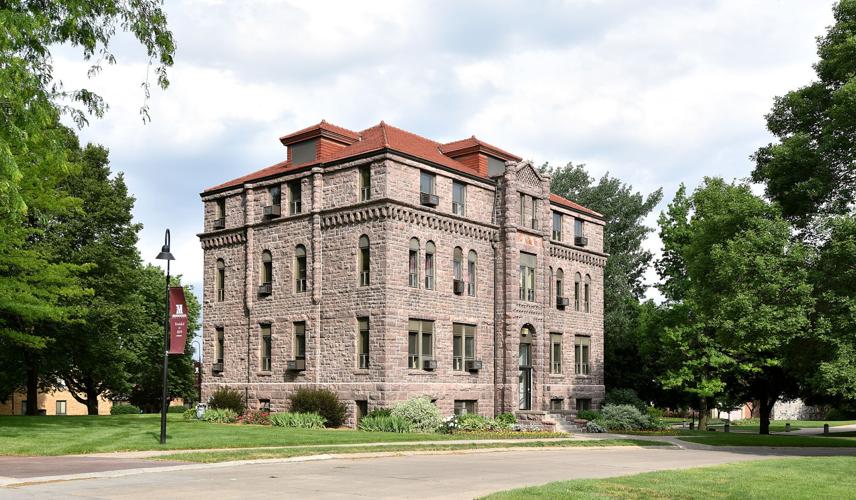


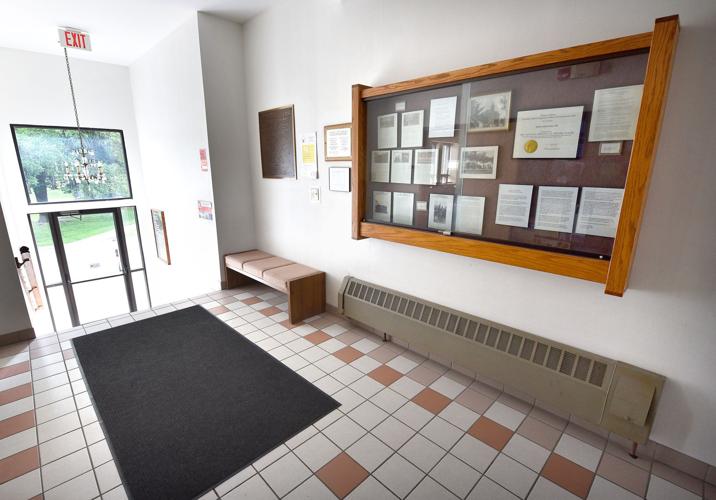
SIOUX CITY | Charles City Hall, on the campus of Morningside College, is older than the college itself.
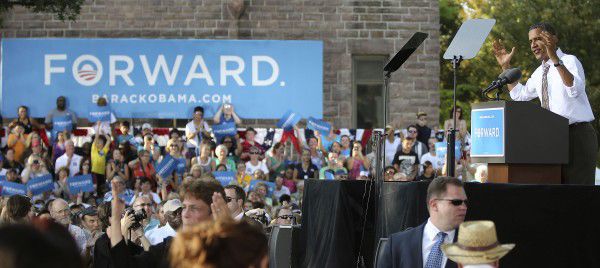
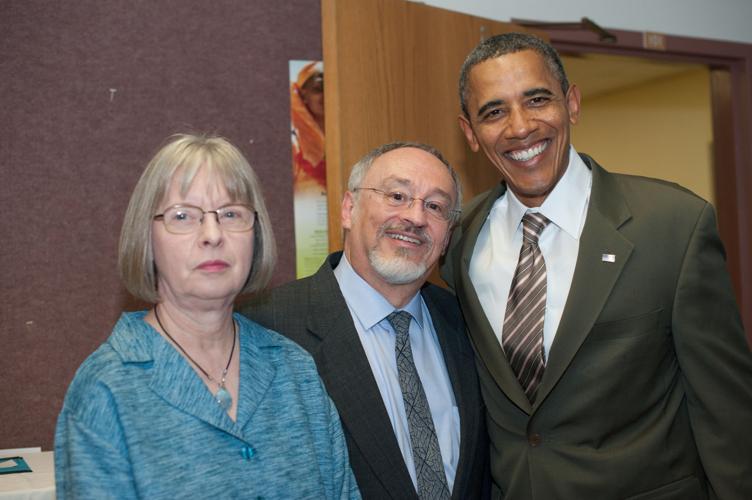
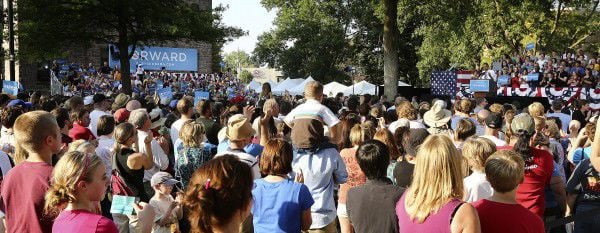
The place also served as host to President Barack Obama, who made a campaign stop at Morningside College on Sept. 1, 2012.
The three-story structure, made of a purplish Sioux quartzite, was constructed for the University of the Northwest, which lasted from 1890 to 1894, a boom period in Sioux City's history, an era featuring the lavish Corn Palaces, expansion and speculation.
This building, in fact, WAS the University of the Northwest. The hall housed classes and had students sleeping on the top floor each night. It was, it appears, the original "one-stop shop" in education.
"The classrooms were in the building, the lunchroom was in a classroom," said Tim Orwig, a Morningside College graduate who penned a history of his alma mater for its centennial just over two decades ago. "Students stoked the furnace in the basement and slept upstairs."
People are also reading…
In 2016, students might still be sleeping upstairs at times, although on a napping level rather than overnighting. A couch serves as a welcoming mat of sorts for students who reach the third floor hallway, an area separating one classroom and the offices of four professors.
For decades, Charles City Hall was home of Morningside's Conservatory of Music, where students participating in the programs of legends such as Leo Kucinski and Paul MacCollin perfected their craft.
Dr. Rudy Daniels taught history here, a class that a young Tim Orwig, a 1977 West High graduate, took. Orwig ended up teaching for 12 years at Morningside. He left the college in 1999 and now teaches architectural and art history at both Northeast University and Boston College.
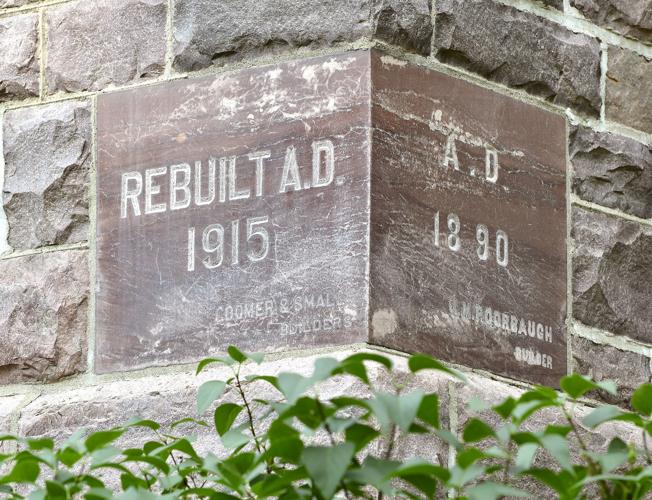
Orwig notes that the cornerstone for Charles City Hall was laid on July 4, 1890, making this building 126 years old.
"A Methodist bishop spoke (when the cornerstone was laid) and the land around the building was prairie," Orwig said. "The bishop said how proud he was that this would be a college that would educate both men and women."
The structure was completed in 1894, when it became the core of the newly formed Morningside College, which replaced a defunct University of the Northwest.
"The idea, like Northwestern University in Evanston, Illinois, was that the University of the Northwest would be financed by land sales in the suburb surrounding the college," Orwig said. "That worked fine until a bust hit."
When Bishop Wilson Seeley Lewis came to the college to take it over in 1897, he found this building in the middle of a field, corn planted in all directions. He challenged himself and his staff to work to make the school viable.
Lewis Hall, which stands just south of Charles City Hall, is named for President Lewis, who served the school for 11 years. The foundation of Lewis Hall matches the purple Sioux quartzite found at Charles City Hall.
How, then, did the name come to be Charles City Hall?
"Charles City College (in Charles City, Iowa) was founded by German Methodists," Orwig said. "There were a number of German-speaking Methodist congregations that needed ministers. Charles City College formed in 1891 and in 1914 it closed and merged with Morningside."
When it closed, Charles City College boasted 63 alumni. They immediately became Morningside alumni. The legacy of Charles City College lived on in 1958 when this hall was completely renovated and renamed after the alums of the college in northeast Iowa.
"What's funny is that many times I've heard people say that building was dismantled from Charles City, Iowa," Orwig said. The story lacks one key ingredient: The truth.
"The story makes me smile and take a break before I explain it to them," Orwig said.
Charles City Hall was gutted by a fire in 1914, but was rebuilt, as the durability of the Sioux quartzite became apparent. This site, which is listed on the National Register of Historic Places, was restored in 1989 and now houses classrooms and offices for the departments of history and political science, philosophy, religious studies and theater.
It also housed a sitting U.S. president just over four years ago. In fact, it became "headquarters" for White House staff traveling with President Obama, who entered Charles City Hall that day through a covered entry on the east side of the building, perhaps taking the same steps future leaders took on their way to history class, making local history some 126 years ago.


