


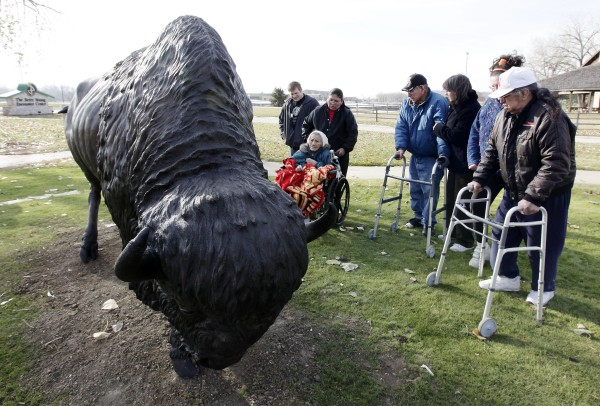
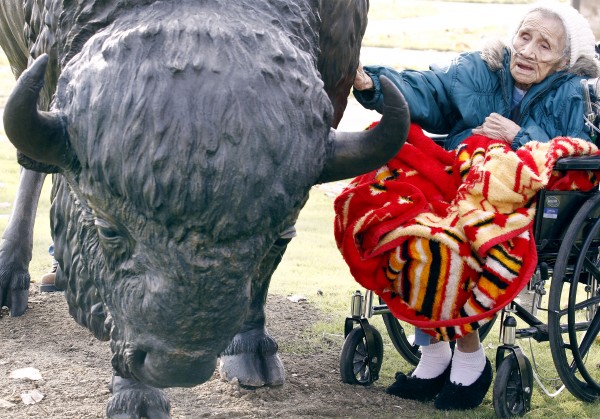
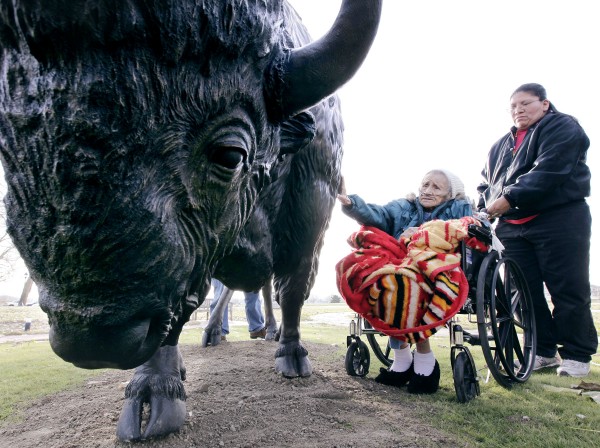
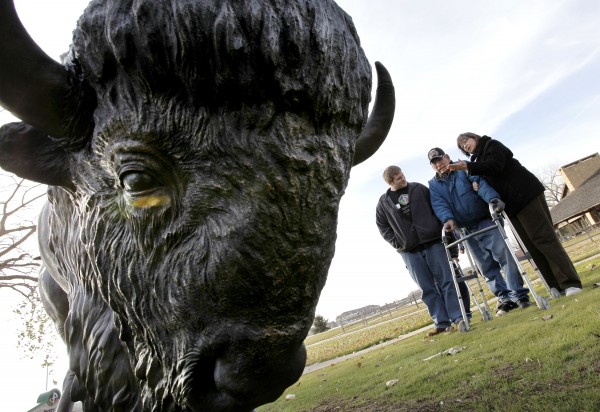
Annie Phillips gently touched the side of the mammoth bronze statue and the petite octogenarian began chanting in her Native American language.
“It was a prayer,” the elder with the Omaha Tribe said later inside the Betty Strong Encounter Center and the Sioux City Lewis & Clark Interpretive Center. “I asked the Lord Jesus to bless the animal and this area and thanked him for allowing us to be back here again for a visit.
“It's important to preserve our language,” the 89-year-old continued, then added with a grin, “it's also important they know I'm still kicking down here.”
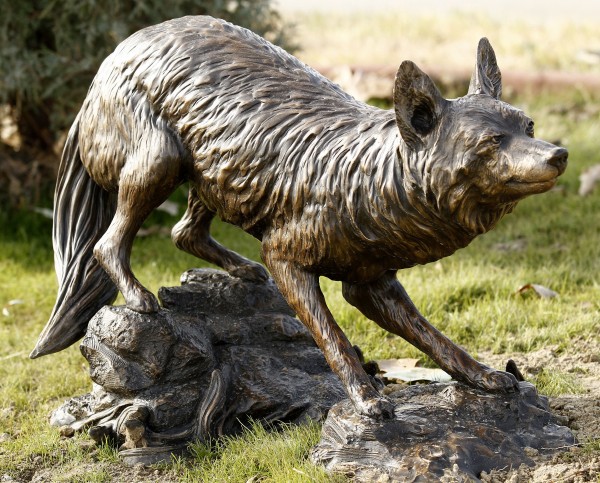
Phillips and other Omaha Tribe members came from Macy, Neb., and were among the first to see the newly installed, life-sized bronze sculptures of five Plains animals at the center.
“They're very nice,” said Alvin Cox. “They will be here for many years.”
People are also reading…
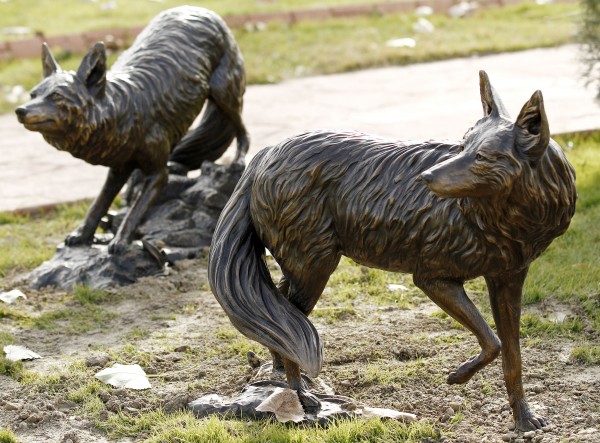
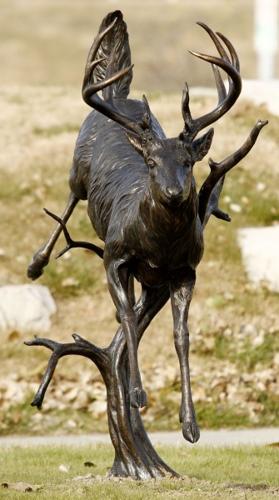
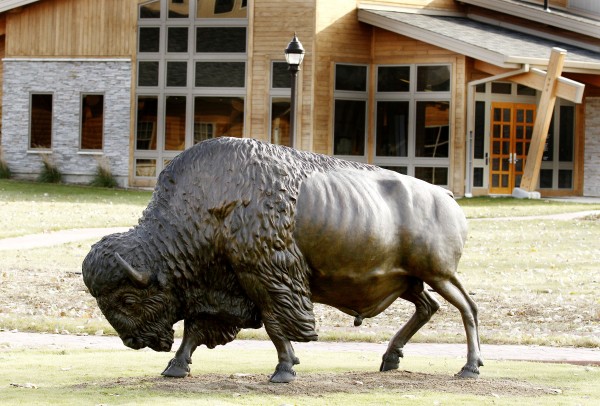
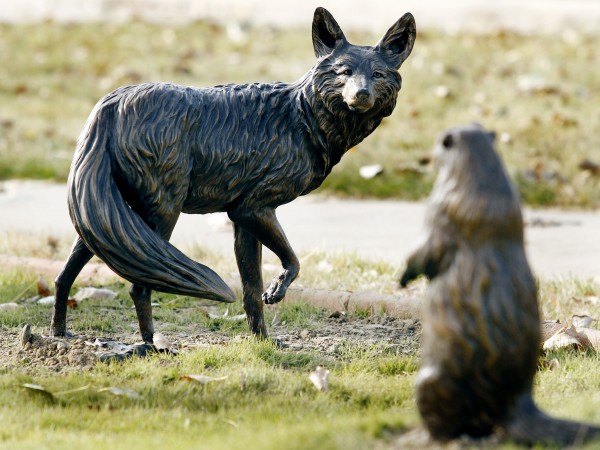
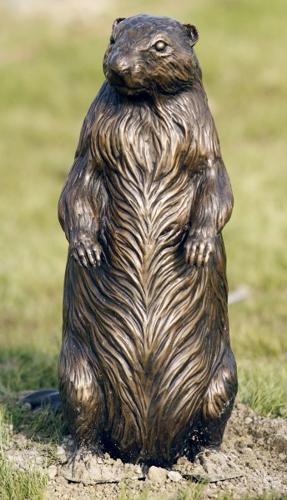
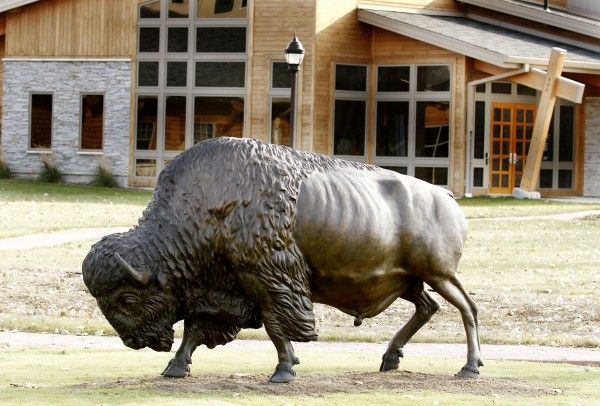
A buffalo, a white-tailed deer, two coyotes and a yellow-bellied marmot are now showcased as the second in a series of sculptures on the center's grounds. They join “Spirit of Discovery,” the 14-foot bronze sculpture of Capts. Meriwether Lewis and William Clark and Lewis' Newfoundland dog, Seaman. Mike Flanagan, a Wyoming artist known for his lifelike work, created the statues.
“The animal sculptures speak to the center's mission of engaging visitors in stories of our land, people and rivers,” said Marcia Poole, director of the center. “The animals will be at the heart of programs, activities, tours and exhibits for visitors of all ages.”
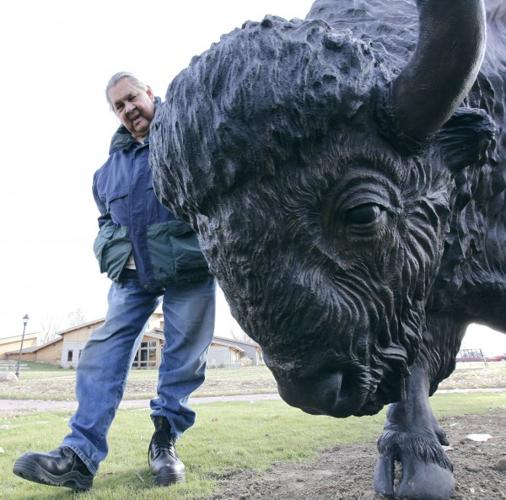
The 1,000-pound buffalo sculpture evokes stories about Lewis & Clark's efforts to meet the Omaha in mid-August 1804 in the present-day Sioux City area.
President Thomas Jefferson wanted the explorers to broker a peace agreement between the Omahas and the Otoe and Missouri Indians to promote U.S. trade interests. But the Omahas had left their nearby village apparently to hunt buffalo.
“This is very special for me, because I'm a part of the Buffalo Clan,” said Robert Walker. “I like this sculpture because it's bigger and has more detail.”
Commonly known as buffalo, the North American Bison played an essential role in the daily life of the Omaha and other Native people. They burned the prairie to encourage fresh grass that would attract the powerful animal. They hunted the buffalo annually for food, clothing, and shelter. They depended on the buffalo for spiritual sustenance.
Buffalo helped sustain the explorers who were astonished by the prairie's abundance of the animal. On Aug. 23, 1804, near present-day Burbank, S.D., Pvt. Joseph Field shot the expedition's first buffalo. It took 12 men to bring the carcass to camp.
The explorers killed 567 white-tailed deer, another abundant food source. On Aug. 12, 1804, near present-day Sloan, Iowa, they spotted an animal new to them: a coyote, which they referred to as a “prairie wolf.”
The center's marmot sculpture reminds us of stories of Sacagawea who became part of the expedition during the 1804-05 winter at Fort Mandan near present-day Bismarck, N.D. When the permanent party reached Sacagawea's Shoshone people in present-day southwestern Montana in August 1805, Lewis noted marmot fur used in some of their robes. The Shoshone provided desperately needed horses for the Corps' daunting mountain crossing.
Poole pointed out each of the center's animal sculptures will inspire year-around program opportunities. Visitors will learn that in 1876 the Omaha Tribe conducted its last buffalo hunt, forever changing their way of life, according to Pierre Merrick, whose Indian name is Cikon xega.
Merrick is a member of the “Inkesabe Clan,” the Black Shoulder Buffalo Clan, of the Omaha Tribe. Merrick and Dwight Howe, an enrolled member of the Omaha Tribe, will conduct presentations at the center about the significance of the buffalo.
As part of the center's Natural World focus, Larry Myhre, outdoor editor of the Sioux City Journal, will present programs on the white-tailed deer. Programs about animals also will be presented by Dr. William H. Heyborne, assistant professor of biology at Morningside College.
There will be no shortage of stories inspired by the center's animal sculptures. Visitors interested in the explorers' stamina will learn that Clark regularly recorded the amount of game killed for food and clothing. One buffalo could provide meat for two days. Nine pounds of buffalo supplied some 5,900 calories, close to the explorers' daily per capita calorie consumption when they were well fed off the land.
“Altho(ugh) game is very abundant and gentile,” Lewis wrote in his journal entry of April 27, 1805, “we only kill as is necessary for food.”
The Betty Strong Encounter Center and the Sioux City Lewis & Clark Interpretive Center comprise a cultural complex on the Missouri Riverfront, exit 149 off Interstate 29, built and sustained by Missouri River Historical Development, Inc.


