


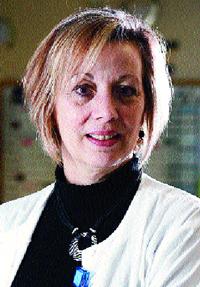
Lori Horton, manager of case management, St. Luke's Regional Medical Center, talked with Nick Hytrek about her job in patient care.
1. In a nutshell, what do your duties include?
Case managers are part of a multidisciplinary team and we coordinate the care and any discharge needs a patient would have.
2. What type of education and training is needed?
Our department consists of six RNs and three social workers. I'm a registered nurse and have a bachelor of science in nursing.
3. Are all the people you see hospital patients?
It's almost all inpatients. Everyone is reviewed by a case manager.
4. Are your services requested by family members or is it done automatically?
People are also reading…
We go to the ER when they let us know they have somebody.
5. Do your patients fall into any age group or does it run the gamut depending on who's in the hospital?
It can be anybody.
6. Is there a more common condition that you see patients for or does it vary with what people are in the hospital for?
The actual review and assessment, it isn't dependent on the diagnosis, it's dependent on what the patient's needs are.
7. What are you looking for during the assessment?
If they have any needs when they're dismissed and if there are any services when they're dismissed. We follow their care when they're here and make sure everything's being done.
8. What types of assessments are being done?
We initiate a conversation with the patient or family members. Then we ask if they had any services prior to their hospital stay, if they think they'll need any help when they go home. For example, if they have a fracture, it's important to know if they can get around their house.
9. Are you looking at just physical needs or are there psychological or mental things you're taking into consideration?
We take a look at whether or not we think they're safe. There are people that no matter what, say they're going home.
10. Who is involved in this process?
It could be anyone from the family as in a family care giver and any hospital staff. The basics are a case manager and nurse from that unit and the doctors.
11. How long does this process take?
It starts soon after admission. Sometimes it's finalized at dismissal, sometimes it's done before that because they don't need anything.
12. What are the goals for the outcomes of the process?
What we're trying to do is balance their needs and their quality of life, the services they receive here and the patients themselves having a say in their care and the services they receive.
13. Can this process help families make tough decisions?
Yes. Sometimes they realize it would be in the best interest of the patient to go to a nursing home. It might just be a short-term stay until the patient is strong enough to go home.
14. Is it hard to watch elderly patients faced with giving up some of their independence?
It is hard because it's not what they want.
15. Do some show relief when they learn the assessment results?
Yes. I think there are some people that think it's good because they didn't know what to do. We do help people because they didn't know what options are out there.
16. What happens if a patient refuses to accept the assessment recommendations?
They have the right to determine their plan. If they want to go home, we work really hard so they have what they need when they get home.
17. How many cases might you have going on at a time?
That's kind of hard to say because some of the work is shared. Our ratio is 25 (cases per case manager). We keep busy all day, every day.
18. Is this something all hospitals do?
Usually every hospital has some kind of case management department. Everybody has their own way of doing it. There are different models.
19. Are a lot of people surprised by the options that are available?
Sometimes they are. Some people are aware because they've heard about it from another person. Some are relieved to know there are opportunities for help and assistance.
20. How many more services or options are there now compared to 10 or more years ago?
I think there's more options because our population's getting older. At one point, the only choice was a nursing home. Now there are more things available in the home for assistance like home services, home care.
(Staff photo by Jerry Mennenga)


