


Thanks to the expertise of board-certified ophthalmologists like Dr. Beth Bruening, and the medical support and resources of Mercy Same Day Surgery at Mercy Medical Center-Sioux City, more and more Siouxland patients are seeing more clearly after cataract or eyelid surgery.
New advances and techniques have made cataract surgery and eyelid surgery two of the most successful and life-improving surgical procedures, which can be done safely in an outpatient setting like Mercy's state-of-the-art Same Day Surgery and Surgical Services departments. The resulting improvement in vision can be especially gratifying for patients.
Cataract surgery
Cataracts are very common, said Bruening, whose clinical practice is Eye Associates Siouxland, Sioux City.
About 20.5 million Americans age 40 and older have cataracts.
People are also reading…
Cataracts are the clouding of the eye's clear lens, similar to a window that is fogged with steam, she said.
When the lens becomes cloudy, light rays cannot pass through it easily and vision becomes blurry.
Cataracts are not a growth or a film over the eye and currently, there are no medications, eye drops, exercises, glasses or lasers that will cause cataracts to disappear.
Although cataracts usually develop as part of the aging process, they can also result from eye injuries, certain diseases such as diabetes, genetic inheritance, certain medications, frequent exposure to UV-A and UV-B rays and smoking.
"When cataracts do begin to interfere with daily activities, they can be treated surgically," she said.
"In such a procedure, we make a tiny incision through which we can remove the cloudy lens and replace it with a permanent artificial lens."
Cataract surgery is the most frequently performed surgery in the United States, with more than 1.6 million surgeries performed each year. After surgery, vision is improved in most patients.
The clinicians at Eye Associates Siouxland say cataracts start out small and have little effect on vision at first. But as the cataract grows and becomes denser, so does its impact on vision.
You should see an ophthalmologist if you experience any symptoms of cataracts including painless blurring of vision, sensitivity to light and glare, double vision in one eye, poor night vision, and fading or yellowing of colors.
Eyelid surgery
While cataracts are a more common problem affecting vision, eyelid position problems can also limit your ability to see the world clearly and broadly.
"Excess eyelid skin, droopy eyelids or eyelids that turn inward or outward are common problems," she said. "Fortunately, these conditions can be corrected with surgery."
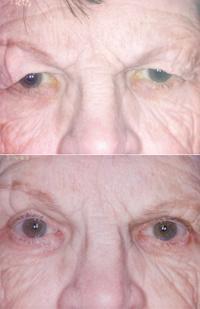
Ptosis, or upper eyelid drooping, is apparent at birth or develops with age. Involutional ptosis, which can accompany the aging process, may limit the field of peripheral vision and produce an uneven appearance. Surgery corrects the problem by shortening the muscle that opens the eyelid.
If you think you may have a cataract or might benefit from eyelid surgery, talk to an ophthalmologist about your options. Or, for more information about the procedures or to schedule a consultation, contact Eye Associates Siouxland at (712) 233-1529.


