


Dear Jim: I want to add a greenhouse on my house for the kid's rec room and to grow some plants. I cannot afford a fancy kit, so I plan to build it from scratch. What is the best way to design an efficient one? - Ron M.
Dear Ron: You should be able to build a nice greenhouse yourself at a reasonable cost using scrap materials. It sounds as though you are interested more in what is called a "sunroom" as living space than a true greenhouse used strictly for growing plants or a simple cold frame for starting plants.
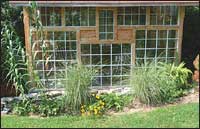
A friend of mine in my neighborhood built a beautiful sunroom (he uses it also for plants) using scrap materials. He contacted local replacement window companies. He was able to get scrap replaced old windows for free. He designed and built the sunroom around the sizes of these free windows.
Depending on how tight your budget is, you may be able to buy a do-it-yourself sunroom kit at a reasonable price. Many of them are modular with lightweight aluminum frames and clear plastic windows and screens. As your budget allows, you can gradually add on additional sections to enlarge it.
People are also reading…
If you are lucky enough to have a wall on your house facing solar south (different than compass south), you may be able to use the sunroom to help heat your house. This requires specific design concepts and details. At the worst, a south-facing sunroom can be built that requires little additional heat to stay comfortable and allow plants to survive through the winter.
When building a sunroom from scratch, a wood frame is much easier to work with than aluminum. Since you are planning to have plants in it, the indoor humidity level will be fairly high. This will also create some condensation at night. Using pressure treated lumber for the main framing would be wise.
A key design feature is whether to have a vertical or slanted front. A slanted front reduces the roof area and overall material costs. It is fine for plants, but it reduces the headroom near the front for your children. During the summer, a slanted front tends to overheat since it faces the sun.
A modified design with a several-foot-high vertical kneewall and a slanted front above it is another option. This provides more headroom and room for low plants against the kneewall. A brick or stone kneewall provides additional thermal mass to improve year-round comfort and efficiency.
Cover a portion of the roof, or all of it on a slanted front design, with plywood and shingles. This minimizes overheating during the summer. A completely clear roof may also cause excessive glare. Size the sunroom in multiples of eight-feet lengths as much as possible to minimize waste lumber. Make tables and plant stands with inexpensive bricks to increase thermal mass.
Write for (instantly download - http://www.dulley.com ) Update Bulletin No. 769 - do-it-yourself instructions and diagrams to build a low-cost sunroom/greenhouse and a cold frame, a thermal mass chart and a common greenhouse plants growing guide. Please include $3.00 and a business-size SASE.
James Dulley, Newspaper Name, 6906 Royalgreen Dr., Cincinnati, OH 45244
Dark mulch alternative
Dear Jim: I get tired of buying the deep black mulch each year for my garden. Also disposing of all of those bags does not seem good for the environment either. Is there any mulch with a longer life? - James G.
Dear James: The dark hardwood mulch, called "black gold" in my part of the country, does degrade quickly. It is not bad for the soil when it degrades over winter, but all the bags and transportation are wasteful.


