
From The MASTER GARDENER - Woodbury County Extension
Posted from 07/23/05:
Recently I checked my answering machine to find this message "What is happening to all the maples in Sioux City? They are yellow and little crumbs of sawdust are on the patio furniture."
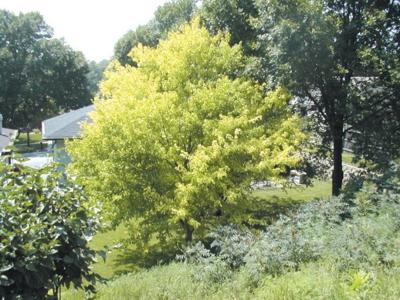
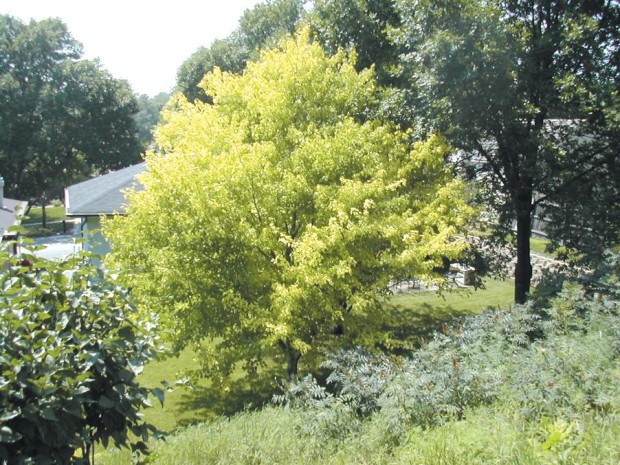
My initial response was to look at my two maples, which are nice and green. Then I looked out over the valley behind the house and scattered here and there were yellow trees, apparently silver maples. Over the next day or two a windshield survey showed that there were a lot of yellow maples scattered around Sioux City. Most were nice and green, but a certain amount of yellow trees was definitely out of the ordinary. Finally I found one that was close to the curb and had a reachable leaf. Close inspection showed the telltale signs of iron chlorosis, a yellow leaf with dark green veins.
People are also reading…
Iron is essential for all plants in the photosynthesis process. Iron enables the plant to produce chlorophyll (the green in the leaves). The green leaves convert sunlight to food for the plants. Some plants like pin oaks are widely known for chlorosis problems, but any plant is susceptible if adequate soluble iron is not available. Iron is a common component in the soil which becomes insoluble when the soil pH reaches 8. In the hilly loess soil (fine light brown silt) part of Sioux City the pH is typically 7.5.
The only thing I can see that is common to all these trees is this year's weather, which has caused a slight change in the soil pH. Since this is a localized effect and plants vary in sensitivity the result are the scattered yellow trees. Localized change in pH is fairly common. Frequently it is related to construction activity where mortar or concrete scraps become mixed with the soil. A neighbor had a problem with one maple after adding a room to the house. I had a walnut tree develop chlorosis with no identifiable changes in its environment.
The bottom line is what to do next. In the short run the tree will not be permanently damaged. It is the same as you going on a severe diet for a while. If the condition persists the tree is weakened and will ultimately die. In my neighbors case the first year it was just yellow. The next year a few leaves at the top were withered and brown. The third year about the top half was withered, and then he removed the tree.
Materials to treat chlorosis are readily available at a professional garden store. The seasonal garden departments will not be much help. Treatment is available as a quick fix foliar spray, as a trunk spike containing iron chelate, or as a pellet fertilizer containing ammonium sulphate and iron sulphate. The pellet material is applied by drilling holes around the drip line and pouring a small amount in each hole. For large trees the pellet material is the most effective. A spray treatment would be all right for a small, newly planted tree.
Several options are available for making holes. A water powered root feeder will do. Earth augers that drill a 1 1/2- to 2-inch hole can be obtained at the garden store. These are powered with an electric drill. You can also make a very effective driller by assembling some short sections of iron pipe into a T and attaching a hose connection to the T. Attach the pipe to your garden hose and let the water pressure do the drilling. Space the holes about three feet apart around the perimeter of the drip line. A six ounce juice can is a good measure. Use one half to a full can per hole depending on the tree size. The measure is not real critical as it will be gradually dissolved and absorbed by the tree.
My answering machine specified two problems, which are unrelated. The sawdust on the patio furniture is chewing residue from unspecified beetle larvae in the tree. According to the "Ortho Problem Solver" Maples are subject to attack by a variety of beetles that crawl up the tree in the spring to deposit their eggs. The hatching larvae chew into the wood causing the small particles. These pests would probably not inflict long -term serious damage. Treatment would be in the spring by coating the trunk with a general pesticide like Sevin. This would ward off the adult beetles before the eggs are laid.