


SIOUX CITY -- Within the last decade, Western Iowa Tech Community College officials heard the three television stations in metro Sioux City had a need for candidates trained to be videographers and perform other news tasks.
Following its goal of responding to community needs, the college six years ago started an Audio Engineering program. Then, in 2016, they added another element, with video related training in a combined program with the prior audio pieces to meet what television officials had shared.
The first students in the two-year program will graduate in May. They take about 30 percent of similar coursework, then for the other 70 percent specialize in either the Audio Engineering or the Video & Media Production portions, depending upon personal interest, Associate Dean of Career and Technical Education Michael Rohlena said.
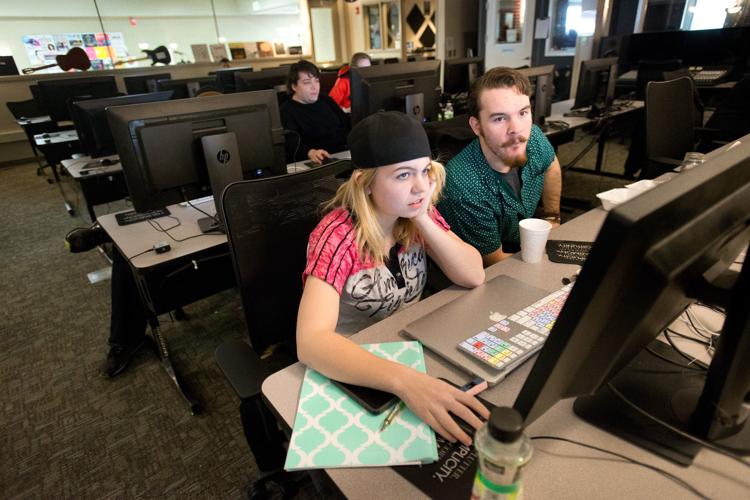
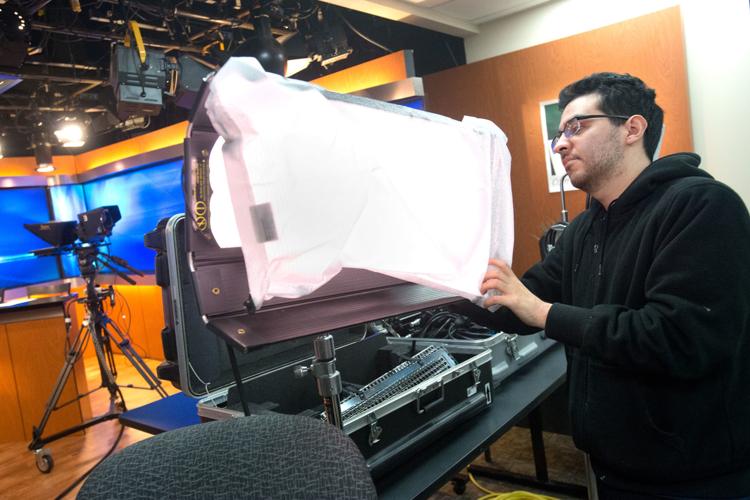
Students go up the learning curve via hands-on exercises, lectures and team projects to get competency in typical tools of the audio and video fields.
People are also reading…
"These are not programs, 'Here is the book, we will test you on the book.' The vast majority of this is applied learning," Audio Engineering Instructor Chris Mansfield said.
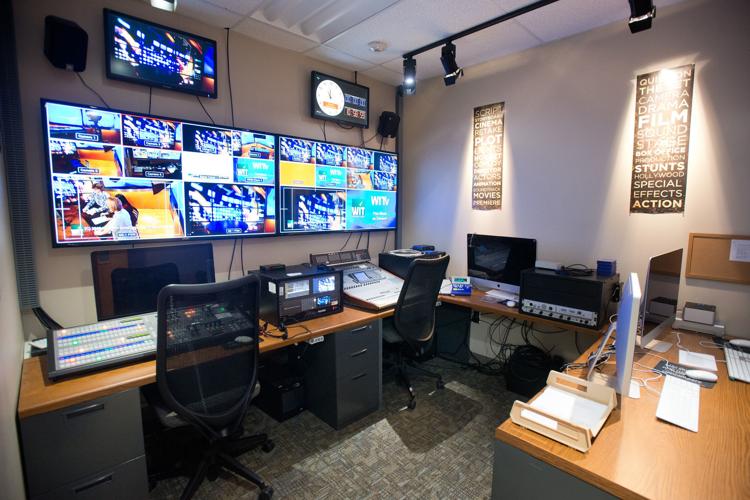
A roughly 12-room wing has such pieces as a recording studio sound booth, a control room for a video studio and an audio engineering room, where students can listen on speakers instead of headphones.
"It is a high technology-based field," Rohlena said.
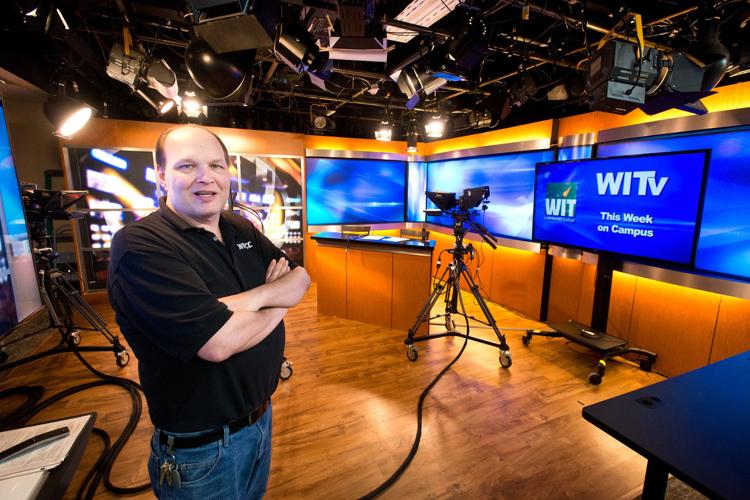
Another notable piece in the wing is the former news set of KCAU-TV Channel 9, which became expendable when the station moved from downtown to a building along Gordon Drive. The set is now used each Friday to record This Week On Campus, a seven-minute synopsis of WIT activities that lie ahead, which is streamed online.
Mansfield said WITCC has a good relationship with all three television stations. Originally, he said, the instruction "was focused almost exclusively behind the scenes," but then some stations said they wanted training for reporters and other jobs.
Over the years, several radio and television stations have used the WITCC students as unpaid interns or employed them full time, Rohlena said.
Besides Mansfield, three part-time adjunct instructors teach students in the audio and video fields.
Between the two programs, there are roughly 60 students, with 60 percent of those in the Video & Media Production side. Besides Sioux City, they've landed internships in Des Moines, Sioux Falls and the Quad Cities of eastern Iowa and western Illinois. Some of the May graduates already have jobs lined up.
Mansfield said the students come from largely a 60-mile radius of Sioux City, but also "is well beyond our traditional reach," tapping students from near Omaha, Des Moines and eastern Iowa.
David Hansen, of Sioux City, joined the program in fall 2017 and aims to graduate in 2019, as he transitions out of the food service field. Hansen had heard of the WITCC audio and video coursework from friends, and now after taking classes said the facilities and access to good training is top notch.
Hansen doesn't know what direction he'll go after WITCC, but noted he could work in TV or radio, make acoustic treatments or do sound design for video game companies.
"I am learning a ton about what tools are out there and we have a lot of them here," Hansen said.


