
SIOUX CITY -- Morningside College will soon become the third college in Iowa to offer a major in agricultural education, which will certify graduates to teach agriculture at the middle and high school levels.
Consultants at the Iowa Department of Education encouraged Morningside to develop this program in response to a severe shortage of teachers in that discipline, said Dr. LuAnn Haase, chair of the Sharon Walker School of Education at Morningside.
“Morningside College welcomes the opportunity to become a leader in the preparation of secondary agriculture teachers in the state of Iowa and in this region of our country,” Haase said.
“Continued collaboration between Morningside College and its K-12 school district partners benefits students, agriculture-related businesses, and, ultimately, our economy as Morningside graduates help close the gap in this labor market need.”
People are also reading…
Agricultural education has been a teacher shortage area in Iowa for 14 of the last 17 years, in South Dakota for the last nine years, and in Nebraska for three of the last four years.
At the same time, demand is growing, said Dr. Tom Paulsen, associate professor and chair of the Regina Roth Applied Agricultural and Food Studies Program at Morningside.
“Schools are starting to understand that the agricultural sector, broadly defined, has tremendous career opportunities,” Paulsen said.
The U.S. Department of Agriculture expects about 58,000 job openings per year for graduates with a bachelor’s degree in agriculture, but with only about 35,000 graduates to fill those openings.
That could explain the rapid growth of Morningside’s agricultural and food studies program. It has grown from about 10 students when it started in 2014 to almost 70 students four years later.
The program offers an overview of agriculture that is accessible even to students with limited experience in the field. Then students minor in specialties such as agribusiness, agronomy, environmental policy and law, food safety, political science or mass communication.
Paulsen called education a logical growth area.
“We have an excellent education department here at Morningside College. Very well respected. We’re partnering with that experience," Paulsen said.
Most agriculture programs can be found at large public universities. It's unusual to find a small college with professors whose full-time job is to teach courses in agriculture, according to Paulsen.
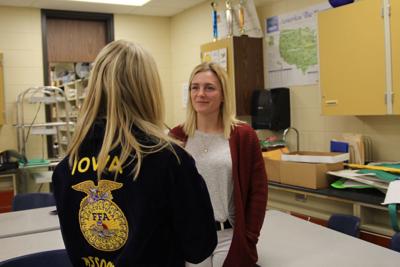
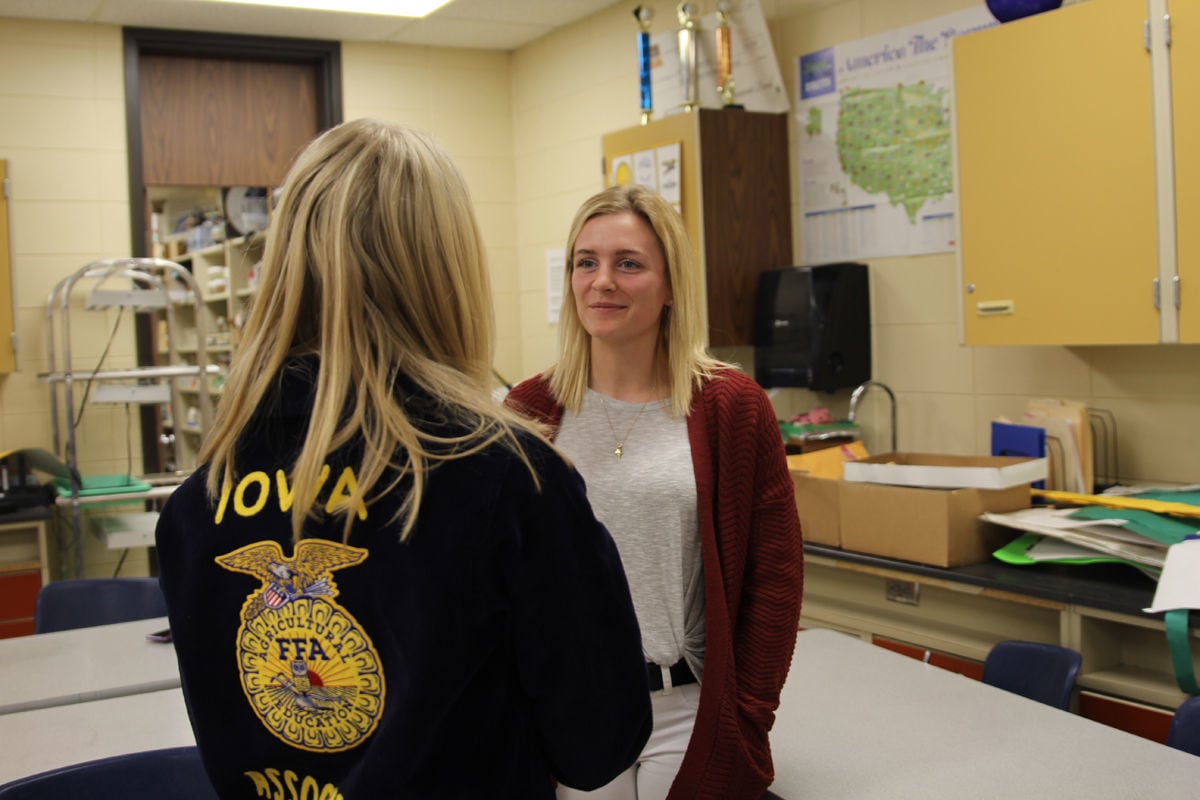
DeAndra Fritz will be one of the first agricultural education majors at Morningside. Her mother is an agricultural education professor at a large university, but Fritz thought a small college like Morningside would fit better for her.
“I chose a small school rather than a big school because I learn better in a classroom that is not a lecture hall necessarily,” said Fritz, a college sophomore.
“I learn better when the teacher is going to know my name and I can ask questions rather than a big university where there are 200 students in a class.”
There are five students in her first agriculture class at Morningside.
There was no agricultural education program at Fritz's high school. She said her Morningside professors have been great in helping her get the experiences she needs to be successful.
For example, Fritz said Paulsen helped her get in touch with an area high school, so she could watch FFA practices.