



LE MARS — The excitement of passing a bond issue has faded, but Le Mars school and community leaders have found new joy in considering designs for the new elementary school to be built with the bond funds.
Since the $49.97 million bond issue passed with 61% approval in November, a core planning committee has been meeting with designers and architects and touring new elementary schools in the area to determine what the new 151,000-square-foot building in Le Mars should look like.
"It is enjoyable, and people are very excited about it," Le Mars Community School District superintendent Steve Webner said. "At these core planning meetings you can see the excitement in the room."
The new building will replace the district's three current aging elementary schools and will be built on 17 acres the district owns west of the district's football field and track complex, adjacent to the middle/high schools.
People are also reading…
The district envisions a building that's likely to be more than one story with room to accommodate 1,200 students in preschool through fifth grade, giving the district room to expand from the current elementary enrollment of approximately 900 students. The building will be designed in a way to facilitate future additions, if needed.
The district hopes to break ground in spring 2026, and construction is expected to take about 18 months. The cost is estimated at $67.6 million. In addition to the bond funds, the district will utilize SAVE funds -- statewide sales tax revenues -- to pay for the building and reduce the property tax impact of the passed bond issue.
Before any ground is broken, the planning committee, which consists of 30 school and community leaders and parents, must settle on a design.
Le Mars High School students Jenna Morris and Ryder Mullally perform their group improvisation act that earned the critic's choice award at Iowa's large-group all-state speech festival.
The committee likes the "school within a school" concept, Webner said, in which separate wings or pods make it feel like a smaller school. It could be designed with dedicated wings or pods for each grade level, for example. The committee must decide if the school will be designed to have seven sections in each grade as the district has now or design it for eight or nine sections.
The new building will alleviate the crowded conditions found in each of the three current buildings, which are above capacity. With each school packed with students, it's hard to find space for music and programs such as English as a Second Language and Title I. None of those programs have their own spaces in the current buildings and must meet in converted closets and building entryways.
"We want dedicated spaces for those programs," Webner said.
The new building also would also include space for art instruction, a cafeteria, gymnasium and a playground.
By consolidating three elementary buildings into one, the district should realize new efficiencies in food service and supply purchasing, Webner said.
"Instead of having three separate buildings, it's all under one roof," he said.
With teachers at each grade level in close proximity rather than spread out in three schools, it will be easier for them to collaborate and meet.
"Being in the same pod will help communication as well," Webner said.
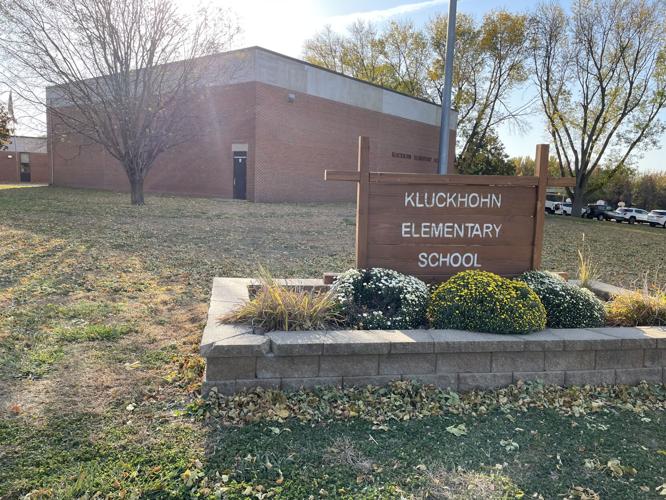
The building also will operate more efficiently than the current buildings, which have heating, electrical and plumbing systems operating beyond their service life. Clark and Franklin elementary schools both were built in 1939, and Kluckhohn Elementary was built in 1971. Webner said the district will receive community input on what will be done with the current elementary buildings once the new school opens.
Webner said the new school will benefit not just the teaching staff, but the community as a whole. A strong school district with modern facilities can help attract new residents to Le Mars, something voters realized when they passed the bond measure.
"This community from all facets came together and they understood our current facilities were not going to meet the needs of our students long term," Webner said.