




SIOUX CITY | Mark Schuett remembers family trips to Sioux City as a young boy growing up in Cherokee, Iowa.
As the family entered the city from the north, Schuett said he'd know they had arrived in the "big city" when he saw a certain four-story manufacturing plant along Floyd Boulevard.
"The building kind of made an impression on me," Schuett said.
Now Schuett knows he's arrived in the Sioux City business community as be renovates the former Sioux Tools plant, which he bought last year, into a processing, packaging, distributing and warehousing facility for his company, American Natural Processors Inc., one of the nation's largest processors of organic ingredients.
"We're slowly making progress. It's a pretty big project," Schuett said.
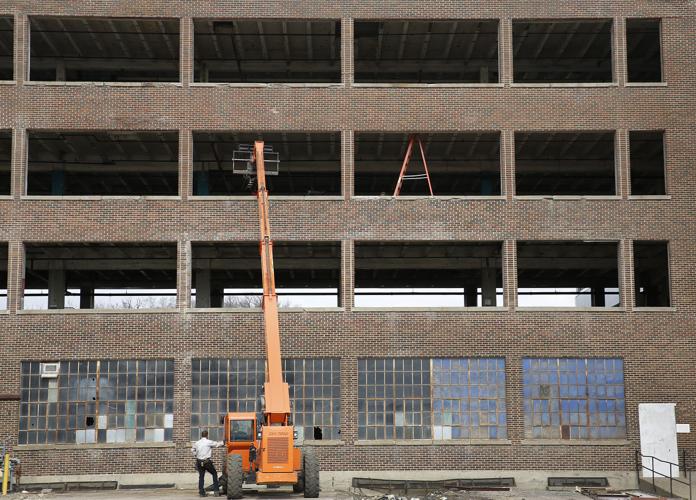
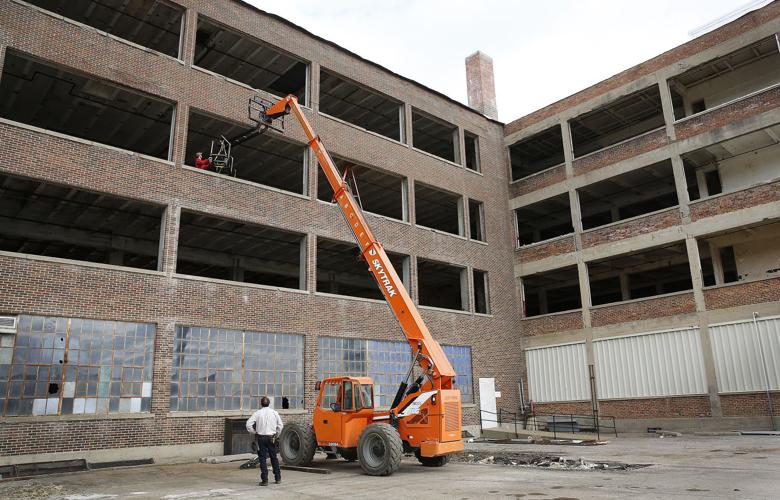
Rather than rush through the renovations, Schuett said he's taking extra effort to restore the building, located at 2901 Floyd Blvd., to its original appearance as much as possible. Much of the interior is being stripped to the bare bones, as he put it, before work begins to outfit it for his company's needs. On the exterior, all windows are being replaced, and some that have been covered for 30 years will once again let light into the building.
People are also reading…
"That was our desire, to restore it back close to what it looked like when it was first built," Schuett said.
Because of that desire, Schuett said renovation costs will be a "substantial investment." As he cleans out the building, his vision for how he wants the building to look changes, making it hard to pin down an estimated total cost.
The former Sioux Tools plant traces its roots to 1914, when Oscar Albertson and Harold Jacobson opened Albertson & Co. The plant started by making piston rings and spark plugs and later expanded its product line, introducing a line of air-powered tools in the 1950s.
By the 1960s, the company had changed its name to Sioux Tools. In 1994, the factory became a division of Kenosha, Wisconsin-based Snap-On Tools, which closed the plant in 2002.
Most recently, the building served as an auxiliary warehouse for Bomgaars Supply, which moved out in 2015 after completing a major expansion of its main warehouse and distribution center.
The site will be ideal for American Natural Processors' expansion, Schuett said.
Already operating plants in Cherokee, Galva, Iowa, and Hartley, Iowa, Schuett said he hoped that opening a Sioux City plant would make it easier to fill his work force. The plant is expected to create 20-25 jobs.
Sioux City also made sense for other reasons. Replacement parts for his other plants often are found in Sioux City. The city's larger infrastructure, such as sewer lines, plus the size of the plant, will make it easier to accommodate the company's needs.
"There are some things we'll be able to do here that we couldn't at other sites simply because of infrastructure," Schuett said.
Schuett founded American Natural Processors in 2000 with his wife, Julie. Daughter Nicole, a scientist, and her husband, Sam Jennett, an engineer, have since joined the family-owned operation. The plants craft organic oilseeds into meals, flours and oils, without the use of chemicals or preservatives. The company processes ingredients that include soy, corn, canola, flax, rice, hemp, chia, peas and algae.
Most of the work in Sioux City will involve processing, Schuett said. The "dirty work" of cleaning and de-oiling grain and oil refining will be done at the company's three other sites. Oil and other products will be transported to Sioux City for final processing and packaging.
American Natural processes most of the organic grain grown in this area, Schuett said, but also handles grain imported from other areas of the country and overseas.
"The demand for organic in the U.S. exceeds what the U.S. produces," he said.
The company produces meal that is used in livestock and poultry feed. It also processes products used as ingredients contained in foods that can be found in just about any aisle in organic grocery stores such as Whole Foods.
Schuett said he hopes to have the plant's exterior completed by this fall, then begin moving processing equipment in. Because the renovations are so extensive, it can appear that the building is being demolished. It's led to a lot of inquiries from people, many of whom once worked there, who stop by to ask Schuett what he's doing. He's happy to tell them the building is being restored.
"They're always tickled that someone's going to do that," he said.