

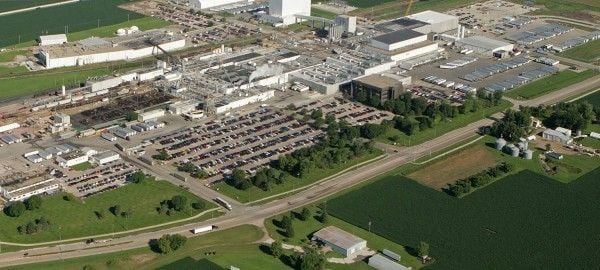

DAKOTA CITY | Tyson Fresh Meats has completed work on a larger, more efficient slaughter floor at its flagship Dakota City beef plant.
The new line remains in a start-up phase, with production gradually increasing as the plant adjusts to the new equipment and processes, Tyson spokesman Gary Mickelson said.
As volume grows on the new line, the plant, which employs more than 4,000, will begin to hire more workers, Mickelson said. When the project was announced in 2012, Tyson said it expected to create 200 new jobs.
The state-of-the-art slaughter floor, which includes the latest sanitation and production systems, was part of a $90 million project to enhance the sprawling complex, which packs more beef in boxes than at any other facility in the world.
The new construction will allow the plant to significantly increase its slaughter capacity, matching its processing numbers.
People are also reading…
Other improvements ave been completed, including changes to the carcass cooler and rendering areas, as well as employee lockers and cafeteria, Mikelson said.
Changes to the box handling operations also are nearly finished. Those improvements involved installing additional conveyors and other equipment to allow easier handling of products.
Renovations to the old slaughter floor, parts of which date to the opening of the plant in the 1960s, are still months away from completion, he said.
At peak construction, as many as 200 construction workers were on site. Mickelson said Tyson has used outside contractors and suppliers, including several tri-state subcontractors. That's helped pump additional dollars into the local economy.
Originally expected to be completed in mid-2013, the project has taken longer than anticipated. At the time it was announced, Tyson warned that a satellite slaughter plant in Denison, Iowa, could cease following completion of the Dakota City work.
But last spring, the meat packer told the nearly 400 workers at Denison that conditions had changed, and there were no longer plans to close the facility.
Factors in the decision to keep it open included the closing of beef plants by some of Tyson's competitors, coupled with reduced feed prices for cattle, which are "creating more opportunities for keeping beef production viable at Denison," the company said.
The Dakota City plant, which is the largest employer in metro Sioux City, by far, produces fresh vacuum packed, boxed beef for sale to wholesalers, retailers, hotels, restaurants and institutions. Bone, fat, trimmings and hides are recovered and used in the making of various foods, pharmaceuticals, cosmetics and clothing.
As part of an $80 million project seven years ago, Tyson completely rebuilt the original processing areas of the 1966 plant.