

SOUTH SIOUX CITY -- Tony Demir foresees a time when Nebraska power plants are burning wood pellets created in South Sioux City to produce cleaner electricity.
Though construction has yet to begin on the $53 million Green Star Gasifiers plant, Demir, the CEO of Green Star Gasifiers LLC, said he's already working to convince power producers to use the biofuel that the renewable energy plant will produce by burning tree waste.
"South Sioux City is going to become that bridge between renewable fuel and fossil fuel," Demir said. "Nebraska is very open-minded and willing to look into innovative and advanced biofuels concepts."
The Green Star plant will burn dead, dying and diseased trees, creating 8 megawatts of clean electricity. Plans call for 5 megawatts to be sold to the city of South Sioux City. The other 3 megawatts will be used to internally power the plant.
People are also reading…
By recapturing and recycling heat inside the burners, the plant will annually create 100,000 tons of a byproduct called torrefied wood pellets, which Green Star, a subsidiary of Green Star Energy Group LLC, will sell to coal-fired power plants. The dense, cleaner-burning pellets can be burned in addition to coal, helping plants reduce their carbon emissions.
Initially, the pellets will be exported to Japan, where the market for the product is strong. Demir said he's talked with Nebraska power producers and hopes to sell the pellets to them.
"The goal is to use that torrefied wood pellet here in Nebraska with coal-fired power plants," he said. "We're trying to establish that strong market here in the U.S."
South Sioux City residents have had a chance to see how the process works since the summer of 2016, when Green Star unveiled a gasifier in the city's Scenic Park. Since its installation, city crews have fed wood waste into the gasifier, producing electricity that has helped power the park's campground. Demir said the gasifier will be replaced with a newer version this year.
Just when the power plant will begin production has yet to be determined. Demir said construction is currently in the permitting stage, and he hopes that work can begin this summer.
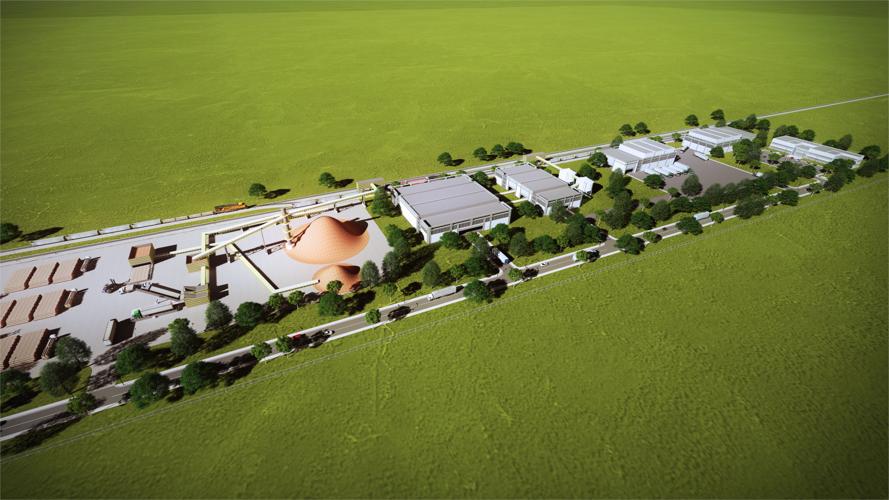
Work on utility lines and access roads was started last year at the 17-acre site in the Roth Industrial Development Park.
Once construction begins, it will be done in two phases, Demir said.
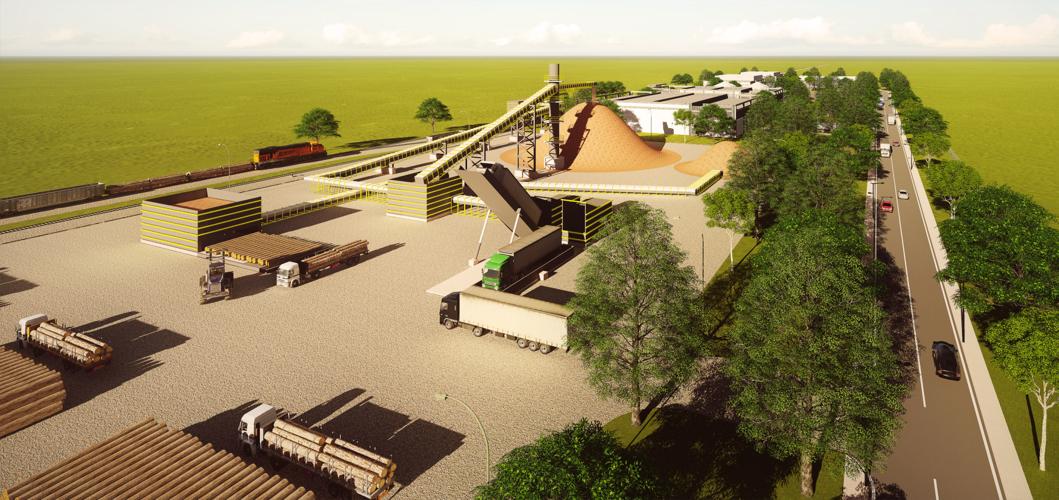
The first phase will take 12 months and includes construction of rail spurs, a wood yard to process and handle wood chips and the torrefication portion of the plant. The second phase will take six to nine months after completion of the first phase and will include the power generation portion of the plant.
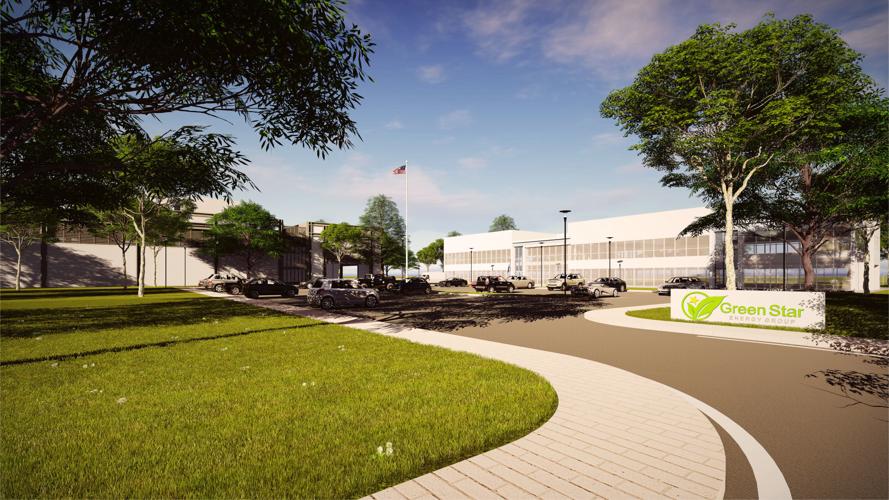
Demir said the plant could be fully operational 18-20 months after construction begins. He said the site, which he is looking into expanding by 10 acres, will have multiple buildings in a campus-like setting that will blend into the environment and be inviting to visitors.
Green Star plans to employ 29 workers full time, and they will be housed and trained through two new programs, Demir said.
Under the Nebraska Neighborhood project, Green Star will build homes for workers. Demir said Green Star is planning a 100-home development in collaboration with the city. Twenty single-family homes would be built in the first stage, 30 in the second stage and the rest as needed. A site hasn't been chosen yet, Demir said, but he hopes construction can begin this summer.
In the Nebraska Earn and Learn program, Green Star will collaborate with Northeast Community College to develop a customized curriculum and provide hands-on training for Green Star workers.
The South Sioux City plant will be unique, burning 100 percent wood waste from local and regional suppliers, Demir said. When the plant fires up, it will use wood from Missouri, Colorado and California. Over time, he expects the fuel to come from areas much closer to South Sioux City. With the emerald ash borer present in Nebraska and Iowa, many cities and private citizens will be cutting down and disposing of ash trees. Red cedars have become a problem in parts of Nebraska and must be thinned, providing another plentiful source of trees for burning.
Local residents also will be able to help supply the plant with its fuel source. A free drop-off site will be located at the plant, and people will be able to dispose of limbs and trees damaged by wind and storms.
Other power plants in the planning stages will be equipped to burn other materials. Demir said Green Star plans to add 13 more plants in the region. Though they will be smaller plants producing 2-3 megawatts of electricity, they will be able to burn municipal solid waste (garbage) and agricultural waste such as corn stalks to make electricity.
Green Star's goal is to produce 100 percent renewable energy, Demir said. The torrefied wood pellet byproducts will be used for power production. The plants will also create another useful byproduct, he said.
"We will end up with very minor ash that will be used as fertilizer," Demir said.