

SALIX, Iowa | One of Port Neal's newest industries will fill help a need that comes about every spring and summer when construction swings into full gear.
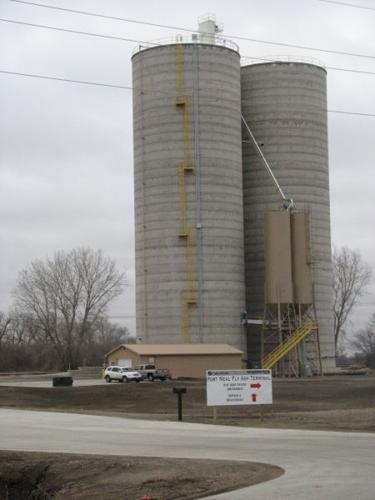
Rail to Road has opened two silos at 2591 Port Neal Road to house fly ash, a coal byproduct collected from MidAmerican Energy's two nearby coal-fired power plants.
That fly ash is an ingredient in concrete, and Rail to Road will have a stockpile ready for concrete and paving companies once it warms up.
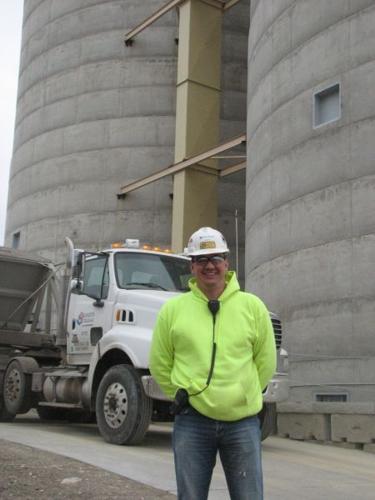
"We're a little bit construction season driven. As the construction season is upon us, we'll be ready. We are now in full operation," Rail to Road president Clark Meyer said.
The Sioux Falls-based company started building in June on MidAmerican Energy property, began operations in late December and reached full production in January.
People are also reading…
The $3 million-$5 million investment includes two concrete silos measuring 50 feet in diameter and 148 feet tall, plus an office, truck scale and other structures. The silos can hold 20,000 tons of fly ash.
Meyer said he expected the silos to be filled this spring in time for construction season. Two trucks run for eight hours a day between MidAmerican and the new facility five days a week, depositing 20-25 loads weighing 26 tons each into the silos each day.
Rail to Road is partnered with Headwaters Resources, of Salt Lake City, and done in cooperation with MidAmerican Engery. Meyer said Headwaters Resources buys and sells the fly ash to its customers. Rail to Road removes the ash from the power plant, stores it and loads it out for Headwaters' customers.
"We feel like we're the experts in that," Meyer said of his company, which also operates a facility in Sioux Falls.
Rail to Road's development will keep a large supply of fly ash on hand, securing a ready local supply of the important concrete ingredient for Siouxland concrete companies.
"There's a shortage in the construction season and a surplus in the winter. In storage, we're helping bridge that gap," Meyer said.
It will also benefit MidAmerican, he said. In the past, MidAmerican sent all unused fly ash to the landfill. Meyer expects the power company won't need to send as much to the landfill anymore, thus saving in landfill disposal fees.
"I think we should definitely be able to utilize more of their byproduct," Meyer said.
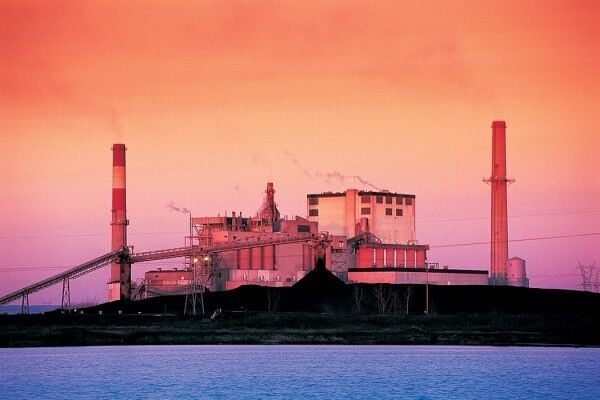
MidAmerican, Iowa's largest utility, announced plans last year to retire or convert to natural gas two coal-fired plants in the Port Neal complex by mid-2016 and install better pollution-control devices on two remaining facilities there. The move was the result of a settlement with the Sierra Club over environmental concerns.
The emission control upgrades at MidAmerican's Neal Center Units 3 and 4 is scheduled for completion this year.
The burning of coal to produce electricity generates three types of ash, MidAmerican spokeswoman Tina Potthoff said.
Fly ash, the lightest ash material, is captured by an electrostatic precipitator, collected in hoppers and blown into a silo where it is loaded into trucks for sale. Fly ash is commonly used as a cement replacement and for soil stabilization.
Fly ash not captured by electrostatic precipitators is carried with the flue gas and is captured by a desulfurization, or scrubber, and baghouse system. This ash is loaded onto trucks and hauled to the coal combustion residuals landfill as waste.
Bottom ash, the heaviest ash material, falls to the bottom of the boiler during the combustion process. It, too, is ultimately hauled to the coal combustion residuals landfill as waste.
The amount of ash recycled or sold depends on market demand, according to MidAmerican.
Journal business editor Dave Dreeszen contributed to this story.