

SIOUX CITY | With a growing number of prospective homebuyers, from young professionals to empty nesters, opting for downtown living, developers are moving to fix up additional spaces in the central business district.
"I think there's definitely more demand," said United Commercial President Chris Bogenrief. "It's just finding the right properties with the right parking and being able to get them cheap enough to make it work."
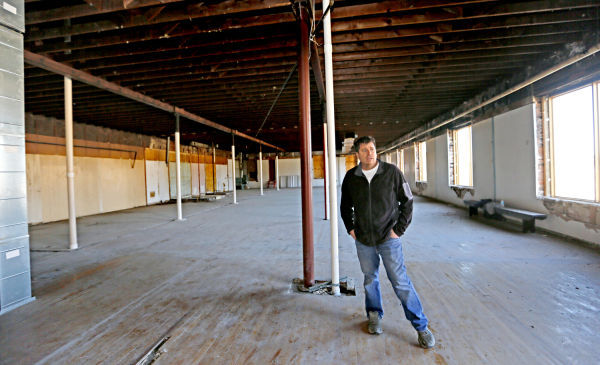
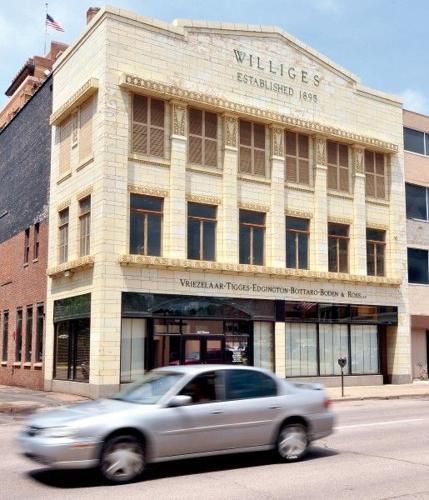
The top floor of the three-story Willeges was recently converted into seven upscale lofts with such amenities as granite counter-tops and hardwood floors. Priced between $104,000 and $152,900 depending on the size, the units sold out within six or seven months of completion.
People are also reading…
The 1917 Willeges Building -- originally a fur factory and later a women's clothing store -- was saved from the wrecking ball in 2007 by developer Bart Connelly. The lower two floors had previously been converted into offices for a law firm and other tenants.
The Willeges was the latest mixed-use rehabilitation project that Connelly has completed downtown in recent years.
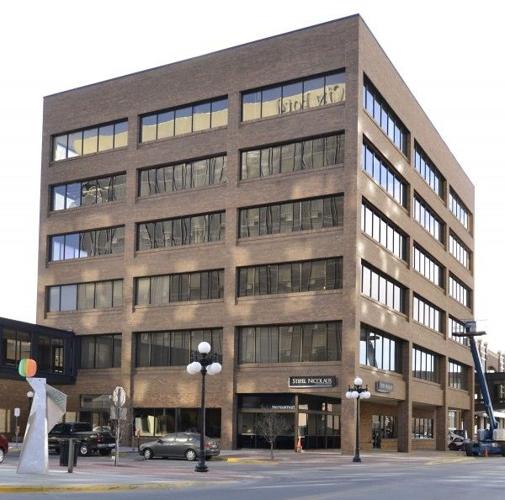
Nearly all the condos and lofts in the two most recent rehabbed buildings -- the United Center, a turn-of-the-century six-story warehouse at 302 Jones St., and the 4th & Jackson, a 1970s-era, six-story office building at 700 Fourth St. -- have been sold or leased and remain full.
A broadening of state tax breaks for rehabbed housing has given developers an added incentive to build more units. So too has been a tight metro area rental market, driven by the arrival of hundreds of temporary construction workers assigned to the ongoing massive expansion at CF Industries' fertilizer complex at Port Neal.
MORE UNITS IN THE WORKS
Some other adaptive reuse housing projects are in various stages of development downtown, with some others under consideration.
* Local developer and business owner Rick Bertrand is building six market-rate apartments above McCarthy & Bailey's Irish Pub at 423 Pearl St. Scheduled to open this year, the units -- with 1,000 square feet of living space, two bedrooms and two baths -- will rent for $850 monthly, he said.
The Irish pub in 2011. The two-story 1917 structure is one of a series of run-down buildings in the 400 and 500 blocks of Pearl that Bertrand's development company acquired, turning the bottom floors into bars, restaurants, retail shops and offices.
* Just up the street, a Vermillon, S.D. developer, Matt Mullen, is putting together a similar market-rate apartment project. He struck a deal with Bertrand for the structure at 510 Pearl St., known as the Malone Building.
* The new owner of the Insurance Exchange Building is studying whether to convert the top three or four floors of the six-story office building at 507 Seventh St. into market-rate apartments.
Brad Cummings, an Orchard, Neb., developer, has moved the building's commercial tenants to the bottom two floors to prepare for the potential housing rehab project. While he is confident the market is strong enough to rent all the units, the projected cost of all the improvements needed to meet modern building codes, such as installing a sprinkler system and another stairwell, has given him pause.
"The costs are getting elevated to the point where I don't know how feasible it's going to be," Cummings said in an interview earlier this year. He said expects to make a final decision later this spring.
BEST HOPE?
Adaptive reuse has been used extensively to revive former commercial and office structures in Chicago, Philadelphia and Los Angeles, often fueled by city-sponsored incentive packages to encourage development.
In a 2011 study of Sioux City, a team of experts that analyzed the strengths and weaknesses of downtown identified adaptive reuse housing projects as the best bet for filling a glut of vacant office space in aging high rises like the Insurance Exchange.
A number of the leased condos in the United Center and 4th & Jackson Building were snatched up by employees of contractors at CF Industries' $1.7 billion expansion, which is entering the second year of construction.
Calls inquiring about leasing units continue to come in nearly every day, Bogenrief said
"We tell them, 'We're sorry, but they're full," he said.
EXPANDED TAX INCENTIVES
While much of the past focus has been on high rises, Bertrand said he anticipates more housing conversion projects in structures with as few as two stories, like McCarthy & Bailey's Irish Pub.
A new state law that took effect Jan. 1 reduces from three to two the minimum number of adjoining housing units a developer in a designated enterprise zone like the one in downtown Sioux City must build to qualify for an income tax credit of up to 10 percent.
In some smaller buildings, there's simply not enough space to carve out more than two units, said Bertrand, who also represents Sioux City in the state Senate.
"I think these type of tax credits will help spawn development," he said. "It lets the small developer in."
An overhaul of the city zoning codes nearing completion includes provisions aimed at encouraging more downtown mixed-use commercial projects like the Williges Building, as well as expand adaptive housing to other parts of the city, said Jeff Hanson, the city's community development operations manager.
The update, which impacts each of the city’s 35,000 properties, was recently approved by the City Council
"We’re trying to attract a younger generation and bring more of our younger generation back home to Sioux City," Hanson said. "Those that are coming back here are demanding more of that mixed-use residential."