


James Dulley
Dear Jim: We are building a smaller empty-nester home. We would like a two-story home, but my knees are bad. Is installing an elevator in a home a feasible option and does one use excessive electricity? - Pat P.
Dear Pat: Installing an elevator in a home is certainly a feasible option and is becoming much more popular as the general population ages.
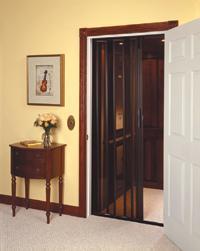
These small elevators, about the size of a coat closet, are specifically designed for residential applications, yet they include all the commercial safety features.
Many people prefer a two-story home for its appearance and ability to isolate the bedrooms from the higher activity-level first-floor rooms.
Two-story homes are also often less expensive to build than a ranch home of the same square footage and provide more design flexibility on smaller lots. As empty-nesters with bad knees, you likely don't want a big lawn to maintain.
People are also reading…
The cost of installing an elevator starts at about $12,000. If this allows you to build a two-story home instead of a ranch, you will reduce the building costs with a smaller foundation and roof. You will also have a greater lot selection because sloping lots, where the garage may have to built under the house, will now be feasible with an elevator.
The electricity cost to operate an elevator is not great. It requires 220-volt service similar to your electric range and clothes dryer. An elevator moves at about 40 feet per minute, so it takes less than 30 seconds to move from floor to floor. With the smaller roof on a two-story, your savings on heating and cooling will be much greater than the electricity one uses.
Your builder will install the shaft for the elevator. It will have a swinging door and look similar to another closet. Once the shaft is built, an elevator technician will handle installing it. The safety door on the elevator is typically a metal scissors or folding panel type.
Most residential elevators offer the option of doors on several sides. This may cost a little more, but it provides more flexibility on the placement of the elevator. You will be able to access it from different sides on different floors of your house.
You have two basic mechanical design options: cable and hydraulic. Both are equally safe and use about the same amount of electricity. A cable design uses a motor and a steel cable to lift and lower the elevator. It is less expensive than a hydraulic one, but it sometimes requires more space.
A hydraulic model typically runs a little smoother than a cable one. The small hydraulic pump can be located away from the elevator so it may be better where there are space constraints.
The following companies offer residential elevators:
Cemcolift
(800-962-3626
Concord (800-661-5112
Residential Elevators
(800-832-2004
Thyssenkrupp Access
(800-829-9760
and Waupaca Elevator
(800-238-8739
Send inquiries to James Dulley, Newspaper Name, 6906 Royalgreen Dr., Cincinnati, OH 45244 or visit http://www.dulley.com .
Green cabinets
Dear Jim: We are remodeling our kitchen and we want to use environmental "green" products when possible. Most kitchen cabinet use particleboard, which is unnatural. Where can I get real "green" cabinets? -
Dear Tracy: If you do an internet search on "Amish cabinets", you should be able to find sources for solid wood cabinets. Keep in mind though, "natural" does not necessarily mean it is good for the environment.
Particleboard and similar materials, although they are man-made, use waste sawdust and scraps from other wood production. Putting wastes to use instead of hauling them to a landfill is generally good for the environment.


