


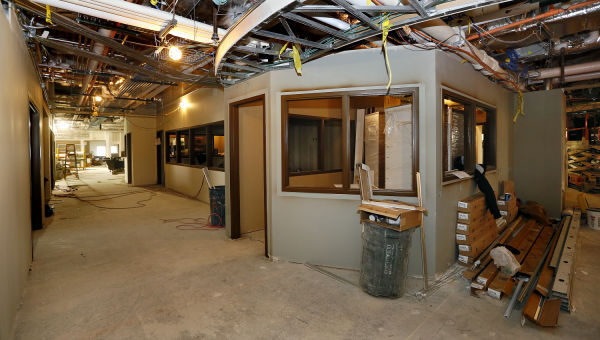
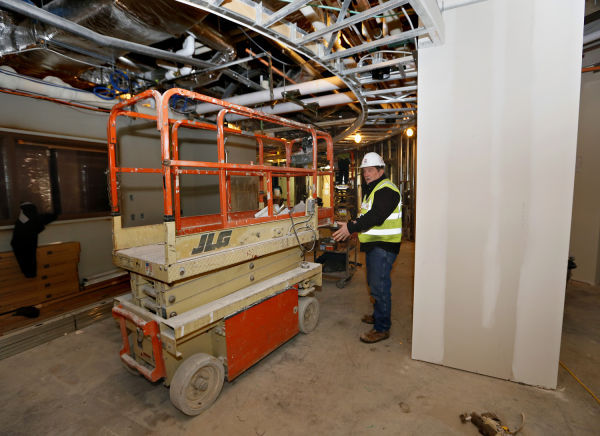
SIOUX CITY | Mercy Medical Center -- Sioux City is nearly ready to unveil its expanded, more modern intensive care unit.
"We still are on target for early March opening, although a lot of things have to fall right into place over the next two weeks to make that," Frank Forneris, Mercy's facilities director, said in an email in mid-February.
The first 15 new patient rooms, two nurse's stations, a nourishment room, the medical room, two staff restrooms and a respiratory room are all ready to go, he said. The tube stations are in place and should be functional for the opening of the unit.
The $14 million project will replace three separate ICU units on the downtown hospital's fifth floor with a single more open unit equipped with the latest technology. The older ICU pods date to the opening of the hospital in 1982.
People are also reading…
All of the patient rooms have been redesigned and enlarged, creating more flexible space for doctors, nurses and other support staff, and a more comfortable experience for patients and their families, according to hospital officials.
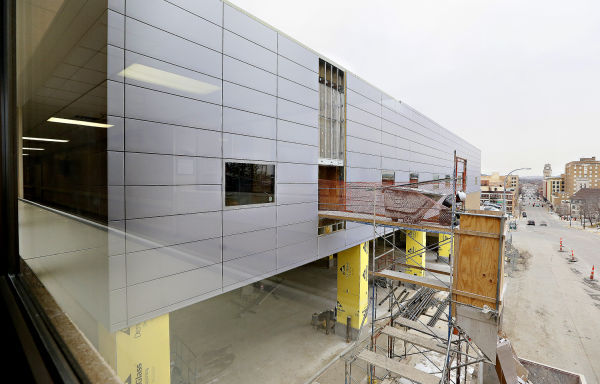
The multi-phase project began in August with construction of a 8,000-square-foot addition on the Sixth Street side of the hospital. Built above the fourth floor radiology services department and a portion of the underground emergency room parking, the addition was enclosed by fall, allowing interior work to continue through the cold-weather months.
Outdoors, crews are nearly completed with the facade on the new addition. They used the same decorative metal and windows as the Mercy Heart Center on the fifth floor.
The older ICU consisted of three units totaling 15,000 square feet with eight beds each, for a total of 24 beds. Pod 1, however, had been closed for some time due to reduced patient counts, leaving 16 beds active, Forneris said.
Starting Oct. 1, patients in Pod 3 were moved to Pod 1. After that, the Pod 3 space was completely gutted.
Once the 15 new rooms open, the final phase of the project will begin with the renovation of the space in Pod 1 and 2, Forneris said.
"Once the transition is made into the west Phase 1 portion of the project, we'll start work on the east portion, which will consist of the main storage rooms, three more patient rooms and the waiting area," he said. In addition, Phase II will include a new staff break room and offices.
The final phase also called for shells for two additional beds that could be finished at a later date. Hospital officials are considering whether to finish the shells as part of Phase II, he said.
The ICU patient rooms now average 180 to 220 square feet, with limited space for family members to visit, Forneris said. The new single unit ICU will have all-private rooms with at least 300 square feet, he said.
The larger rooms will have three separate sections or zones -- one for caregivers by the door, another for patients in the middle and the other for families by the window. Each family area will have a desk and comfortable seats.
The new caregiver zones will accommodate larger equipment such as booms that support medical gases.
The technology will allow physicians to perform certain procedures and interventions in the rooms, minimizing the need to move critically ill patients to other areas of the hospital.
The layout of the new ICU will allow a single nurse, from a station, to view two patient rooms.
As part of the renovation of the older ICU units, the patient transport elevator for Mercy Heart Center is being extended to the sixth floor, where the heart center is located.
"When patients need to go from the hospital to the Heart Center, we didn't want them to have to navigate through the middle of the ICU," Forneris said. "So we're taking the elevator up another floor."
The modernization project also included last year's addition of a $2 million magnetic resonance imaging scanner. In December 2013, prior to the start of work on the ICU addition, the 15,000-pound MRI was lifted by crane and lowered into the fourth-floor radiology area.
The Siemens Magnetom Skrya, which is equipped with a powerful 3.0 strength Tesla magnet, which offers enhanced image clarity and will allow staffers to perform breast, cardiac and abdominal scans.


