


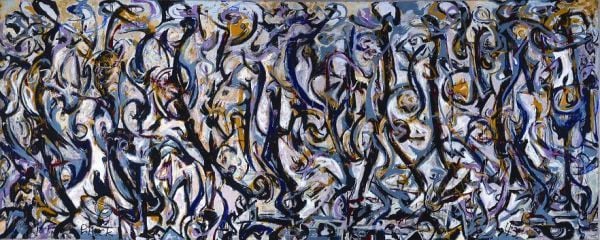
SIOUX CITY | The 100th anniversary of the Sioux City Art Center in 2014 will include the most influential exhibit ever in the city, when Jackson Pollock’s painting “Mural" will be shown in a secured first-floor gallery with an alarm system.
"Mural," which is insured for nearly $150 million, will be the most expensive piece to have come through downtown Sioux City. The 20-by-8-foot painting is considered the genesis of the Abstract Expressionism, the first truly American art movement that made an international impact.
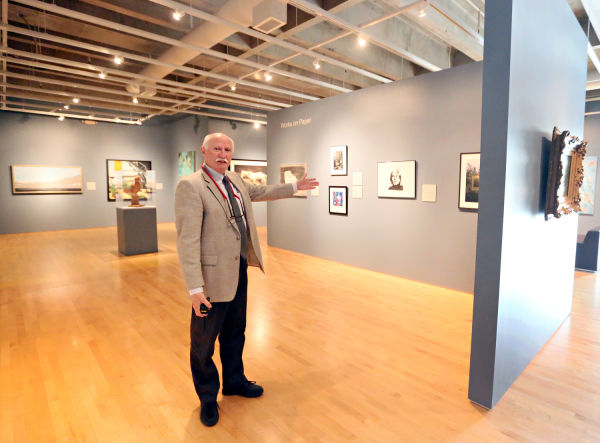
"(Pollock) is basically the face of Abstract Expressionism," Sioux City Art Center Director Al Harris-Fernandez said.
"People are very, very enthusiastic. I am surprised by all the comments that I get. They know it is a major event."
People are also reading…
"Mural" will be shown for nine months from late June through April 2015, making for a highly notable 100th year. The anniversary will be celebrated through a host of activities from May 16, 2014, through May 2015.
Harris-Fernandez was "looking for major projects to bring to Sioux City" for the centennial. The Pollock artwork fell into place through some contacts he knows.
"You don't know what you can do until you try," he said.
Back in May 1914 residents incorporated the Sioux City Society of Fine Arts, seeking to create a downtown facility to offer art classes and display local and regional art. Initial classes were held in various community buildings, as well as in Grandview Park during the summer months.
In 1937, the Art Center Association of Sioux City began research into a standalone center, and the Sioux City Art Center opened on Feb. 20, 1938, at a downtown Pierce Street site that later became the Williges store.
The existing facility at 225 Nebraska St. opened in 1997. Harris has been director for 12 years, and nine people work at the facility. Other artists are hired to teach a variety of courses.
Harris-Fernandez is proud of the art, programs and classes available at the center. He said many people wouldn't have access to high-end art without the facility, which is typically free to visitors, although people pay for classes and to see some special exhibitions.
"We provide access to fine art," he said. "Art is expensive, and fine art is even more expensive."
The 100th anniversary activities will include creation of a book documenting the permanent collections at the art center. Workshops on Pollock's techniques will be available for people.
Harris-Fernandez said Pollock's work shifted the center of the art world from Paris to New York City. Pollock's work didn't result in substantial sales during his lifetime, but later interest exploded and his wife created a foundation directing tens of millions of dollars to established but under-recognized artists.
"Mural" is usually housed at the University of Iowa Museum of Art. The painting is nearing the end of a conservation process at the Getty Conservation Institute in Los Angeles, before coming to Sioux City. The process means people will experience vibrant colors that have not been seen since the painting was first commissioned in 1943.
Pollock, who lived from 1912 to 1956, created the painting by dripping and flinging paint at the canvas.
"It almost developed to him dancing back and forth," Harris-Fernandez said.
The painting has brought record attendance to other Iowa facilities, and Sioux City Art Center Curator Todd Behrens said is highly anticipatory about Siouxland people being able to see Pollock's work.
"He did things big and bold," Behrens said.
The art center is privately raising $250,000 to cover security insurance and shipping the piece to Sioux City in a specialized truck. The University of Iowa Museum of Art is not charging Sioux City a fee to show the painting.
After nine months in Sioux City, the painting then will go on a world tour, with stops still being finalized.
Harris-Fernandez said big crowds saw a 2003 Rodin exhibit, with people from 48 states and 19 nations taking that in.
"We would hope that we will have some pretty high numbers (with Pollock's piece). It has broken records in other places," Harris-Fernandez said.


