



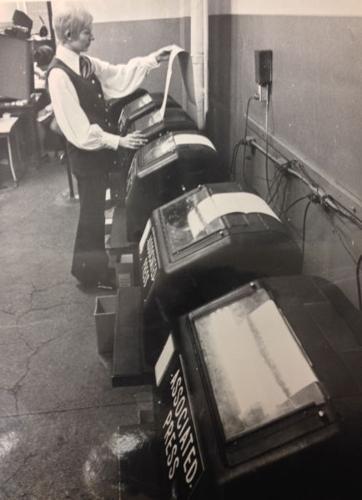
SIOUX CITY | Like washing machines gone haywire, the whirling wire machines rocked back and forth on spindly legs, spewing stories bearing faraway datelines.
London, Tokyo, New York, Paris, Moscow, Washington, D.C.
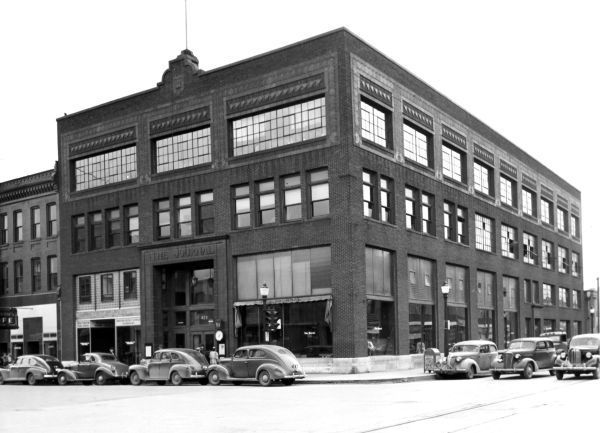
The narrow "wire room," where Sioux City Journal staffers of the mid-20th century could read stories typed in cities around the world by Associated Press correspondents, was just off the newsroom on the third floor of the old Journal building on the southeast corner of Fifth and Douglas streets.
Down the street was Grayson's men's clothing store. Across Douglas Street was the bus depot and the Stopover bar, attracting some of the night staff between late editions at midnight. Nearby was a Greek eatery. A block north, City Hall.
Gigi Goodson of Sioux City, grandniece of Journal publisher Elizabeth Sammons and granddaughter of Sammons' sister, Journal executive Louise Sammons Freese, recalled spending time looking at the telephone operator's board in the balcony. She also enjoyed peering through a peephole into the family's Perkins Bros. office supply store next door.
People are also reading…
The four-story structure was built in 1914 and was the Journal first building designed for a newspaper plant. The elegant, brick-faced building was designed by noted architect William L. Steele.
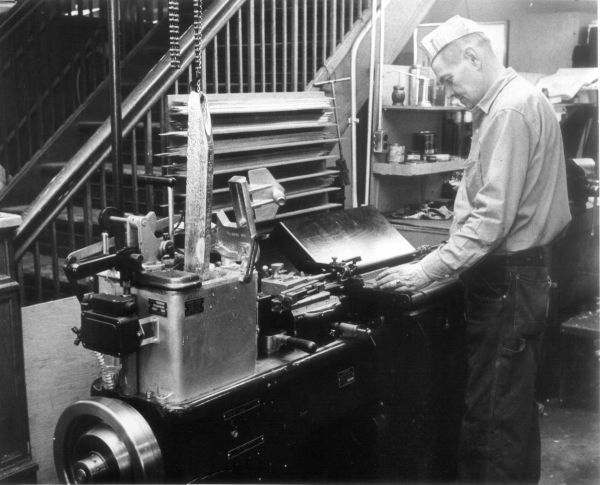
In 1958, a nearly $1 million remodeling project created the intermediate balcony floor from the two-story first floor that housed the advertising and circulation departments and resulted in other modernizations throughout the plant, including installation of the $500,000 Goss Headliner press.
What wasn't replaced was the old cage elevator that shook as it rose to each floor. More often than not, the elevator got stuck between floors.
The elevator was closed in the evenings, meaning employees in the newsroom, composing room, hot type, stereotyping and photoengraving departments and other technical staff had to walk up the steep staircase to reach the third floor.
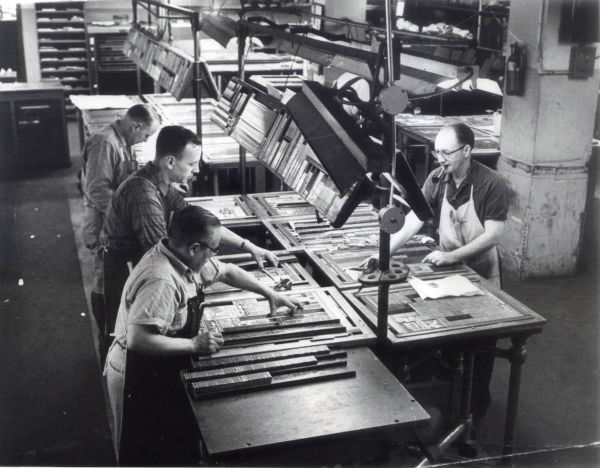
The newsroom was utilitarian -- gun-metal-gray metal desks and file cabinets, the "universal" curved desk, basic chairs and large, gooey rubber cement pots that were used to paste typewritten pages together. More than once, a reporter or copy editor on deadline accidentally stuck the glue brush in their coffee mug.
People stood along the Fifth Street sidewalk looking through large windows to watch the two-story presses roll. Their rumbling hum could be felt throughout the building.
Goodson said she and her three sisters also spent time visiting their grandmother Louise and Aunt Elizabeth in their Journal offices while waiting for a ride home with their parents, Ray and Julie Goodson, both Journal writers. The family sold the paper in December 1971 to the Hagedone Corp.
"When they started to tear down the building (in 1972), my mom saw there were lots of things that were going to be thrown away," she said. "My mom took home some of the ornate railing and marble. ... Gale (Goodson, her sister who lives in Spirit Lake, Iowa) and I have part of the staircase in our homes. Some pieces went to our lake home," she said of the longtime family place on West Okoboji Lake in Northwest Iowa.
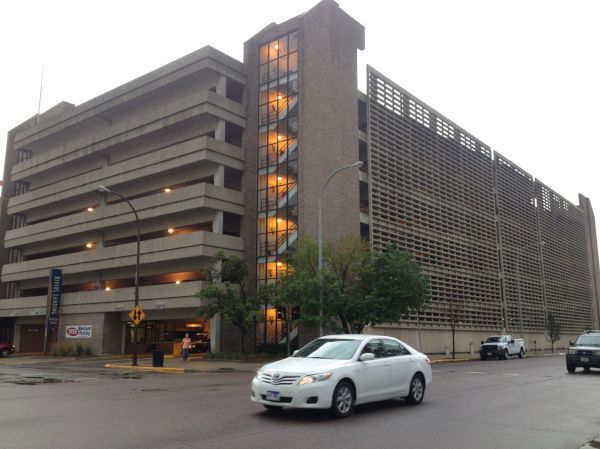
As part of the city's urban renewal project, the building was razed. Now, the city's River's Landing parking ramp stands in its place.


