


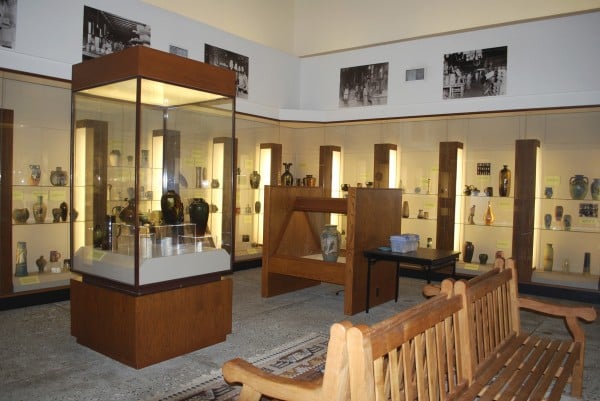
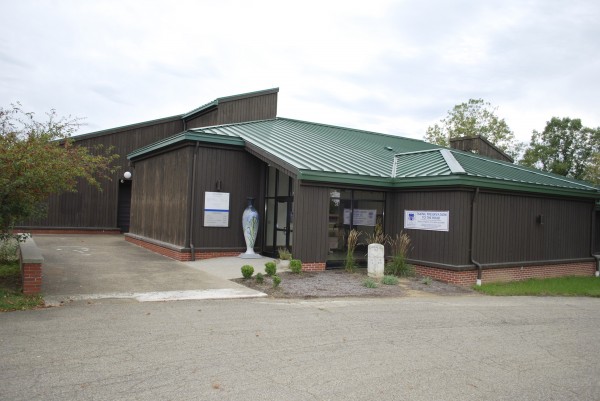
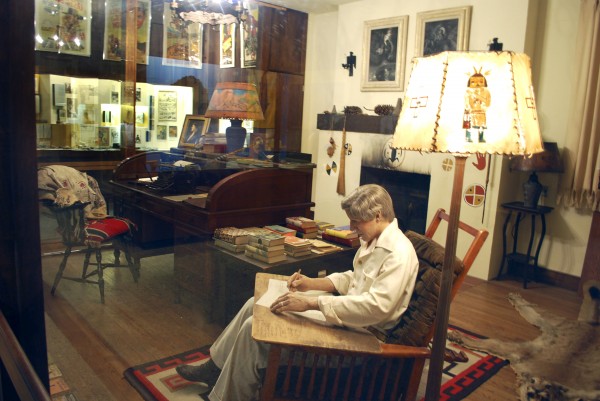
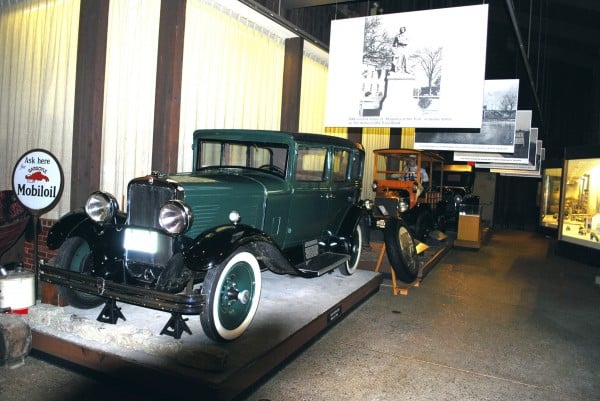
NORWICH, Ohio -- The National Road/Zane Grey Museum is actually three museums in one location. There's a section dedicated to the story of the National Road, which was called the "Main Street of America" and stretched from Baltimore, Md., to East St. Louis, Ill. Another portion of the museum tells the tale of one of America's favorite western writers and native Ohioan Zane Grey, who was known as the "Father of the Adult Western." The central portion of the museum building features Ohio art pottery which is an important part of the region's heritage.
The National Road was first envisioned by George Washington who saw the need for good roads for settlers on their way west. Prior to the construction of the National Road travelers made the trek westward following Native American trails that could be impassable in wet or winter weather. A new and better east/west road was desperately needed.
The National Road/Zane Grey Museum tells the story of how in 1803 an Act of Congress provided revenue for the road from the sale of land in Ohio. This new road would initially stretch from Cumberland in Maryland to Wheeling in what is now West Virginia. Later plans called for the road to be extended to East St. Louis, Ill. The National Road would become the nation's first federally funded interstate highway.
People are also reading…
Work on the new road began in 1811 and reached Wheeling in 1818. When complete it was known by several names: the National Road, the Cumberland Road and the National Pike. It was the first federally sponsored highway and featured several new innovations in road design including a 66-foot wide right-of-way. The road was 20-foot wide covered with 18 inches of crushed stone at the center, tapering to 12 inches at the edges using a design developed in Europe. Rivers and creeks were spanned by stone bridges and distances were marked by iron mile-posts.
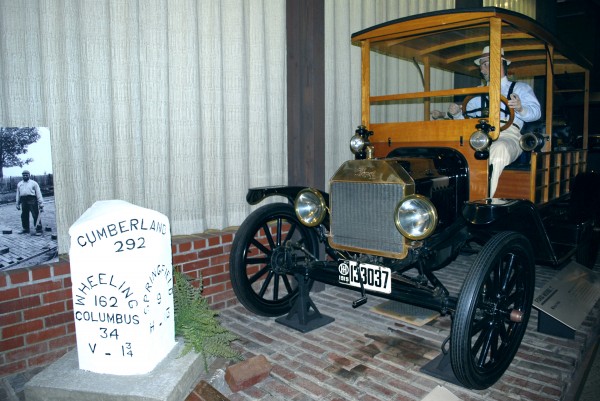
The museum has a collection of unique vehicles that first traveled the National Road including a Conestoga freight wagon and several antique cars. There's also a detailed diorama 136-foot long showing various sections and towns along the National Road.
Another portion of the museum is dedicated to prolific western writer Zane Grey who was born January 31, 1872, in Zanesville, Ohio. The town was founded by his mother's ancestors. Gray developed an early interest in fishing, baseball and writing. All three would shape his life to come. After high school he won a baseball scholarship to the University of Pennsylvania where he reluctantly studied dentistry, a course of study he pursued to please his father. He graduated in 1896 but instead of becoming a dentist Grey played baseball for a minor league team in Wheeling, W.V.
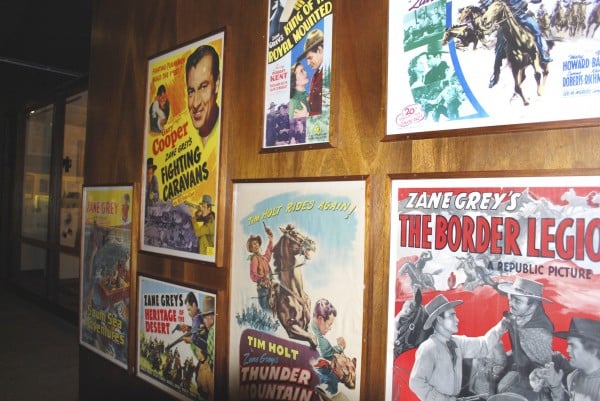
Although he occasionally practiced dentistry his real love was the outdoors and writing. He loved fishing and spent time in Lackawaxen, Penn., to fish the upper Delaware River. It was there he met and fell in love with Lina Roth. After their marriage in 1905 Lina helped her husband get his writing published and financed the printing of his first novel. After a hunting trip to Arizona Grey became interested in stories about the conquest of the Old West and in 1910 his first western, "Heritage of the Desert" became a best seller. His best known western novel, "Riders of the Purple Sage" was published in 1912. Zane Grey soon became one of the first millionaire authors.
He formed his own motion picture company Zane Grey Productions in 1919 but soon sold the company to Jesse Lasky who with his partner Adolph Zukor formed Paramount Pictures. Zane Grey's writings were made into 46 full length movies and 31 short subjects. His prolific writing career included 99 books, 196 magazine short stories and 59 stories published in serial form in magazines.
Zane Grey died October 23, 1939, at the age of 67 and is buried in Lackawaxen, Penn.
A central portion of the museum is dedicated to Ohio art pottery and shows the impact pottery artists had on the area. The southeastern portion of Ohio is rich in clay making it the ideal location for pottery. When the first settlers came to the area they set up small pottery operations in their backyards and sheds. The area would eventually become known as the "Pottery Belt" and the "Clay Corridor". The large collection in the Zane Grey/National Road Museum features work by artists from 1880 to today.


