


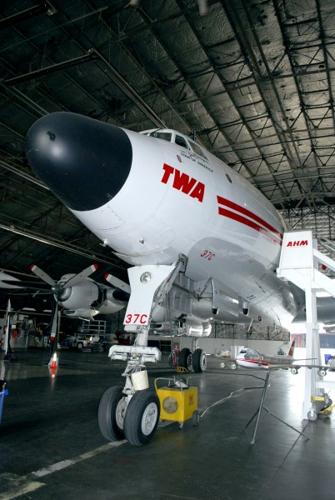
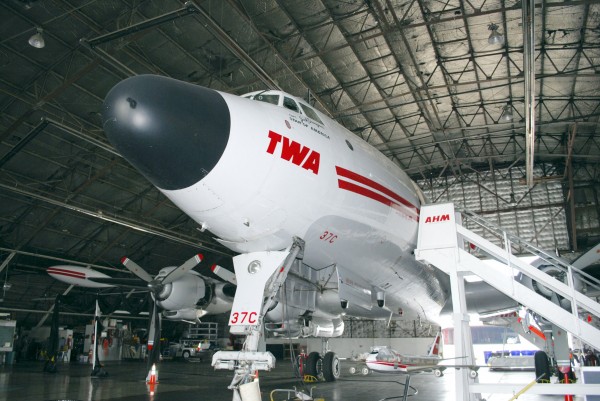
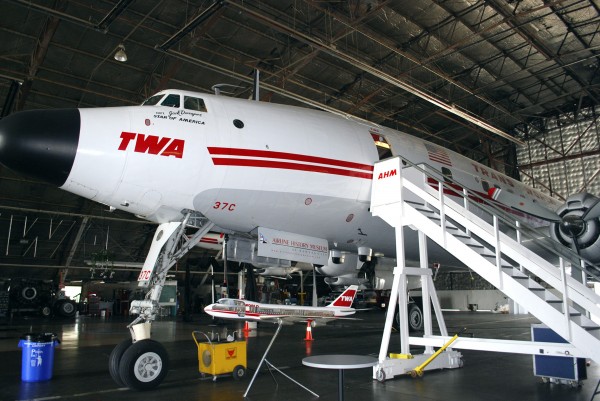
KANSAS CITY -- It was back in 1986 when a group of Kansas City aviation history buffs decided to take on the massive project of finding and restoring an airliner to like new condition. But it wasn't just any airliner they wanted to restore. They wanted an historic icon of the airline industry. They wanted a Lockheed Super G Constellation.
The original Constellation or "Connie" as it's affectionately known was developed in 1939 by Lockheed Aircraft from specifications provided by Trans Continental and Western Air (later known as TWA) and one of its major stockholders Howard Hughes. TWA wanted an airliner capable of carrying 20 passengers in sleeping berths or 44 passengers in normal seating. The plane with its unique triple-tail design had to carry 40 passengers and have a 3,500 mile range. The Connie was a propeller-driven airliner powered by four 18-cylinder radial Wright R-3350 engines.
In addition to being an airliner the Constellation also served as a U.S. military transport plane and was used extensively during the Berlin Airlift. President Dwight D. Eisenhower used a Constellation as his presidential aircraft.
People are also reading…
After a long search the group known as the "Save A Connie" organization found a somewhat dilapidated Constellation sitting at Falcon Field in Mesa, Ariz. The Connie had been sitting in the desert sun for 9 years after being used as a bug sprayer in Canada. It took nine weeks of hard work by volunteers but then the plane was ready to once again take to the skies at least for one flight to Kansas City. The Connie arrived on July 15, 1986, after navigating by compass and following roads from Arizona to Kansas City. Then an 18-month restoration brought the plane back to better than new condition. Part of the restoration was to convert the Connie from a transport to a passenger plane. Once the restoration was complete the Connie went on the air show circuit and thousands of people were able to see this flying piece of aviation history.
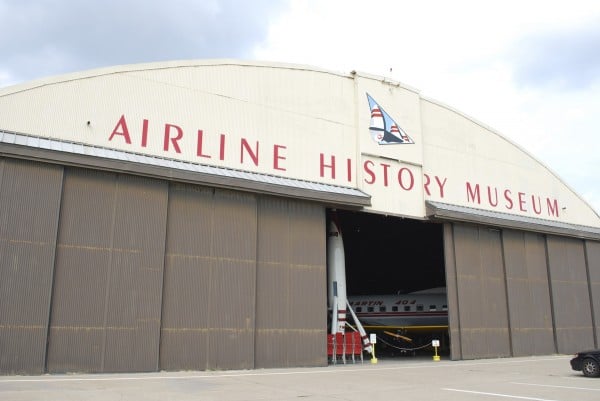
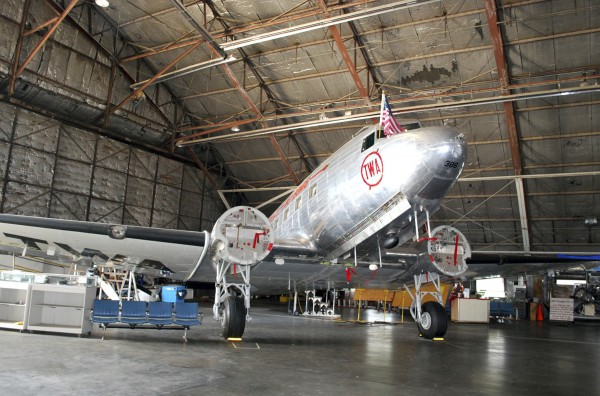
Today when not touring the country for air shows the Connie is the centerpiece of the National Airline History Museum in Kansas City. But it is not the only plane or artifact in their collection. Also on display in the hangar is a smaller TWA airliner the Douglas DC-3 that was built in 1941 and was once based at the Kansas City Airport. A Martin 404 airliner used by TWA and Eastern Airlines is in the hangar while a Lockheed L-1011 Tristar is on the ramp. The museum plans on using the Tristar as a classroom to teach school groups about the history of airlines in the U.S.
One very unique artifact on display in the hangar is the TWA Moonliner. In 1956 TWA became a corporate sponsor for Disneyland's TWA Moonliner attraction in Anaheim, CA. The Moonliner was designed to show what a TWA atomic-powered spaceliner would look like in the far distant future of 1986. Howard Hughes had a 22-foot reproduction of the Moonliner rocket ship known as Moonliner II built and installed on top of the TWA Corporate Headquarters' building in downtown Kansas City. Then when Disney and TWA ended their partnership in 1962 the Moonliner II reproduction was sold and spent time rusting away sitting next to a campground near Interstate 70 between Kansas City, Mo., and St. Louis. Then in 1997 a Colombia, Mo., lawyer who was an avid Disney collector purchased Moonliner II and restored it back to its 1956 condition and it is now on loan to the National Airline History Museum.
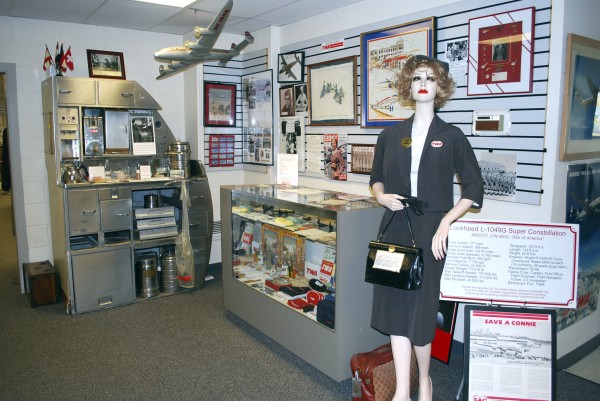
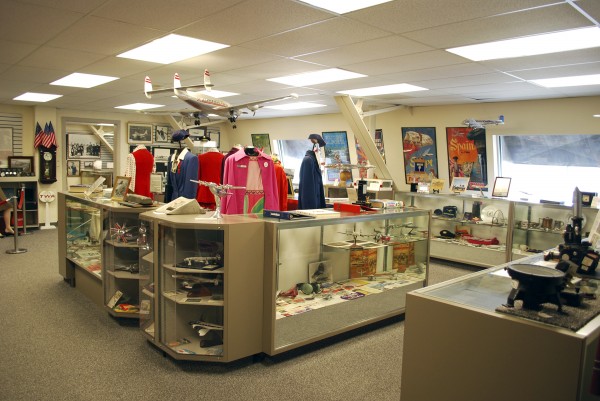
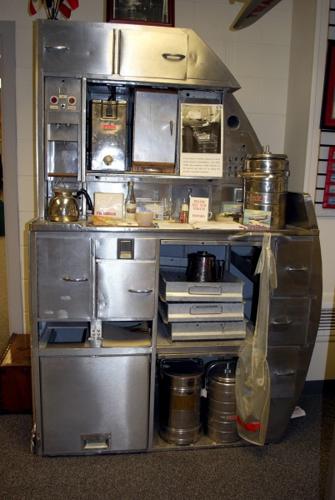
Several rooms inside the hangar are filled with artifacts relating to airline history. Those artifacts include uniforms worn by pilots and airline crews, historic photos, advertising posters and even a kitchen once used on an airliner.


