


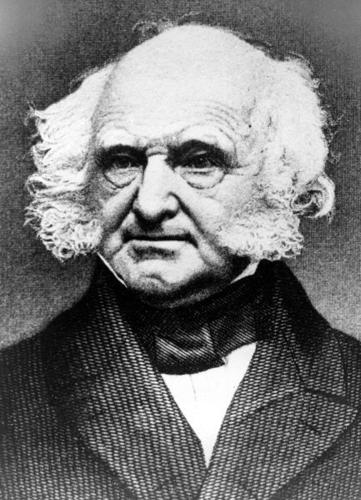
KINDERHOOK, N.Y. | Martin Van Buren was born in what was once called, "Old Kinderhook" and got the nickname "OK." He was later dubbed "The OK President" and some historians attribute the use today of the term OK to come from that.
Our eighth president was by all accounts a shrewd politician who laid the foundation for the Democratic Party.
Van Buren was born Dec. 5, 1782, in Old Kinderhook, N.Y., to Abraham and Maria Van Buren. His father was a farmer who also ran a tavern where young Martin was introduced to lively discussions on politics. His father couldn't afford to send him to college but did manage to get his son an apprenticeship with a lawyer. Van Buren studied law and was admitted to the bar in 1803 and then began his own practice.
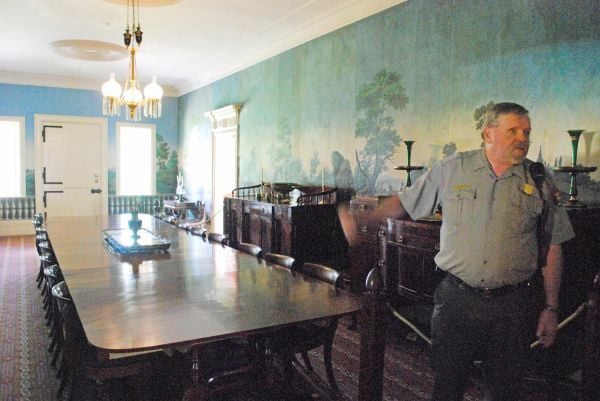
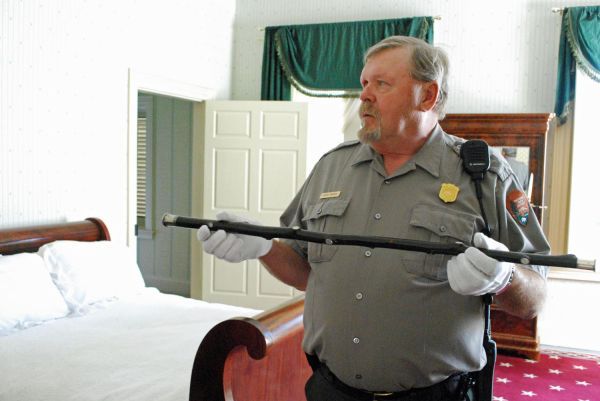
Dennis Andrews, a National Park Service ranger and tour guide at the Martin Van Buren home in Kinderhook, said Van Buren married his cousin Hannah Hoes in 1807. "They had four children," said Andrews, "and two of them served in the president's cabinet."
People are also reading…
Shortly after his marriage, Van Buren became more involved in politics and in 1812 was elected to the first of two terms in the New York State Senate. In 1815 he was appointed as New York's attorney general. It was during this time he proved himself to be an adept politician.
Just as Van Buren was finishing his second term, his beloved wife Hannah died of tuberculosis. In spite of his personal tragedy, he continued to pursue his political goals and in 1821 was elected to the United States Senate. After John Quincy Adams became president in 1824, Van Buren -- along with Andrew Jackson, William Crawford and John Calhoun -- got together to form a new political party based on the idea of limited government. This would eventually evolve into the Democratic Party.
In 1828, Van Buren was elected governor of New York and gave up his Senate seat. A few months later, he left that position when President Andrew Jackson appointed him as his secretary of state. Later Jackson reorganized his cabinet and appointed Van Buren as minister to Great Britain.
When Jackson ran for a second term he selected Van Buren as his running mate. Jackson and Van Buren won the election and in 1835 at the end of Jackson's term, Van Buren was nominated for president and won the election in 1836, becoming the eighth president of the United States. However, he failed to win a bid for a second term.
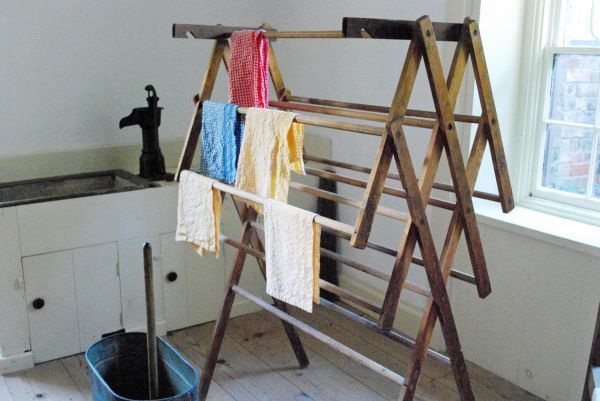
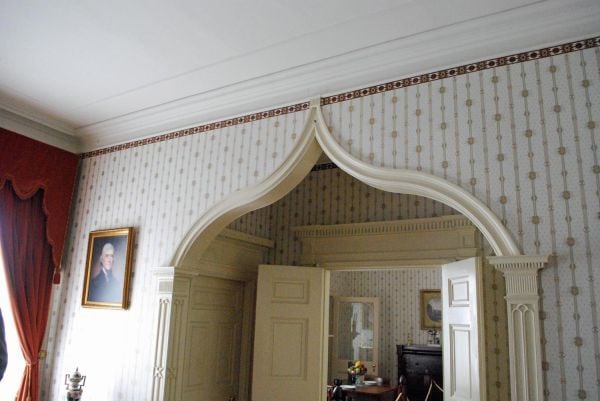
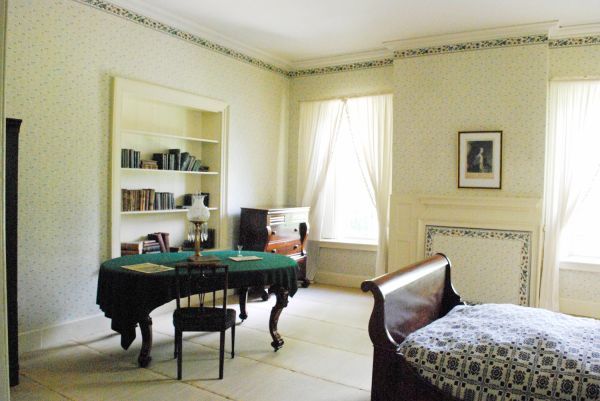
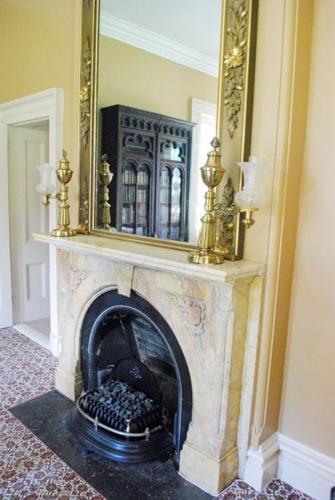
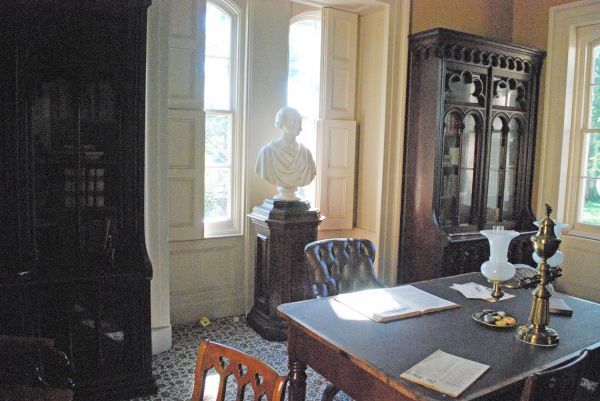
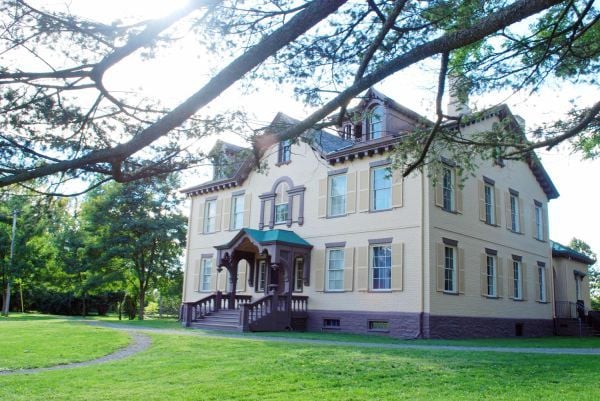
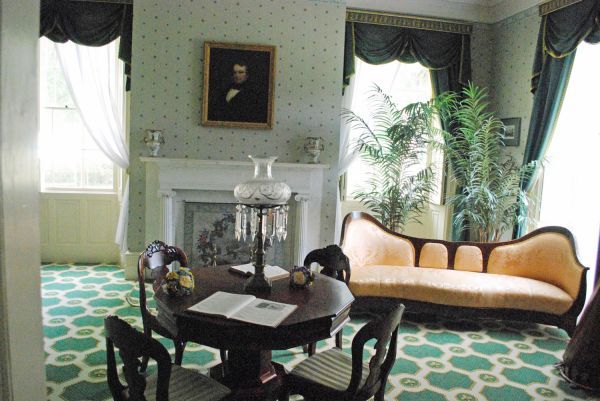
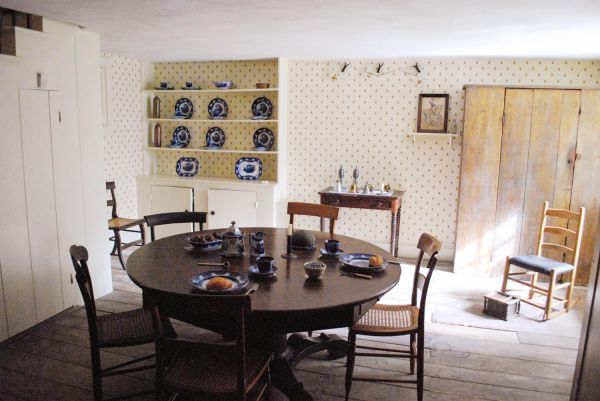
After retiring from politics, Van Buren returned to Kinderhook and moved into a 36-room mansion he named Lindenwald. The National Park Service now owns and operates the home situated on 40 acres. The house has been meticulously restored to its 1800s condition said Andrews. "The dining room has the original wallpaper and many of the furnishings in the house are original."
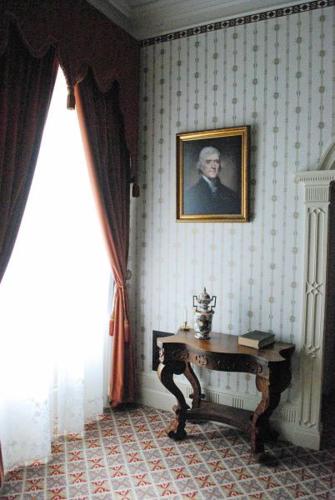
Andrews said Van Buren lived in the house from 1841 until his death in 1862. The two-story brick home was built in 1797 and had several owners before Van Buren bought it. Van Buren made many improvements to the home including having 51 colored wallpaper panels from France installed to create a mural hunting scene in the dining room and main hall. It was the dining room where much of the business of the new Democratic party was conducted. He also hung portraits in the house of some of his personal friends including Thomas Jefferson, Henry Clay and Andrew Jackson.
Today visitors can see the house as it was when Van Buren lived there. The first stop is the visitor's center which is a small building not far from the house where tickets can be purchased for a guided tour by a knowledgeable park ranger.
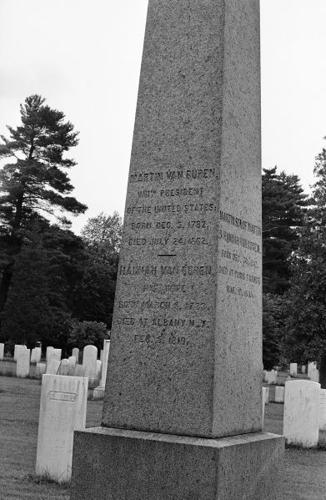
Visitors can also drive a short distance to the Kinderhook Dutch Reformed Church Cemetery where Van Buren along with his wife Hannah, his parents and his son Martin Jr. are buried. The cemetery was founded in 1817 and is located on Albany Avenue in Kinderhook.


