


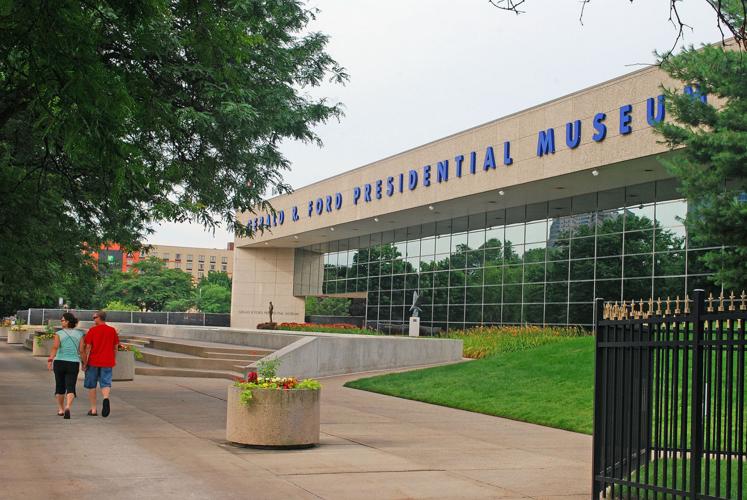
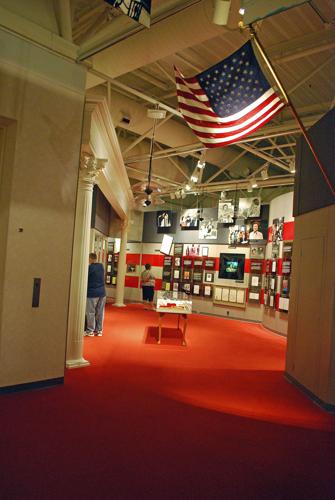
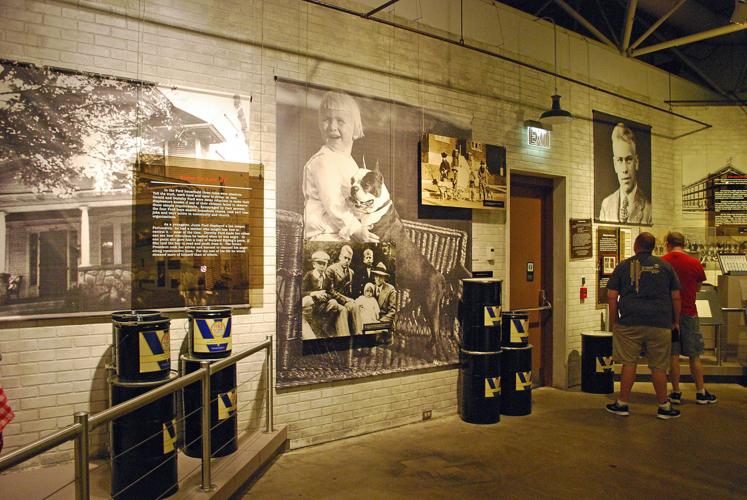
GRAND RAPIDS, Mich. | The Gerald R. Ford Museum not only tells the story of our 38th president, it also profiles an exciting and turbulent time in our nation’s history. Those stories are told through artifacts from the period, exhibits of actual events and interactive displays.
The future president was born July 14, 1913, in Omaha, Nebraska. He was born Leslie Lynch King Jr., but just weeks after he was born his mother, Dorothy Ayer Gardner, took him to her parents' home in Grand Rapids to escape her abusive husband. Within a year the couple divorced.
Less than three years later she married Gerald Rudolff Ford, a local paint company salesman. Growing up, Leslie Jr. began using his stepfather’s name and made it legal when he was 22. Ford didn’t know his biological father until he was 17 and that meeting only lasted a few tense minutes.
Gerald Ford excelled in sports and became captain of his high school football team. He continued playing football at the University of Michigan and was offered a position on both the Detroit Lions and Green Bay Packers NFL teams. Ford decided instead to continue his education at Yale University where he attended law school.
People are also reading…
Gerald Ford got his start in politics in 1940 as a volunteer for Wendell Wilkie’s presidential campaign, and attended the Republican Convention that year in Philadelphia. A year later, he graduated from Yale Law School in the top third of his class. He then returned home to Grand Rapids and became involved in local politics.
Shortly after the United States entered World War II, Ford put his law career on hold and enlisted in the Navy. His college experience as a coach and trainer allowed him to become an instructor in the Navy’s V-5 aviation cadet program. He taught elementary seamanship, ordnance, gunnery, first aid and military drill. In addition, he coached in all nine sports that were offered, but mostly in swimming, boxing and football.
Ford applied for sea duty and was stationed on the aircraft carrier USS Monterey and served as assistant navigator, athletic officer and antiaircraft battery officer. While he was on board, Monterey participated in many actions in the Pacific with the Third and Fifth Fleets during the fall of 1943 and in 1944.
After the war, Ford returned to Grand Rapids and resumed his law career and continued to be involved in local politics. In August 1947, Ford met his future wife, Elizabeth (Betty) Bloomer Warren, a former model and dancer with Martha Graham’s company in New York.
It was at this time Ford decided to run for Congress to represent his Michigan district. Then in October 1948, after winning the election, he and Betty were married and moved to Washington D.C., where they would remain for the next 30 years.
The young congressman worked tirelessly on foreign policy, military programs, the space program and the Warren Commission that investigated the Kennedy assassination. Ford became the House minority leader. But his dream to be speaker of the House seemed impossible, and he contemplated retirement after his 13th term in the House was over in 1976.
But when Vice President Spiro Agnew resigned on Oct. 10, 1973, under allegations of income tax evasion and bribery, Ford’s life quickly changed. President Richard Nixon nominated Ford to replace Agnew, and in two months he was sworn in as the nation’s 40th vice president.
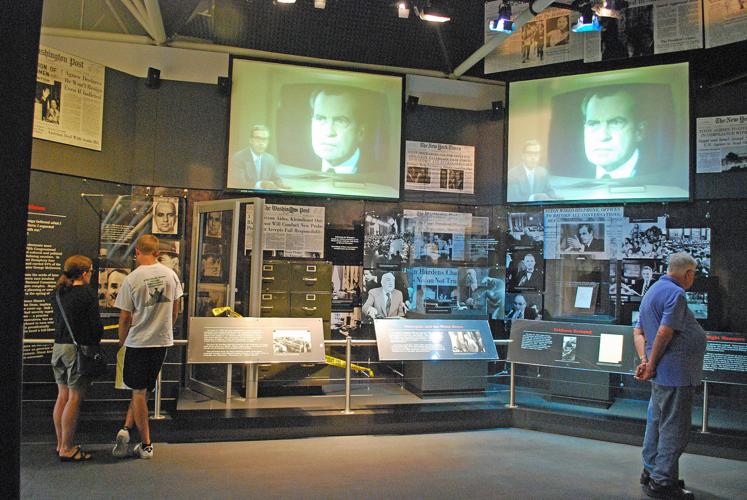
The following year, Nixon’s involvement in the Watergate scandal began to surface and ended with his resignation on Aug. 8, 1974. The next day Ford was sworn in as the 38th president of the United States. When he took the oath of office Ford said, “I assume the presidency under extraordinary circumstances.... This is an hour of history that troubles our minds and hurts our hearts." He not only became the first vice president chosen under the terms of the 25th Amendment but he succeeded the first president ever to resign.
His presidency was clouded by both political and personal trials. A month after assuming office, Ford pardoned Nixon, which cast a shadow over his reputation for integrity. That same month, Betty Ford was diagnosed with breast cancer and later had a radical mastectomy.
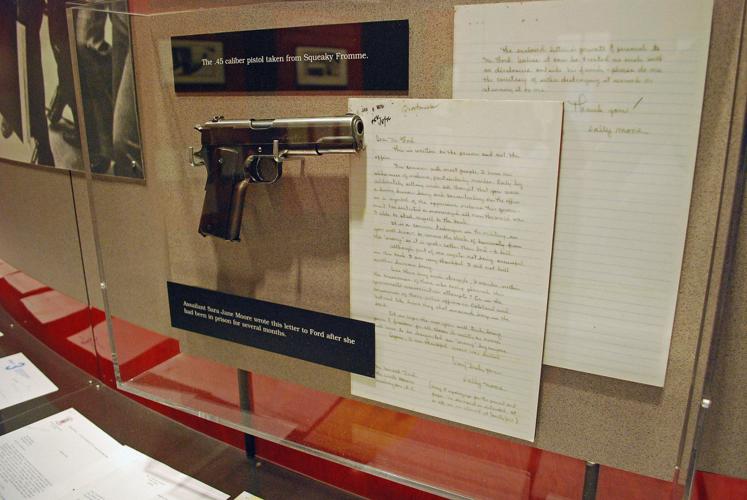
His early presidency was filled with turbulence, highlighted by a failing economy that included an almost bankrupt New York City. During that period foreign relations were rocky at best and an energy crisis almost crippled the nation. To make matters even worse, two attempts were made on his life by Lynette “Squeaky” Fromme and Sara Jane Moore.
Ford was the first U.S. president to visit Japan, but he’s often remembered as clumsy and because of it was parodied many times by Chevy Chase on "Saturday Night Live." He ran for re-election in 1976 but was defeated by Jimmy Carter.
Gerald Ford died on Dec. 26, 2006, at his home in Rancho Mirage, California, at the age of 93.
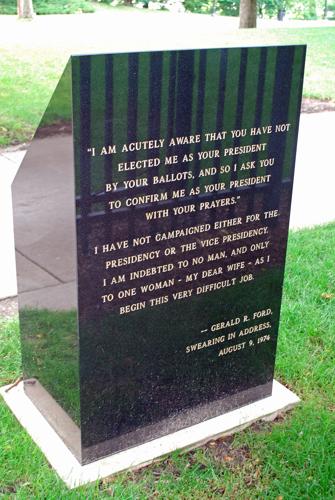
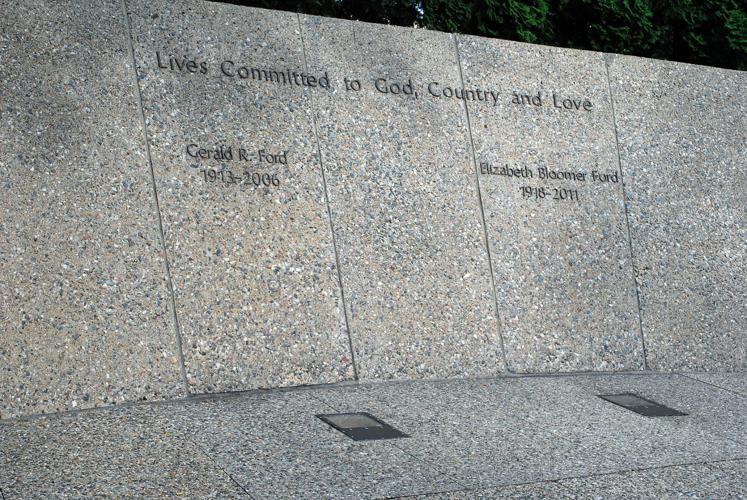
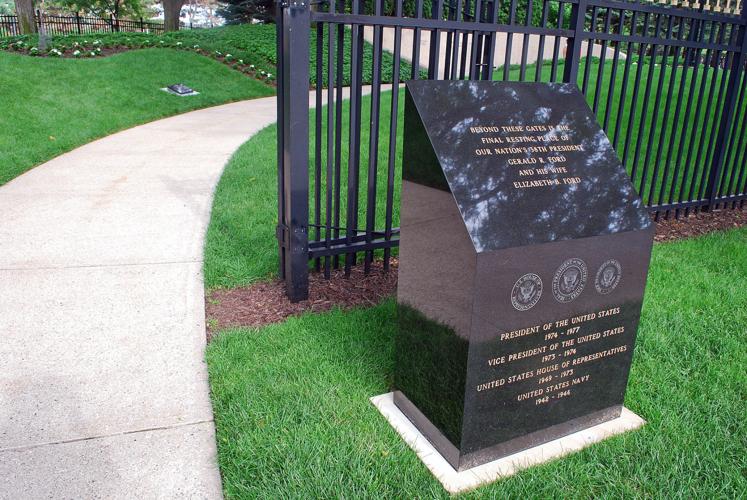
Before entering the Gerald R. Ford Museum, visitors pass by the final resting place for President and Mrs. Ford. A large granite marker has a portion of President Ford’s swearing-in address that states in part, “I am acutely aware that you have not elected me as your president by your ballots, and so I ask you to confirm me as your president with your prayers.”
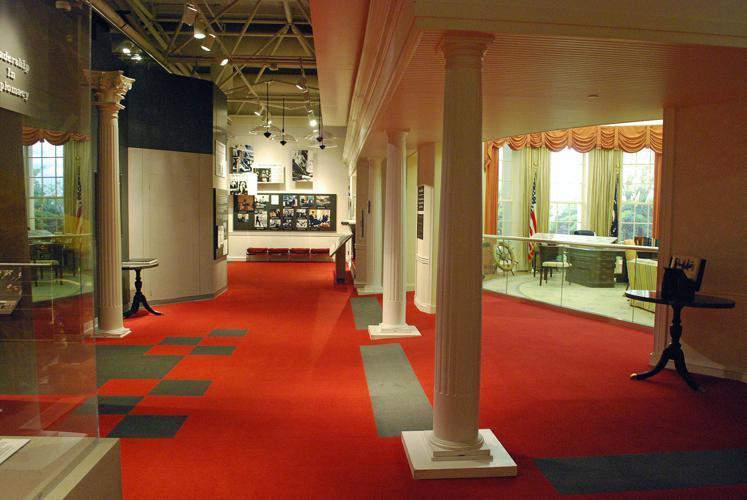
The museum galleries feature hands-on, interactive, video and holographic displays that include a look at Gerald Ford’s life as a boy growing up in Grand Rapids, his college years, his military career during WWII and his presidency. One gallery shows life in the turbulent time of the 1970s, including video and sound from news events and memorabilia like platform shoes, tie-dyed clothes, bell bottom jeans and love beads.
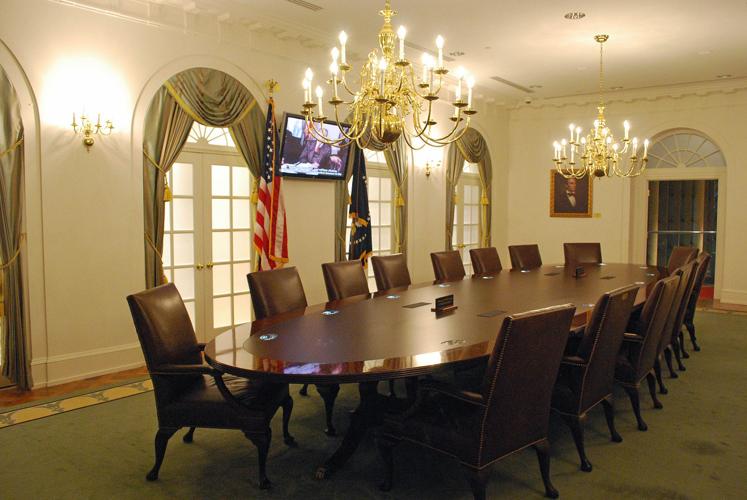
The presidential portion of the museum includes an interactive replica of the Cabinet Room. Visitors are invited to sit at the cabinet table and imagine what it must have been like to be a part of the Ford administration while watching videos of three major events discussed by the president and his cabinet.


