


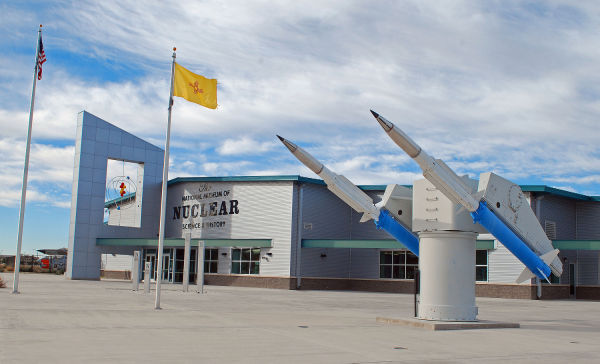
ALBUQUERQUE, N.M. | The National Museum of Nuclear Science and History is dedicated to saving and displaying the history of the Atomic Age.
The museum had its start in a vacant building on Kirtland Air Force Base in Albuquerque in 1969. The museum opened as Sandia Atomic Museum, was staffed by Air Force personnel, and received help from Sandia National Laboratories. In 1973, the Museum name changed to the National Atomic Museum.
After 9/11, all military bases in the U.S. increased security and limited access to civilians. Because of that, the museum moved to a former store in Albuquerque’s Old Town District, but there was no space for large outdoor displays. The museum moved to its current nine acre location on April 4, 2009, under the new name of the National Museum of Nuclear Science and History.
Just outside the museum is an imposing 69-foot-tall Redstone missile designed and built for the Army as a surface to surface weapon. Entering the museum visitors know at once they are in a science museum when they walk on a tile floor that’s inlaid with the Periodic Table of Elements. Continuing on into the building are 13 permanent exhibit areas and a gallery for temporary exhibits and displays.
People are also reading…
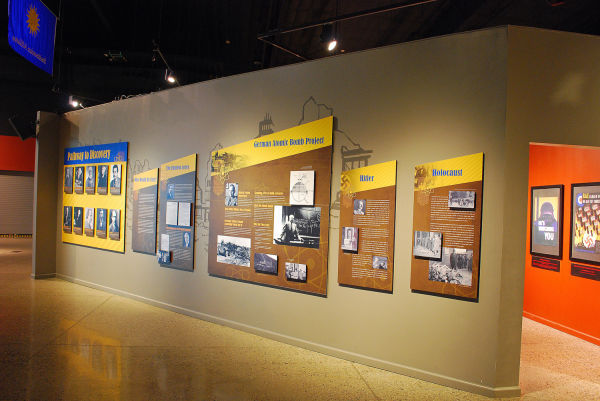
The displays begin with the earliest attempts to understand the atomic structure of matter and the elements. There are biographical sketches of nuclear pioneers such as Marie Curie who because of her research into radioactivity was awarded the Nobel Prize. Curie was the first woman to win the Nobel and the only person to be awarded the prize twice. Sadly Marie Curie was also one of the first to die after repeated exposure to radiation.
Another exhibit about the history of nuclear science details the development of the first atomic bomb. It was shortly after Hitler invaded Poland on Sept. 1, 1939, that the Germans began working on developing an atomic bomb. On Oct. 11, 1939, President Franklin Roosevelt received a letter from Albert Einstein who told the president he thought it would be possible to build extremely powerful bombs using nuclear fission.
The president realized the United States needed to develop such a weapon before Germany or Japan. The result was the Manhattan Project, a top secret operation carried out at 30 different research and production sites in the United States. The main locations were Hanford, Wash.; Oak Ridge, Tenn.; and Los Alamos, N.M. The test site for the new weapon was a desolate area near Alamogordo, N.M., code named “Trinity”.
The first test of a nuclear weapon was on July 16, 1945. The bomb was named “Gadget”. The explosion created a crater 2,400 feet in diameter and was equivalent to about 20,000 tons of TNT. No further tests were made.
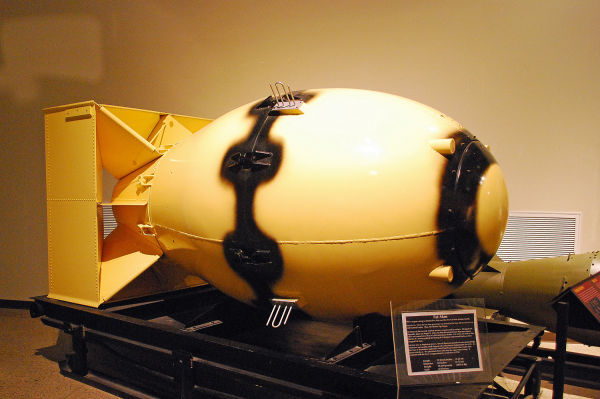
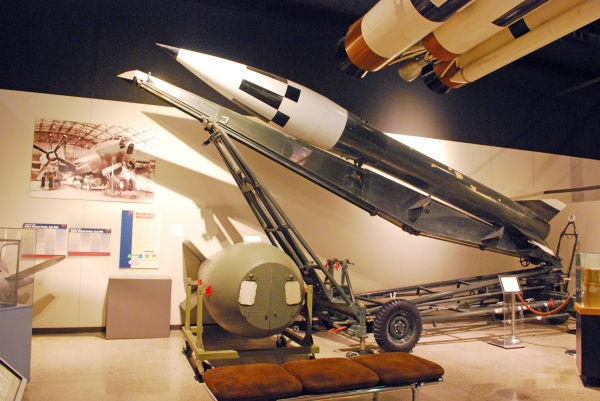
The second bomb known as “Little Boy” was detonated over the city of Hiroshima and the last called “Fat Man” exploded over the city of Nagasaki in August 1945. The museum has replicas of all three bombs on display. Although the Manhattan Project produced the most destructive weapon known to mankind, it also provided the scientific knowledge for peacetime uses of nuclear power.
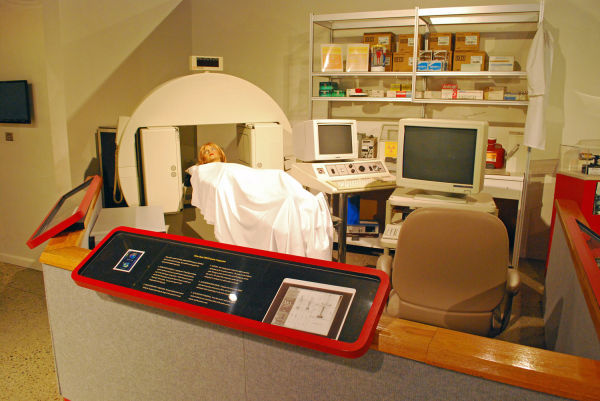
The museum has displays on the history of those peacetime uses including a scale model of the Palo Verde Nuclear Generating Station near Tonopah, Ariz. The displays show how the reactors work and the many uses of alternative energy in today’s world. Another display is a model of NS Savannah, the first nuclear powered merchant ship.
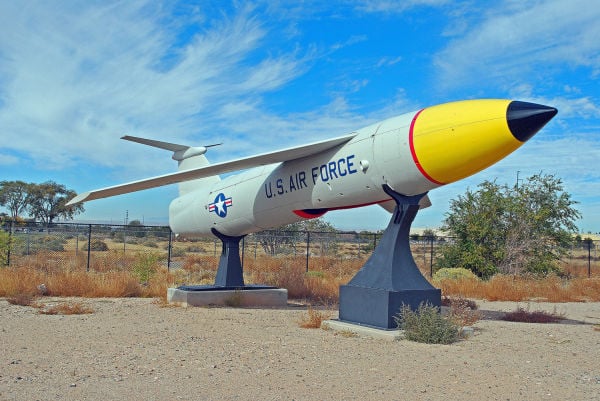
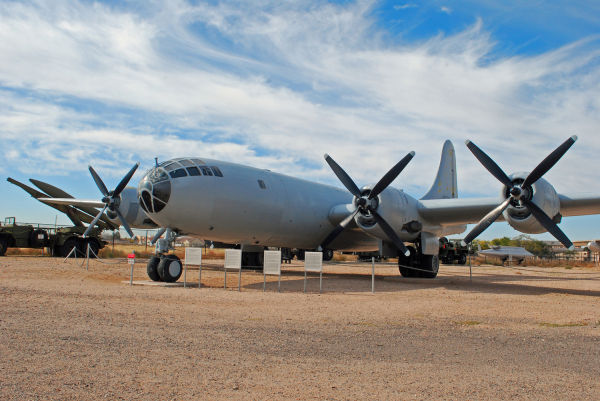
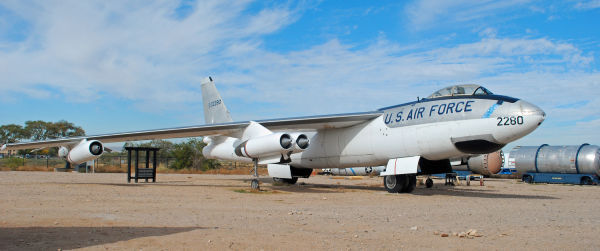
Outside the museum are full-size airplanes and missiles many of which were used to carry nuclear weapons. Airplanes on display include a Navy A-7 Corsair II, a B-29 Superfortress, a B-47 Stratojet, a B-52B Stratofortress, a F-105 Thunderchief and an F-16 Fighting Falcon.
Also outside are several missiles including a Nike Hercules Air Defense Missile, a Bomarc Air Defense Missile, a Thor Missile and many others.


