


BENTON, Ill. - Back during the days of prohibition this small town in southern Illinois was the last stop for gangster Charlie Birger and several members of his infamous mob. Birger met his fate on the gallows behind the jail in Benton.
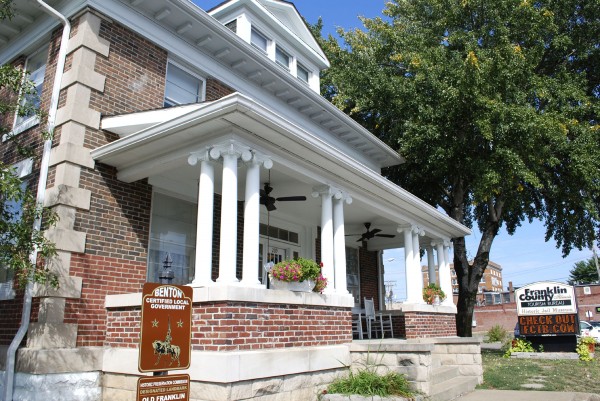
That jail built in 1905 has been beautifully restored with the exception of the cell area and is now home to the Franklin County Tourism Bureau and museum. The museum has artifacts and displays relating to the crime-filled life of Charlie Birger as well as memorabilia dealing with other famous Benton residents actor John Malkovich and former professional basketball player and coach Doug Collins. Also on display are artifacts relating to Civil War General John A. Logan who was a prosecuting attorney in Benton before the war. Benton also has a connection to the Beatles’ George Harrison which is detailed in a display on the second floor of the museum.
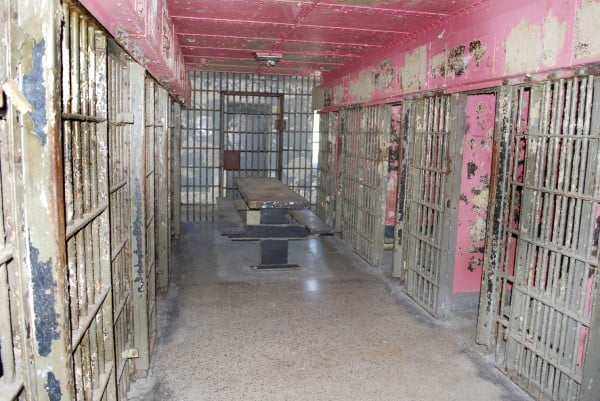
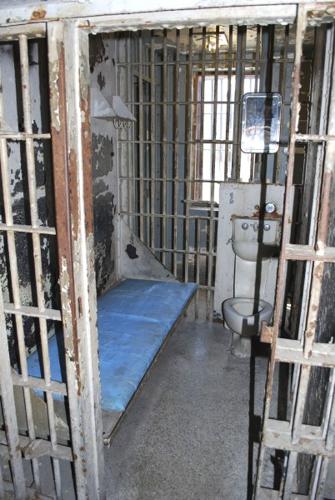
But it’s gangster Charlie Birger who dominates the displays in the museum. Visitors can walk through the cell area where Birger and his gang were incarcerated and see a recreation of Birger’s cell complete with phonograph and a wicker basket similar to the one in which his body was placed after hanging.
People are also reading…
To some people Charlie Birger was a caring person who made sure his neighbors had enough coal and food but to many others he was a cold-blooded killer who is believed to have murdered 10 men in the span of five years.
Birger was a Russian emigrant who was once a newsboy selling papers on the streets of St. Louis. As a young man he was a boxer and later broke horses in the West.
When Prohibition became law in the U.S. Birger decided to go into business selling illegal booze and set up his headquarters in Southern Illinois. After being asked to leave Saline County for his unlawful activities Birger moved his operation into Williamson County where he opened a speakeasy called the Shady Rest. It was there Birger and his gang established their bootleg liquor and gambling operation. The Shady Rest also became a safe haven for rum runners and others seeking refuge from the long arm of the law.
Local legend tells about the time a rival gang used an airplane to drop a dynamite bomb on the Shady Rest. It turned out to be a dud and no damage was done but residents of Benton like to say it was the first instance of aerial bombing in the United States.
Rival gangs and the police were not all Birger and his associates had to deal with. In the 1920s the Ku Klux Klan supported prohibition. In April 1926 Birger and another gang, the Shelton Brothers joined forces to attack Klan leaders in Herrin, Il. During the bloody battles that followed the police looked the other way and Klan member’s deaths were ruled as homicides by “parties unknown”.
Once the Klan was taken care of the two gangs went back to fighting each other. As part of their arsenal of weapons both the Birger and Sheldon Brothers gangs had tanks which were trucks converted into armored vehicles. When Birger heard the Sheldon gang’s tank was in for repairs at Joe Adams’ Garage in West City, Ill., Charlie and some of his gang paid Joe Adams a visit demanding he turn over the Sheldon Brother’s tank to him. Adams refused and was later gunned down.
In June 1927 Charlie Birger and two of his men were arrested for the murder of Joe Adams. Since he’d been arrested many times before and released in a few days Birger didn’t resist. He may not have realized he was being arrested and would be held in Franklin County where he had no influence. Birger and his two accomplices were convicted of the killings but only Birger was sentenced to hang for the crime.
It was on April 19, 1928, that Charlie Birger made that long, last walk to the gallows behind the jail in Benton. At his request a Rabbi accompanied Birger on that walk. Birger jokingly asked to be buried in a Catholic cemetery saying, “The Devil wouldn’t be looking there for a Jew.” His final words were, “It’s a beautiful world.” Charlie Birger is buried in Chesed Shel Emeth Jewish Cemetery in the University Park area of St. Louis, Mo. The marker bears his full legal name of Shachna Itzik Birger.
Inside the jail museum visitors can look into Birger’s cell and see the window where he reportedly yelled to the men building his gallows to “build it strong, boys.” A replica of the gallows is there today.
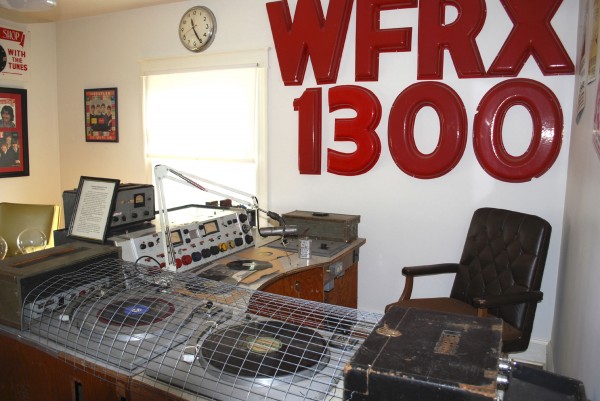
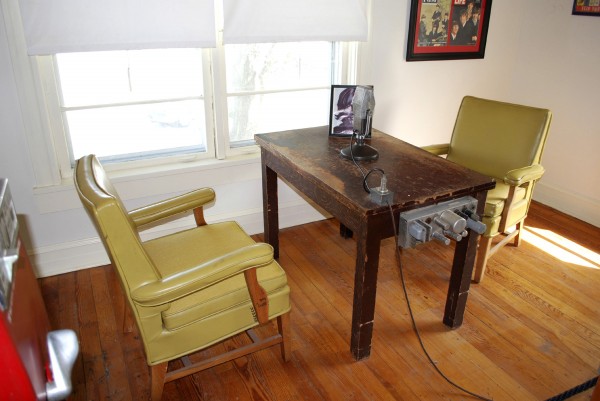
Other displays in the museum include one dedicated to former Beatle George Harrison. In September 1963 Harrison visited his sister Louise in Benton. Harrison had sent his mother a copy of the group’s first single titled, “From Me to You” and his mother sent it to Louise who managed to get Marcia Schaefer, a teen-ager whose father co-owned WFRX in nearby West Frankfort to play the song on her radio show for teen-agers in the summer of 1963. That was the first time a Beatle record was played on a U.S. radio station. When Harrison was in Benton he stopped by the station to meet Schaefer and was interviewed on WFRX. Sadly for Schaefer and Beatles’ fans everywhere that interview was not recorded. The radio equipment in use at the time is now on display in the museum along with the table where Harrison sat. It was just five months later in February 1964 that the Beatles debuted on American television on the Ed Sullivan Show.


