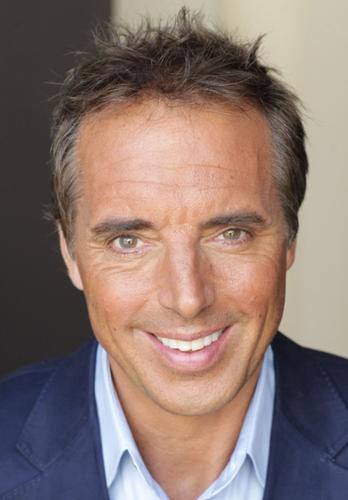




SIOUX CITY | Dan Buettner often asks an odd question of people when speaking about health. "Does your employer offer a shower facility for employees?" he says.
It's direct, simple and seemingly easy to address. It can also result in a healthier workplace and community.
"Having a shower facility on-site encourages workers to at least consider biking to work," says Buettner, a National Geographic Fellow and New York Times best-selling author who created Blue Zones, a company that puts the world's best practices in longevity and well-being to work in peoples' lives.
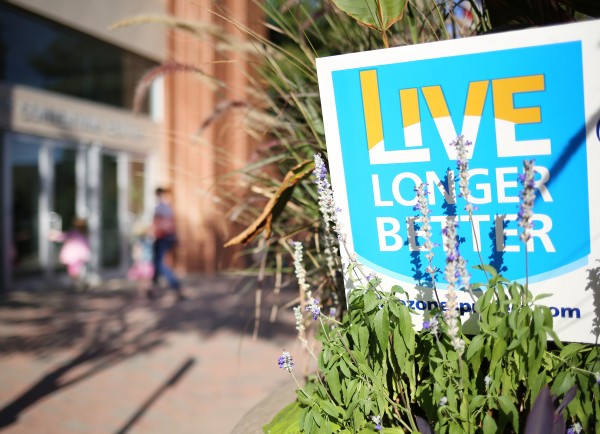
Sioux City this year was named a Blue Zone site, the sixth city in Iowa to earn the designation, part of Iowa's Healthiest State Initiative. There are 19 such designated sites across Iowa. Buettner has visited Sioux City on a couple of occasions, the latest as keynote speaker for the Blue Zones kick-off event.
People are also reading…
Buettner doesn't focus on exercise for exercise's sake. Rarely will he harp on getting off the couch and dieting. The path to healthier living, rather, focuses on engineering activity back into one's life.
"Do you own a bike?" he asks, following that with another question: "Does your employer say to you: We'll give you a break on your insurance if you bike'?"
Buettner doesn't simply see healthier workers as happier and more productive. He sees bulging waistlines and blood pressure readings as a matter of our country's safety.
"When I got into this, I was like a lot of others, oblivious to the ticking time bomb that is health care in America," he says. "It's a matter of national security. You have too many obese kids kids to send into our military; we're spending political and economic might on dialysis machines for 50 percent of the U.S., which will be diabetic.
"Heart disease and cancers adjusted for age are not going down," he adds. "They all make us a weaker country."
Buettner's work with National Geographic took him around the world, allowing him to see various cultures whose way of life -- and life expectancy -- contrasted those found around the country. On the Grecian island of Ikaria, for example, Buettner found Stamatis Moraitis, who came to the U.S. after surviving a gunshot wound during his service in World War II.
Moraitis was given nine months to live in 1976 after doctors discovered he had lung cancer. Rather than stay in the U.S., Moraitis went "home" to die at Ikaria. Moraitis began eating fresh vegetables; he walked; he drank wine and he reconnected with his extended family. He soon planted his own garden, something most residents do on Ikaria. He breathed in the ocean air and got better. At their last visit, Buettner saw a happy and healthy 97-year-old Moraitis (although Moraitis claims he's 102) who has never taken drugs or gone through chemotherapy of any sort.
"All he did was move home to Ikaria," Buettner writes.
That island and several pockets around the world feature men and women who seem to outlive everyone else. Buettner found similarities in their cultures; they're active, their diets feature lots of vegetables, an assortment of wines, goat's milk, herbs and honey.
People in these "Blue Zones," he called them, often don't consume themselves with material possessions and deadlines. On Ikaria, for example, hardly anyone wears a watch. They don't rise with an alarm clock each morning, they get up when their eyes open. They also nap daily.
"None of these people tried to live to 100," says Buettner, 53. "The longevity happened."
The key is to apply some of those principles to our lives here. Buettner's first "Blue Zone" community was Albert Lea, Minn., not far from his residence in the Twin Cities. Four years ago, citizens in Albert Lea applied "Blue Zone" concepts of healthier eating and infused activity in their lives. The result? Life expectancy rose while health care costs sank 40 percent.
Diet is a key focus, but not the end-all/be-all. Again, Buettner says it's all about eating smarter.
"If schools in a community say there is no eating in classrooms and hallways, that will lower BMI (body mass index) by 11 percent because you're cutting out eight hours that kids can snack," he says. "If you don't allow it, they won't be eating candy and Doritos all day."
In Mason City, Iowa, for example, the schools celebrate birthdays one day per month, rather than having treats being handed out every day a child celebrates a birthday.
Twenty-percent of the choices in vending machines, he asserts, should feature fruits and nuts. Water faucets in parks and public buildings should work. Vegetables and healthier eating options should be made readily available in grocery stores and restaurants.
"Instead of beating the dead horse of individual responsibility and telling people for the 15,000th time to get off the couch, we aim to set up an environment so that the healthier option is easier," he says.