


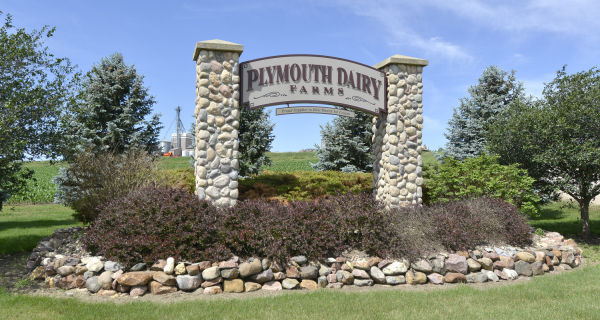
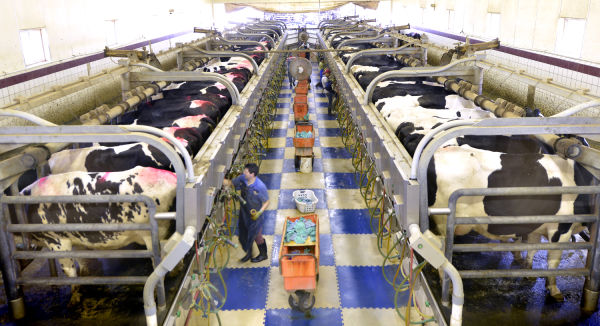
LE MARS, Iowa | Five semis leave Plymouth County Dairy Farms four miles south of Le Mars every day. Those trucks haul anywhere from 50,000 to 54,000 pounds of milk.
That's 250,000 to 275,000 pounds of milk that head north on Plymouth County Road C-49, much of it destined to become ice cream.
Blue Bunny Ice Cream, if you'll note the signage.
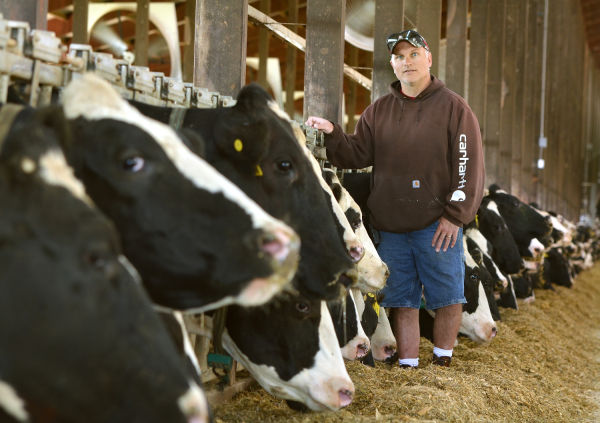
"In less than 10 minutes the milk cools from a cow's body temperature (98 to 102 degrees) to 38 to 42 degrees and then is pumped into a semi tanker," says Kurt Wierda, the general manager at Plymouth County Dairy Farms since 2006.
The Ice Cream Capital of the World, despite what some dessert lovers might think, doesn't grow ice cream in the freezer. The science for getting the best ice cream starts long before your favorite easy chair.
People are also reading…
"Ground zero" is here with Wierda and the dairy farm founded 15 years ago by the Feuerhelm family of Le Mars. The year was 1999 when the family considered building a dairy as a means to market locally grown corn and soybeans. The farm's first cows were milked on Aug. 25, 2000.
These days? Wierda and 31 full-time employees milk 2,800 to 2,850 cows three times per day. Each cow, on average, produces 92 pounds of milk per day.
Wierda cites a measurement of the cows at this dairy that shows their satisfaction. It's 130,000 somatic cell count, a measurement of white blood cells contained in the milk. That figure is key, a healthy one here when compared to industry standards.
"It's an indication of our cows' low stress level, their good health and cleanliness," he says.
In short, a low-stress cow produces more milk and milk of a higher quality.
"I like seeing healthy cows produce," says Wierda, a native of Maurice, Iowa, who grew up milking cows. The Iowa State University graduated worked for two different dairy operations before landing south of Le Mars on May 1, 2006.
He remembers his first May Day here quite well.
"The temperature was 100 degrees that day," says Wierda, noting Holstein cows would much rather endure severe cold than severe heat. At Plymouth Dairy Farms, staff members work around the clock to keep their Holsteins at a comfortable temperature. In summer months, that often means running fans, utilizing sprinkler systems and raising or lowering curtain sidewalls to aid ventilation and, thus, help keep cows cool.
"At temperatures above 65 degrees and with humidity over 60 percent, that's when a cow starts to get uncomfortable," Wierda says.
Production can drop with stressful weather conditions, he notes. That's why Wierda and staff work to keep the environment cool and stable.
Even the bedding area is sand, cool, soft and comfortable for the cows. Plus, bacteria doesn't grow in sand.
What do the cows eat? According to Wierda, the Holsteins consume corn silage (75 to 80 percent of which is grown by the farm), dry hay from Nebraska and South Dakota, a mineral mix delivered by a business in Sheldon, Iowa, wet distillers' grain from Little Sioux Corn Processors in Marcus, Iowa, and soybean mill from Cargill in Sioux City.
"We also feed finely ground corn and cotton seed from Texas, New Mexico and Missouri," he says.
There are three things Wierda wants each cow to do during a 24-hour cycle: Rest, eat and drink, and milk.
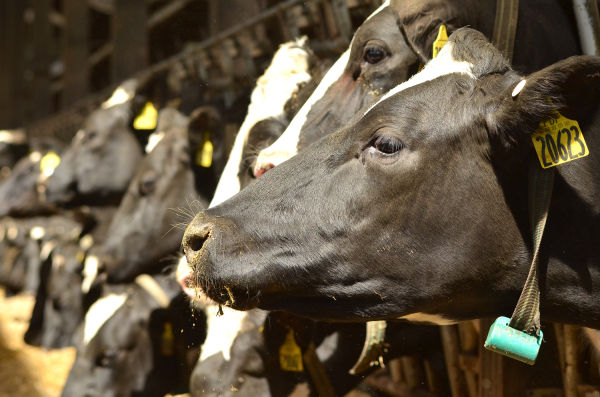
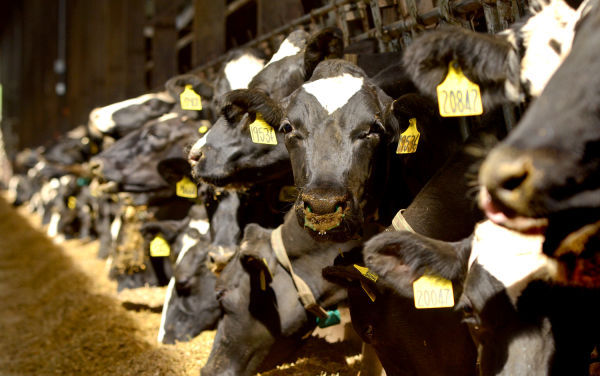
Each cow is tagged at Plymouth Dairy Farms, allowing employees to wave a wand pass a cow's ear to quickly learn where that cow stands from a production and/or health standpoint.
Cows here are monitored for milk output. When an animal falls short of projections, it is placed on a "deviation list," causing staff members to check all facets of the cow's health.
"We try to be as efficient as possible," he says.
When you know a customer's satisfaction at a high point of the day (dessert time) can hinge on your cows, you do everything you can to ensure the best experience possible.
Wierda knows. Because for much of his life, he's been a consumer, too.
"Vanilla. I like vanilla," he says with a smile, disclosing his favorite flavor of Blue Bunny Ice Cream.


