













SIOUX CITY | Rob Frost, the strength and conditioning coach for the Sioux City Musketeers, says it's not uncommon for hockey players to burn 1,000 calories or more during practice.
Adding a weight-lifting session that day can easily burn another 500.
What's a growing United States Hockey League athlete to do?
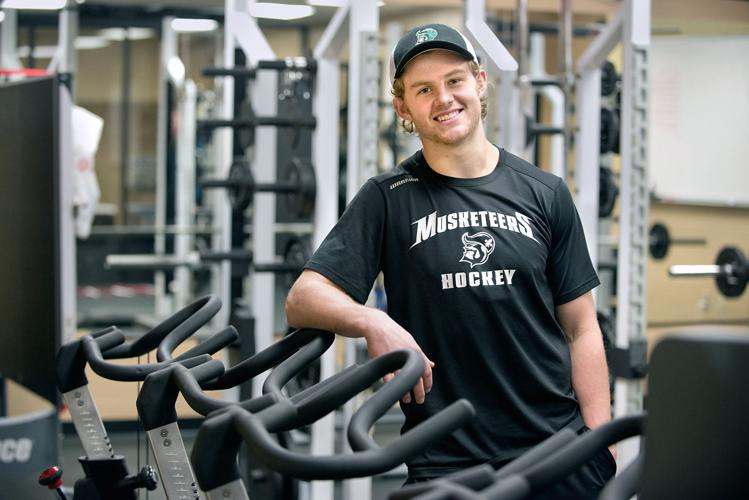
Jacob Wilson, an 18-year-old Musketeers defenseman, has actually gained weight this season, going from 175 pounds at the start of the campaign to 180 at this point. Interestingly, his weight gain through all the work has come about through a dietary adjustment he made last summer.
"I've been able to gain weight this season because I dialed back on pasta this summer, and ate rice and chicken, simple, clean stuff. Then, when practice started and I could tell my energy level was lower, I started eating pasta and carbs."
People are also reading…
Wilson supplements his pasta-friendly eating ways during the season with bread and protein shakes, plus vegetables and fruits.
The upshot? He feels more energized and stronger, despite the rigors of a physical sport being played at a high level.
"I eat five to six meals per day during the season," he adds. "Breakfast, lunch and dinner portions are large, and I'll have good-sized snacks in between each meal."
Musketeers players lift Monday through Wednesday and then take Thursday off, often letting their body regroup in advance of weekend games. As the end of the season approaches, Wilson and his teammates may see lifting and practice sessions grow shorter as the bumps and bruises accumulate.
One item that's often overlooked by both athletes and members of the general public? Sleep.
"Sleep is underrated," says Wilson, the son of Karen Wilson and David Wilson of St. Louis, Missouri. "I hope to get at least 8.5 to maybe 9 hours of sleep each night. You do notice when you're lacking in sleep, especially later in the day."
His mother, who is into cross-fit training, makes sure Jacob is getting to bed earlier. She also advises him on his nutritional intake, something Frost and Coach Jay Varady also help oversee.
"When you burn more calories than you take in, you'll lose weight," Frost says. "The main fuel source for our players are carbohydrates, which makes up 65 percent of their diet, and then proteins and fat are essential, but still just 15 to 20 percent of their diet."
Protein is essential for muscle regeneration and healing. Carbohydrates represent a player's major fuel source.
Occasionally, a player might work out after a game. That's often the case if a player only gets limited minutes on the ice. It makes perfect sense.
"If a guy plays 20 minutes of a 60-minute game, then a guy on your third or fourth line might only get 8-10 minutes," Frost says. "The guy playing more burns more calories. Those players who don't play as much might do more work after the game, or make up that cardio during the week."
There's an art to this science, a complex web that covers a period from September through April. Teams have investments in these young men, and so do the young men. Wilson, for example, will go from Sioux City to Tempe, Arizona, where he'll help Arizona State University get its hockey program on the ice.
And, after that, Wilson has his body, his mind and his eyes on the ultimate prize.
"I'd love to play in the NHL," he says.