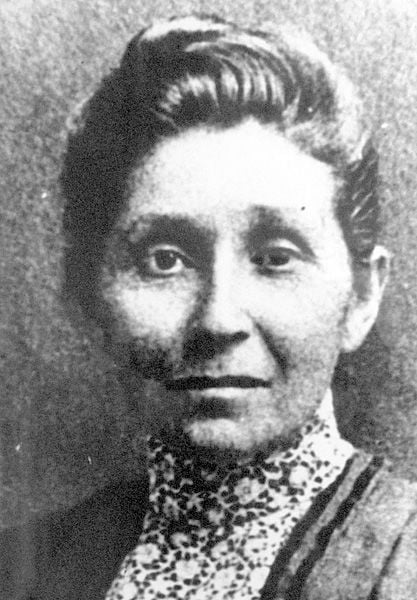

WALTHILL, Neb. | Long a legend among her Omaha people, Dr. Susan LaFlesche Picotte will live on thanks to individuals, who strive to preserve the legacy of one of the most remarkable medical personalities in the Midwest.
Those residents of this small Thurston County community are restoring a previously abandoned hospital to the memory of the first Native American woman to become a physician.
Picotte spent most of her life meeting the health care needs of residents on the Omaha and Winnebago Indian Reservations in Northeast Nebraska.
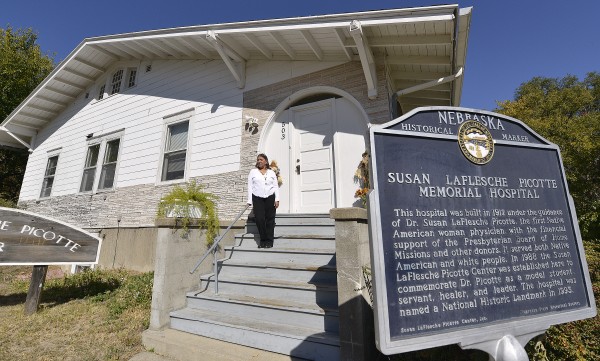
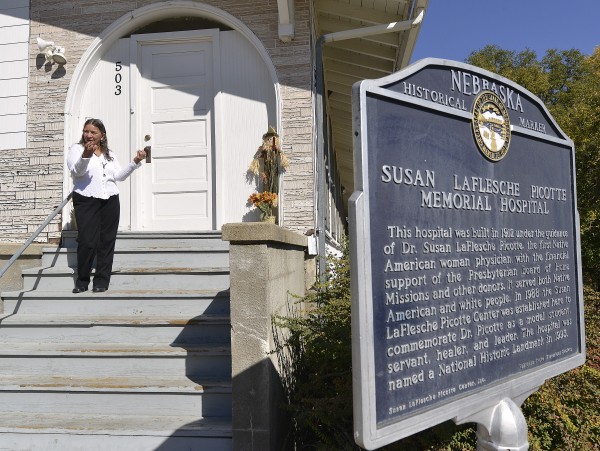
Possibly the highlight of this doctor's career was the establishment in 1912 of a medical facility called the Walthill Indian Hospital.
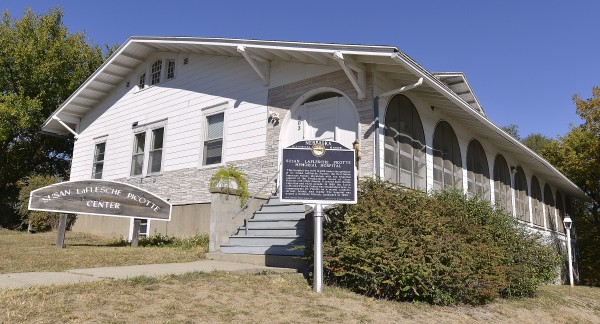
That building, an elongated, three-story, wooden structure, built on almost an acre, crested on the northwest edge of Walthill, was acquired in 1988 by the Susan LaFlesche Picotte Committee and is currently being cared for and rented by Mi'Jhu'Wi Ministries Karen and Johnny Hardenbrook.
People are also reading…
"We really hope to make this a visitors' destination," Karen Hardenbrook said.
The building is not only a monument to a remarkable woman, but to a legacy left by a man named Joseph LaFlesche, who began living with the Omaha Indians in the 1840s, when the tribe had settled near Bellevue, Neb.
LaFlesche was adopted by a principal chief, Big Elk, and succeeded him in 1853, although not everyone recognized him as principal chief.
Taking the name Iron Eye, LaFlesche took his three wives and seven children onto the Omaha reservation and for the next century, they all played important parts in national, regional and local affairs.
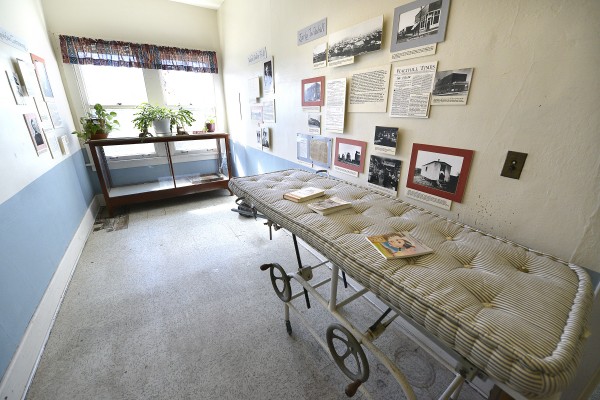
The Center presents the LaFlesche story and Picotte's story through pictorial and written displays in the hospital building.
Picotte was born near modern Macy, Neb., in 1865, the daughter of LaFlesche and Mary Gale, the daughter of Dr. John Gale and Ni-co-mi, of the Iowa Tribe.
But Susan's father believed the Omaha had to adopt white customs and ways of life as well as the Christian religion. As a result, the LaFlesche children abandoned Native American dress, lived in a frame house and attended the local Presbyterian or government agency schools.
Many of Iron Eye's children went East for an education. Susan was among them. She entered the Elizabeth Institute for Young Ladies in 1879, returning to the reservation in 1882 to teach for a couple of years.
Susan then studied at Hampton Normal and Agricultural Institute, a teachers and vocational college for black and Native Americans in Virginia.
She didn't stop there.
With funding provided by the Women's National Indian Association and the Bureau of Indian Affairs, Susan enrolled in the Women's Medical College in Philadelphia and graduated at the top of her class of 36 in 1889, the first Native American woman to earn a medical degree. Picotte interned in Philadelphia, then returned to the reservation, where she spent the rest of her life.
"She was definitely plowing new territory by becoming a doctor," Hardenbrook said.
In 1894, Susan married Henry Picotte, who died of alcoholism in 1905. The widowed physician and her two sons moved to Walthill in 1906, where she established the hospital, which features a screened porch along its entire eastern side where Picotte used fresh air and sunshine to combat the rampant tuberculosis of the day.
As evidenced by a body of correspondence to the Commissioner of Indian Affairs, now in the National Archives, Picotte worked throughout her life to improve health conditions for the Omaha people and to get better public health laws for Nebraska. Through the State Medical Association, she waged a campaign against alcoholism and in 1906 won a federal stipulation that every property deed on the reservation would prohibit the sale of alcohol.
"People can visit and stay as long as they like," Hardenbrook said. "Honestly, it takes a long time to read all of the history of this family. Our plan is to someday add earphones and a CD player that a visitor can take and learn even more."
Picotte was chairwoman of the Thurston County Board of Health, a founder of the Thurston County Medical Society, a member of the Nebraska Medical Association and chairwoman of the Health Committee of the Nebraska Federation of Women's Clubs.
After Picotte's death in 1915 from what she described in correspondence as "wasting of the bone," probably cancer, the hospital was renamed in her honor. It continued to operate into the 1950s, then became a nursing home. In 1966, the building was sold to a private party. The abode served as a residence, bakery, upholstery shop and sat vacant for about a decade.
In 1988 the Susan LaFlesche Picotte Center was established and the hospital restored to honor her work and preserve the history of her family's notable political and social achievements. In 1993 the hospital building was named a National Historic Landmark.
In 2002 at a ceremony in McLean, Va., Picotte was inducted posthumously into the International Women in Medicine Hall of Fame of the American Women's Medical Association.
Now the Hardenbrooks, on site since November 2011, are faced with the task of refurbishing the hospital.
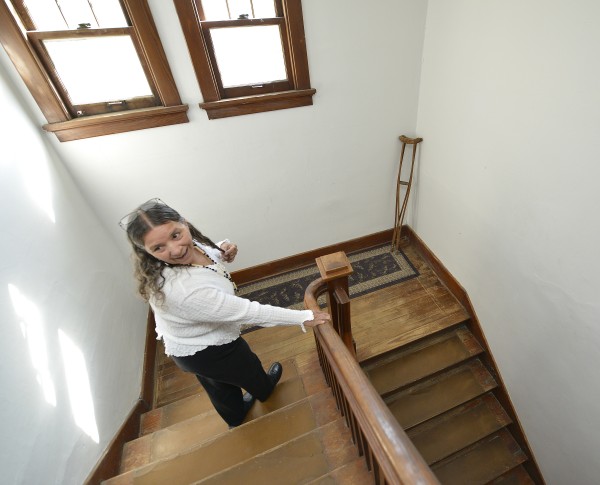
"We discovered beautiful pine floors under tile," Johnny Hardenbrook said. "There are gorgeous old cabinets with glass fronts and original hardware. There is a dumb waiter. We have a century-old marble sink."
The Hardenbrooks would also like to share this remarkable story with others.
"We especially would like to have children visit," Karen Hardenbrook said. "Sharing this story would show that Native Americans were more than people living in Indian villages in tepees."
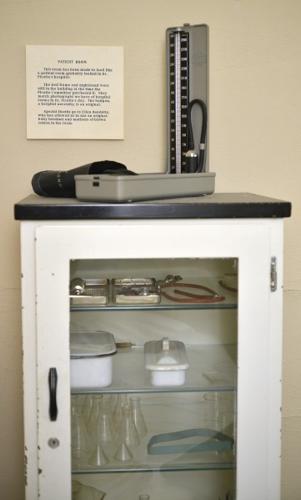
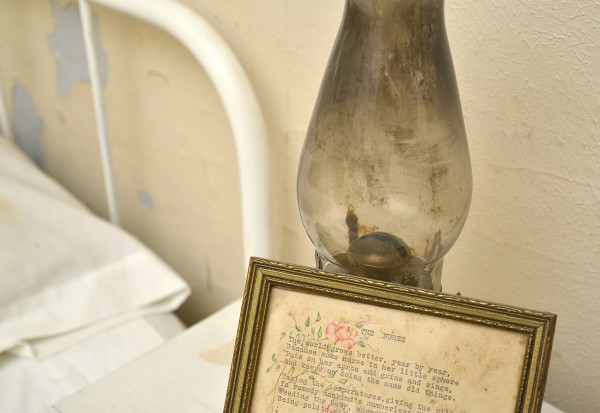
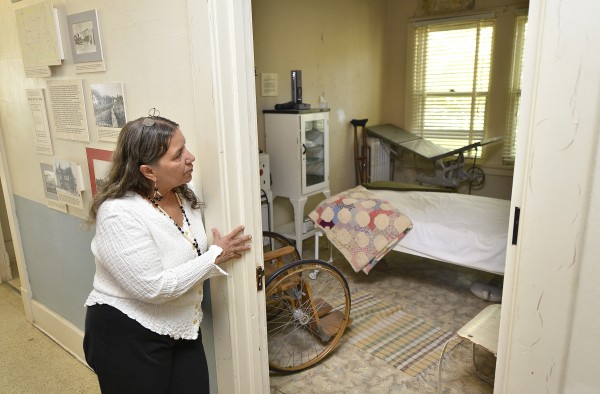
One room is dedicated to the LaFlesche family history; another focuses on Picotte; a patient's room illustrates the medical care provided at the turn of the 20th Century.
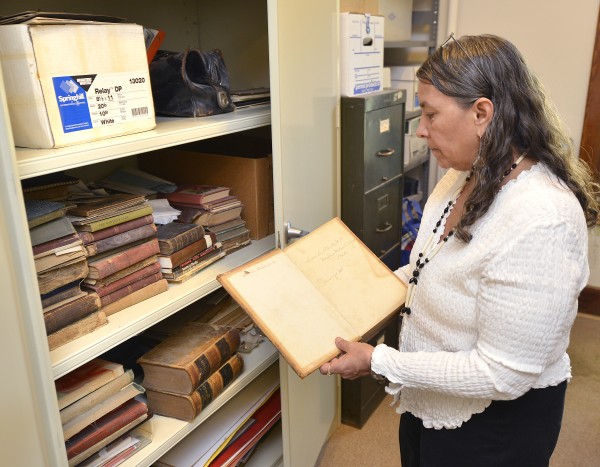
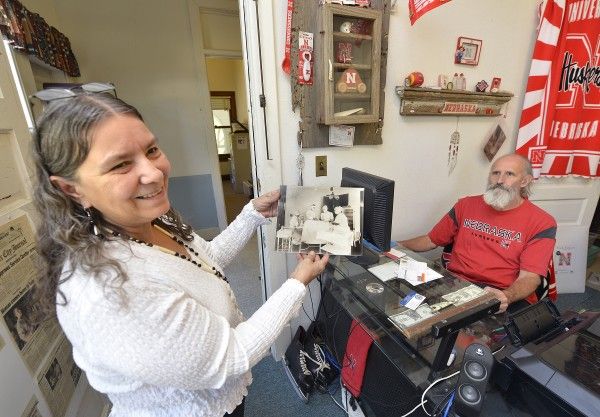
"We have so many artifacts," said Hardenbrook with a shake of the head. "We have been working with students at the University of Nebraska and Wayne State College to help. I'd love to get volunteers to digitize everything from the hospitals archives.”
The Hardenbrooks use the facility for a number of activities. Karen teaches sewing in one of the rooms. Weekly self-help meetings are held. A "free" store for those less fortunate has all types of clothing available. Mi'Jhu'Wi Ministries hosts summer groups from all over the U.S. to help repair elders homes on the Omaha Indian Reservation.