

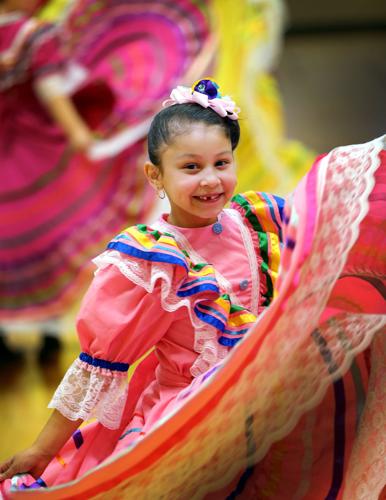
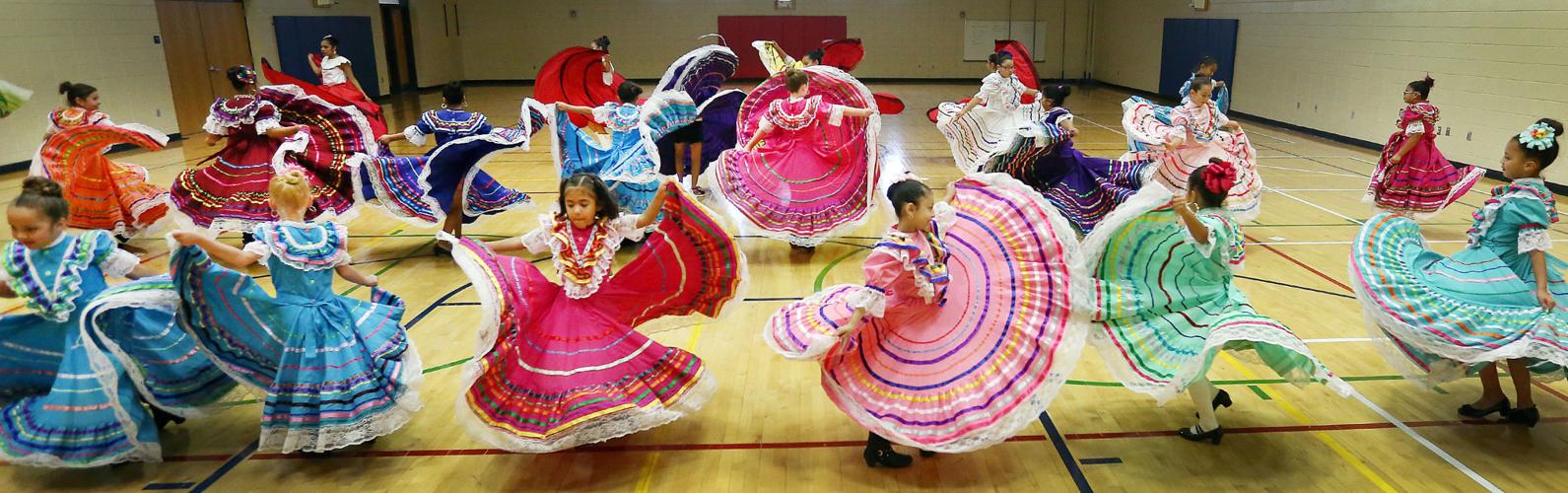
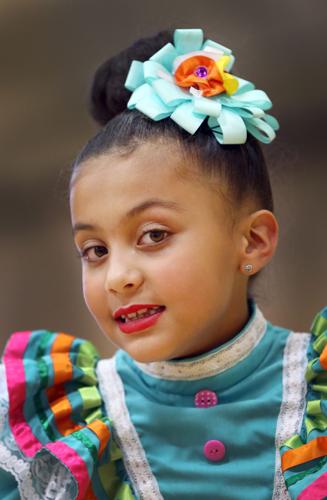
SIOUX CITY | Irving Elementary School fourth grader Yvonna Estrada loves to watch the Disney Channel, cuddle with her cat Casper and twirl around in her festive dress.
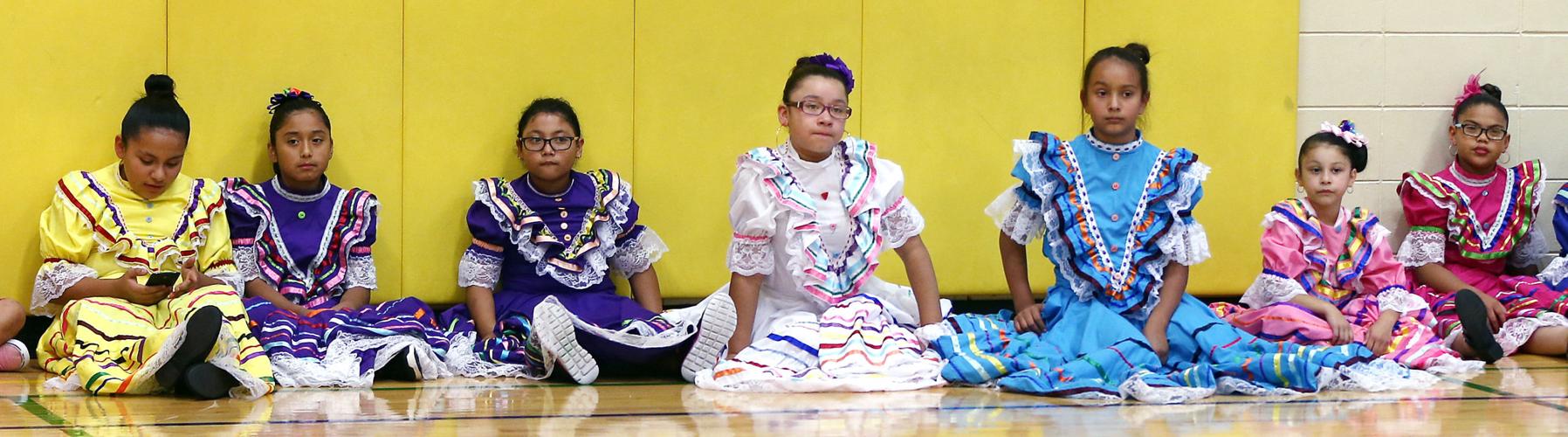
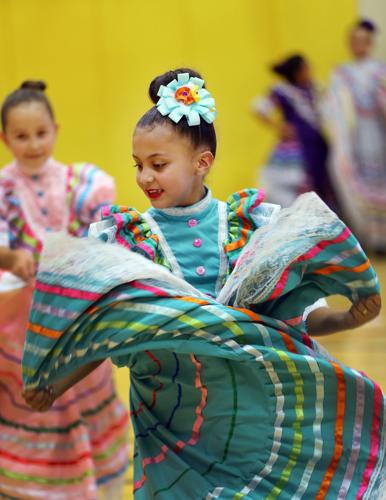
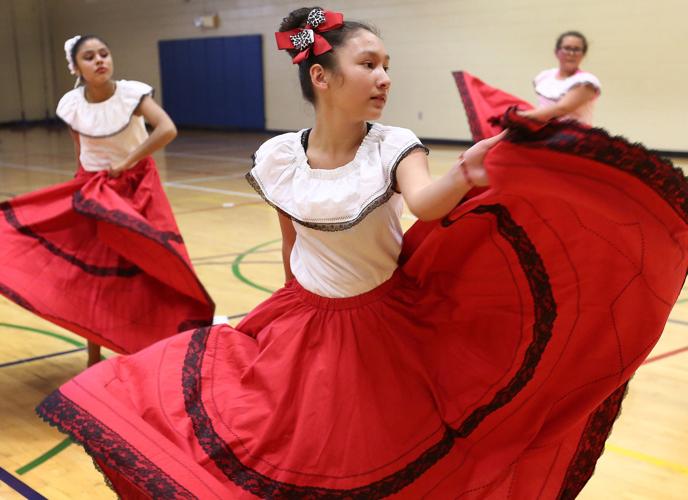
She's one of the kindergarten through ninth-grade students who make up La Perla Tapatia. The girls learn folkloric dances that are a tradition in Guadalajara, Mexico.
"I like to stomp around and make noise," Yvonna said, kicking up the heel of her patent-leather shoes. "They're really loud!"
That's especially true when she's joined by more than 20 other dancers rehearsing in unison at Irving's gymnasium.
"Many of our young dancers have families from (the Mexican state of) Jalisco," said Dave Lillie, an Irving fifth-grade teacher who helped found the group more than seven years ago. "They are renewing their heritage by learning the dances of Guadalajara."
People are also reading…
Presenting shows around Siouxland, La Perla Tapatia will also be performing in a special Dia de los Muertos (or Day of the Dead) program from 1-3:30 p.m. Oct. 30 at the Sioux City Public Museum.
"Day of the Dead typically begins on Oct. 31 and ends on Nov. 2," explained Lanette Velasquez, an Irving instructor. "It is a time when families and friends pray for and celebrate the memories of people who have passed away."
Don't let the decidedly dark name fool you -- the Day of the Dead is a joyous time that allows those who have died to live again through the festivities.
One of the traditions is to build an altar called "olfrendas" where the favorite foods of the deceased are deposited.
"The dead may not be able to eat," Velazquez acknowledged. "But they can still enjoy the aroma."
Hopefully, Marcella Garcia's grandpa will like something smokier.
"My grandpa was a cigar smoker," said the North Middle School sixth grader. "So we leave his favorite brand of cigar on his altar."
Lillie said such nods to tradition are important at Irving since nearly half of the student enrollment is Hispanic.
"Families moving to America may not want to leave their roots behind," Lillie said. "That's why maintaining traditions like dances and the Day of the Dead are so important."
Velazquez nodded her head in agreement.
"When grandparents see their granddaughters dance, they tear up," she said. "It's very emotional for them."
Still La Perla Tapatia is hardly something limited to Hispanic students.
Lillie remembered several Somali students who joined the dance troupe in the past.
"It's really something to see the Somali girls wearing the frilly Jalisco dresses while still wearing their traditional hijab over their heads," he said. "That's always a wonderful sight."