




This pumpkin face with merry gleam / Will light your way on Hallowe'en.
-- From a turn-of-the-century Halloween postcard, using the old spelling of Hallowe'en
SIOUX CITY -- Pumpkins are an autumn fruit and/or decoration, but their lives begin many months earlier, in mid-spring.
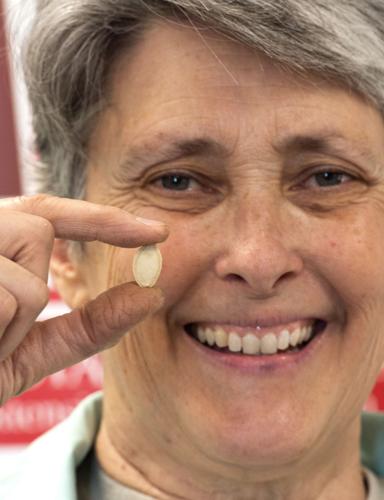
Marion Cain, a master gardener with the Iowa State University Outreach and Extension, said she plants pumpkins in late May, after the threat of frost has passed. Pumpkins are native to Mexico, and they hate frost. (The Spanish word for pumpkin is "calabaza." A popular autumn dish in Mexico is "calabaza en tacha" -- candied, heavily sweetened pumpkin.)
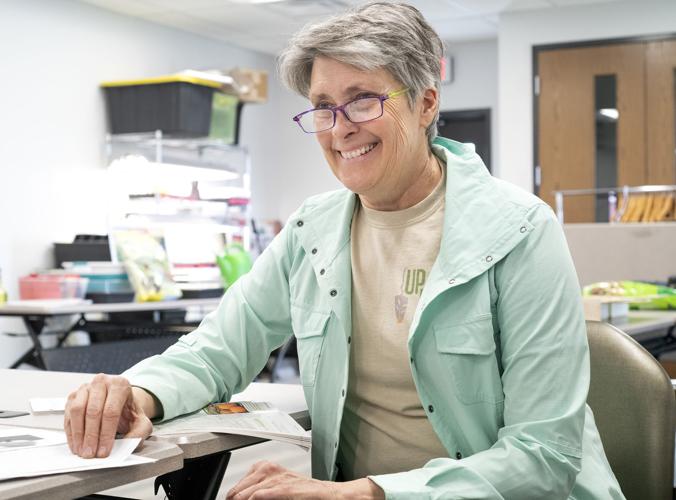
Master gardener Marion Cain talks about ways to increase your chances of gardening success.
Some gardeners start their pumpkins indoors in the springtime, then transplant the seedlings to the outdoors. Cain considers this step optional.
People are also reading…
"You can, it's really not necessary around here," Cain said. "If you really want to, you can. The most important thing about planting pumpkins is, you want the soil to be warm. Don't go out there in April and try to plant them. Wait more like, until, end of May, even first of June is OK. They are a warm-weather crop."
Cain builds small mounds of dirt -- she calls them "clumps" or "hills" -- in which she puts four or five plants pumpkin seeds, half an inch to an inch below the soil and a few inches apart. Pumpkin plants like the sun. Cain recommends planting them somewhere with a goodly amount of sunlight.
"About as much sun as you can get, is a good idea," Cain said. "They say six to eight hours of sunshine. So if you have a tree there that's giving some shade in the area, and if you get six or eight hours of sunshine, you'll probably be OK."
All else being equal, pumpkins are fairly easy to grow, made all the easier by the excellent, rich topsoil in this part of the country. Legend has it that indigenous peoples in North America would plant pumpkin seeds, then leave the plants unattended for long stretches. By the fall, there were pumpkins.
"Really easy," Cain said with a laugh. "You plant the seed, and it grows!
"Nature really takes care of a lot of stuff for us."
One to four per seed
The number of pumpkins yielded per seed varies -- as few as one, or potentially as many as four.
Pumpkins tend to be quite reasonable in the matter of hydration -- they require perhaps an inch a week. During a dry spell, this is equivalent to watering once a week. During a moist spell when the plants are established, no watering is needed.
"It depends on the stage in their life. If they're brand new and we have a drought, you might want to give it some rain, or some water. But it's not something you have to stress about," Cain said.
Cain mulches around her pumpkin plants, which helps to prevent weeds from competing with the pumpkins.
"You need to keep the weeds down some way," she said.
Pumpkins have other enemies besides frost and weeds. One is "powdery mildew," which is a type of mildew encouraged by overly damp conditions. This is one of the reasons that Cain doesn't recommend watering pumpkins heavily, especially in areas with infrequent breezes.
Cain is excited about new varieties of mildew-resistant pumpkins -- but a gardener shouldn't assume their seeds are mildew-resistant unless the packet explicitly says so. Ordinary, inexpensive pumpkin seed packets likely aren't mildew-resistant.
"So, if you have had powdery mildew problems in your garden in the past, this is a good kind to choose," she said.
Natural enemies of pumpkins
Rural pumpkin patches occasionally come under attack from cows -- cattle are capable of devouring whole pumpkins and destroying pumpkin patches if they wander into one. Other types of livestock have also been known to eat pumpkins.
Another pumpkin nemesis is squash bugs, which will destroy pumpkin patches as surely as cows. Gardeners should keep an eye out for these insects; the Old Farmer's Almanac offers a variety of suggestions for prevention and elimination of squash bugs, but detection is key.
There are dozens of types of pumpkins, several of which have ideal traits for Jack-o'-Lanterns. A smaller number of pumpkins have been specially bred for pies. Pumpkins can be white, deep orange or pinkish orange, though related and visually similar squash varieties come in a rainbow of colors. Botanically the pumpkin is a fruit, but it can be considered a vegetable from a culinary standpoint.
The distinction between pumpkin varieties may seem a trivial matter, but Cain said there's a big difference -- she used the metaphor of apple cultivars, which have a wide disparity in flavor, sweetness, color, juiciness, storage life and so forth.
"Each pumpkin will taste as much different as each apple (variety), and other characteristics are different too, whether it's warty, whether it's white, whether it's golden, orange, the stripe-y ones," she said. "It's fascinating."