



SIOUX CITY — Axe -- or hatchet -- throwing is a unique sport that has been steadily growing since the early 2000s.
It is well known as a way to relieve stress, by taking one's anger out by throwing a sharp object.
In Sioux City, there are two different axe-throwing places, offering similar experiences: Woody's Axe Throwing, 1227 Fourth St. and Axe to Grind, 2101 Hamilton Blvd.
Axe to Grind opened in 2019 as an urban axe-throwing venue open to people of all ages. Store lead Ashley Mondor has been with the business since it opened.
She knew someone who was a professional axe thrower and told her about the position. Mondor was a para-educator and needed a break. She wanted a job that was fast-paced and easy-going.
Mondor said the place instantly felt like home.
People are also reading…
“We have people in their 80s or 90s come in to throw and we have kids that love to come and throw,” she said.
People axe throw for a variety of reasons. Whether it’s a fun night out with friends or family, a hobby or a way to relieve stress, Mondor says it is an activity anyone can learn.
“You walk through these doors, and you know you’re safe and you can relax,” she said. “We try to make it fun, we make it so you always have somebody to talk to.”
The story has a variety of regulars and first-timers each week, but Mondor said many of the new people become regulars. She said if someone throws once, a majority of the time they become hooked.
Some of the urban axe throwing locations are in bars. Axe to Grind offers about 70 different kinds of canned beers as well as soda and tea. She said people can have the bar feeling, while still being in a family-oriented location.
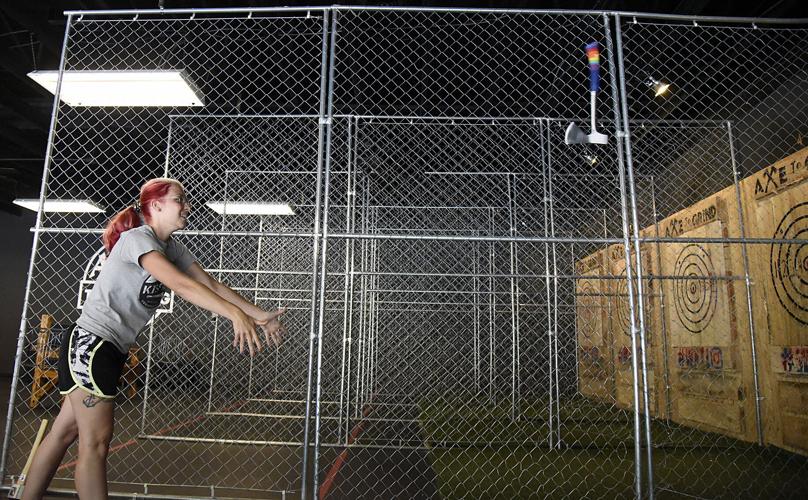
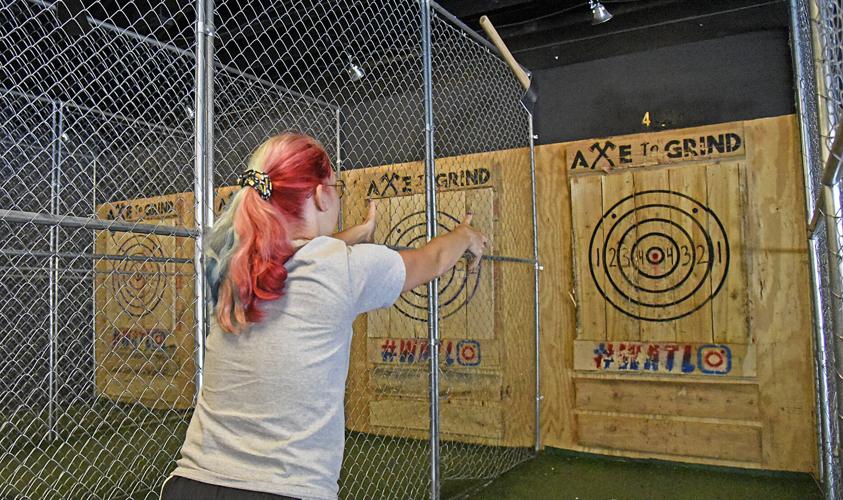
Going axe throwing for the first time can be intimidating for people, she said. When someone walks in, she said they are immediately greeted and after signing a few forms, they are walked through a safety briefing. The briefing teaches newcomers the safety rules as well as a few different ways to throw.
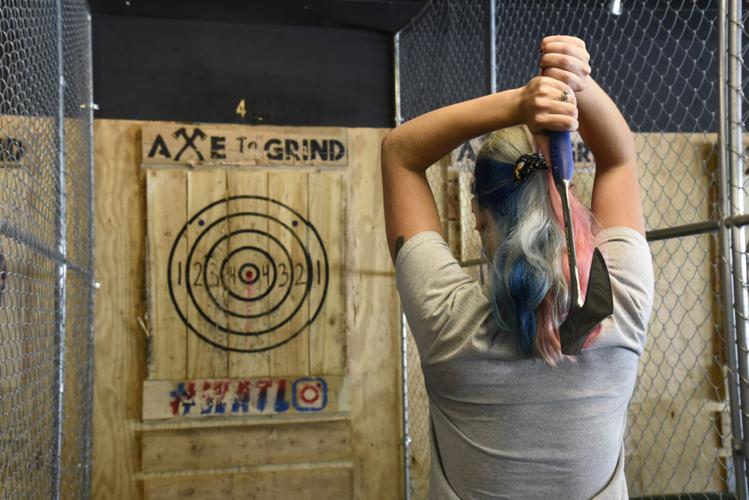
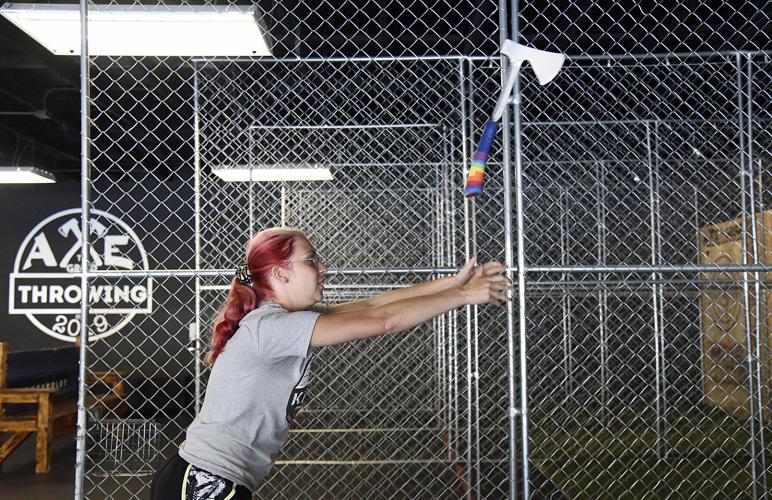
Mondor said there are three main ways to throw an axe. The first way is with both hands called the batter's grip. The thrower puts their dominant hand on the bottom of the handle and the non-dominant on top.
The second throw is one-handed. Mondor recommends throwers put their pinkie on the bottom of the axe. She also said to avoid throwing it like swinging a baseball and swinging across the body.
"You need to make sure you're staying nice and straight," she said.
The third way to throw is called the pistol grip. The thrower puts their dominant hand on the bottom, line up both thumbs and grip together.
For beginners, she recommends throwing with two hands. To begin, she said that they instruct people to stick out their guts as they pull their arms back behind their heads. As they prepare to throw, they should lean forward and stick their butt out, she said.
Mondor does not encourage trick throwing, because it can be dangerous.
Axe to Grind also has mobile axe throwing and will be available to attend events and provide axe throwing opportunities. Mondor said oftentimes that's an easier way for people to become interested in the activity, and less intimidating than going to the physical location.
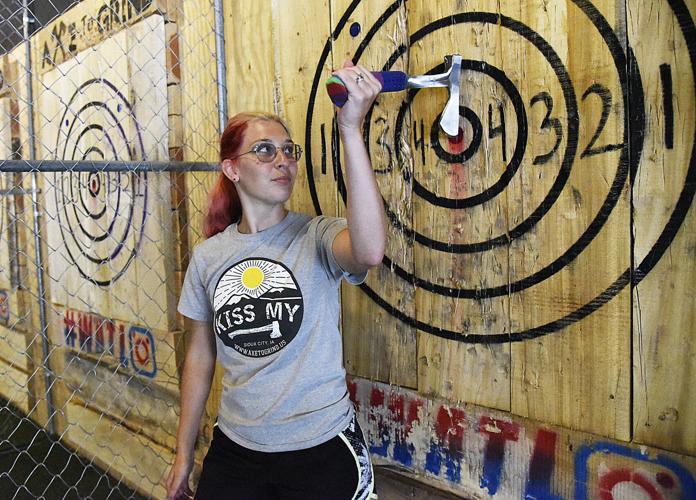
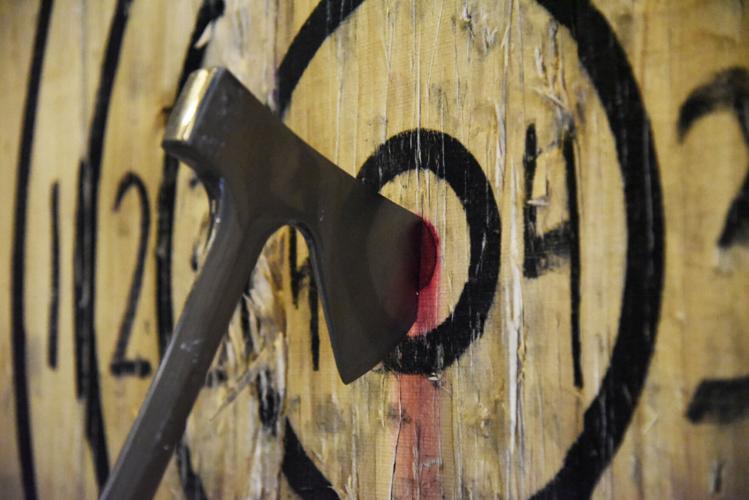
There is a target on the wood boards consisting of four rings and a bullseye in the center, while the two dots in the outer ring have a high risk and are known as kill shots. The traditional game of axe throwing involves 10 throws, followed by a tiebreaker. The person with the highest number of points wins.
There are also a variety of other games people can play when axe throwing. The sport has its versions of Yahtzee and Cricket, as well as other games like Landmines, Odd Man Out, Called Shots, Tug of War and Cornhole Axe Style. Instructions can be provided for these games.
Axe throwing started to become popular in North America in the early 2000s. Backyard Axe Throwing League claims to be the first in the world to offer an urban venue for indoor axe throwing in 2006 and is a founding member of the International Axe Throwing Federation.
Throwing axes date back to prehistoric times as a weapon. There is no definite date or time when axe throwing became a recreational activity, but legend states the first axe-throwing competitions were amongst Celtic tribes or frontiersmen in North America. Modern sport axe throwing is said to have started in Europe around 2001.


