
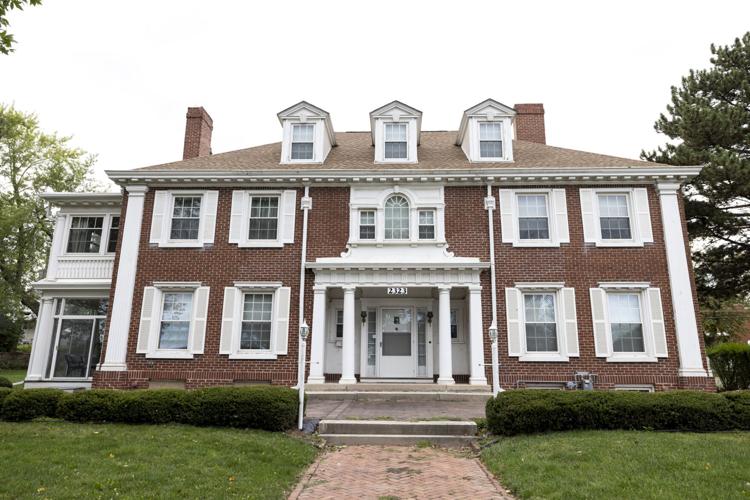

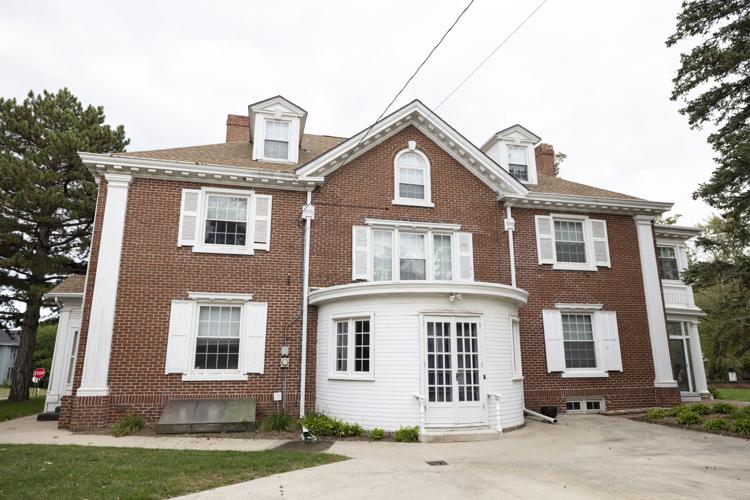
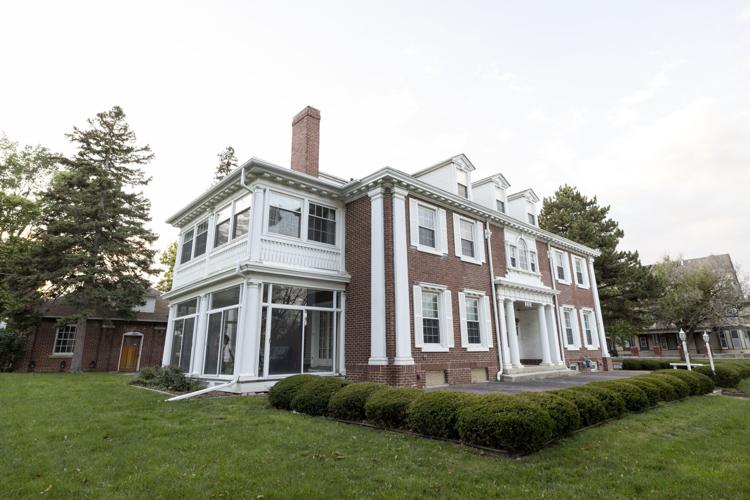
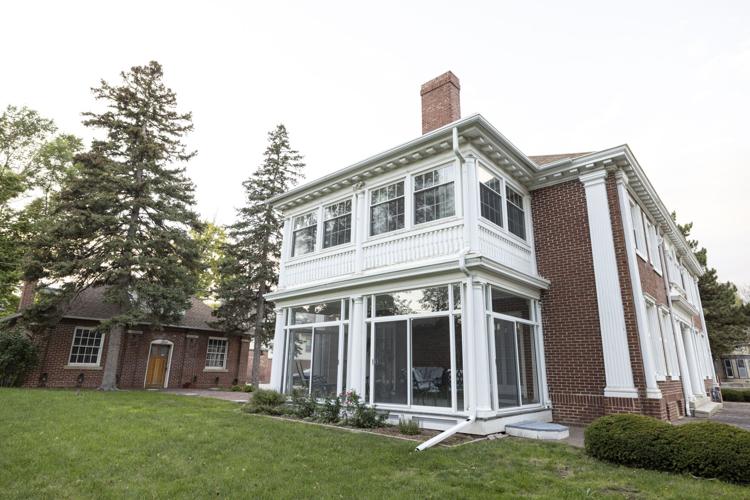
SIOUX CITY — Everything about the eight-bedroom, four-bathroom, roughly 6,000-square-foot brick Georgian Revival mansion at the corner of 24th and Nebraska streets is big and impressive.
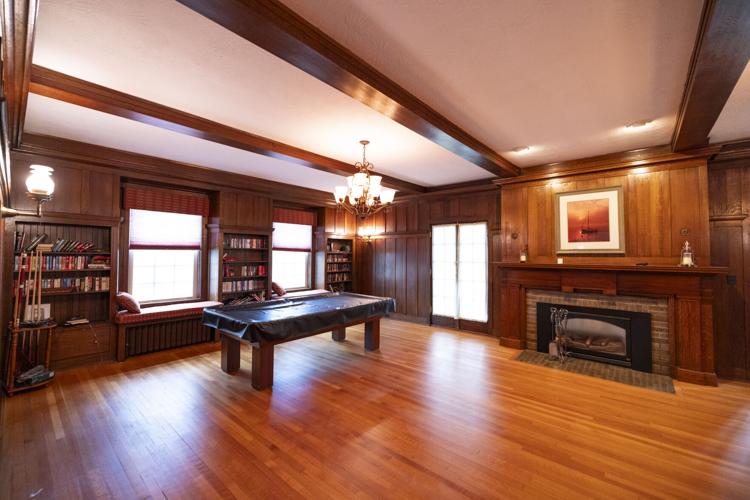
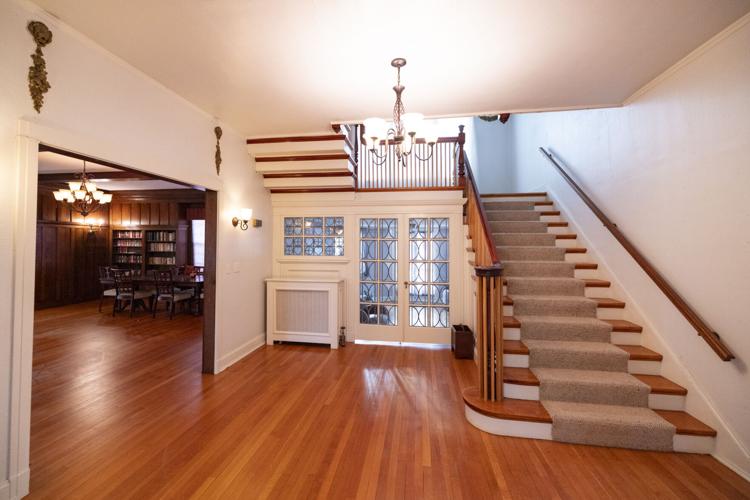
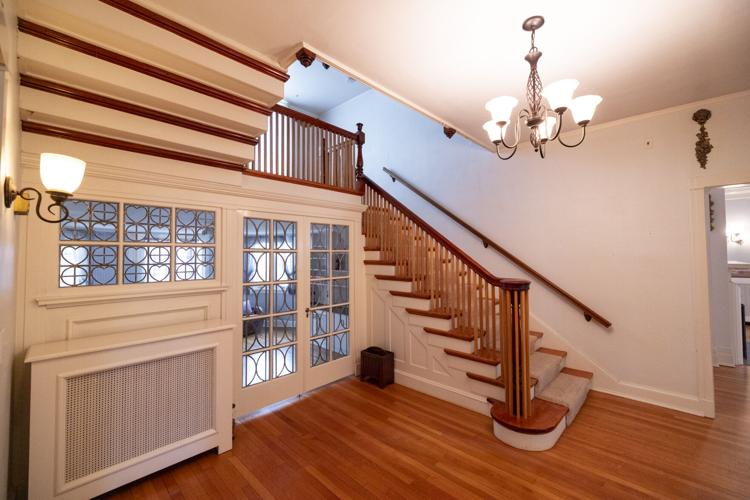
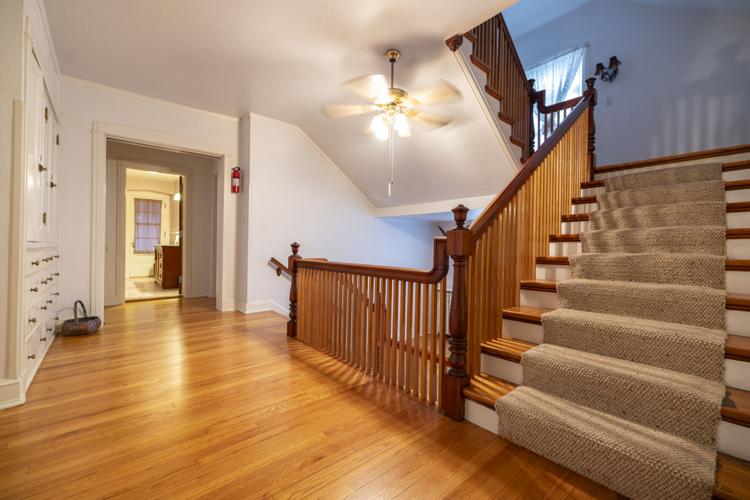
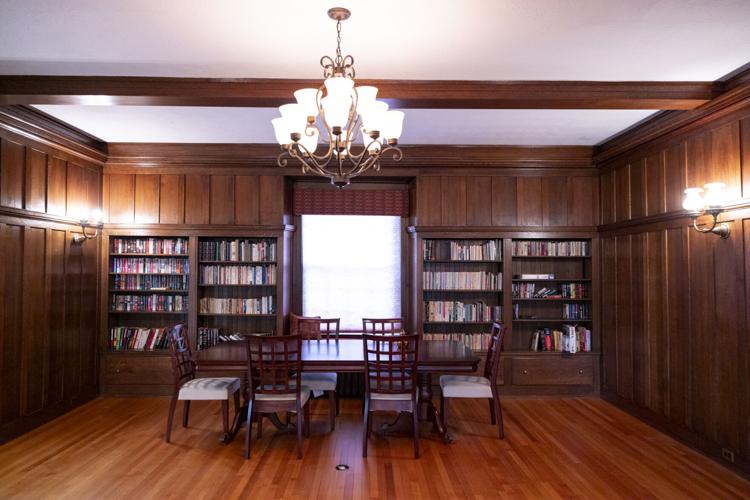
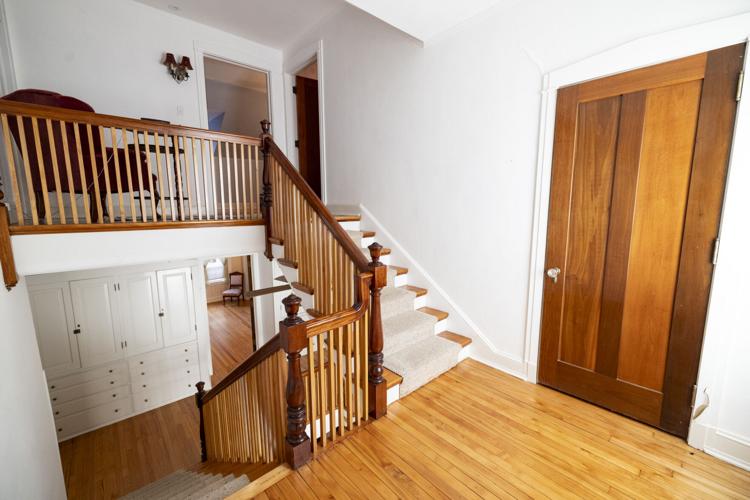
The quarter-sawn-oak paneled, oak-beam-ceiling library is just about big enough (figuratively speaking, if not literally) to fit a smaller house inside it. The foyer has room for a grand piano. Each of the landings of the grand staircase could accommodate a couch and chairs, should one desire a rest between flights. ("The landings are huge," said Realtor Barb Maxon.) Adjacent to the grand staircase is a smaller, hidden staircase -- about the size of a staircase in an ordinary house -- which in the days of maids and butlers would have been used by maids and butlers.
The house sits on a 22,500-square-foot lot (or, rather, two lots) which give it a sort of aura of a country estate plunked in the middle of a city.
People are also reading…
"It's just -- you can't miss this house when you drive down Nebraska," said Maxon, who described it as one of "three signature houses of Sioux City," along with the so-called "Chocolate Mansion," 2900 Jackson St., a dark brown, highly elaborate Queen Anne mansion, and the Linda Sue Manor, a similarly ornate Queen Anne, just across the street from the Chocolate Mansion, at 29th and Jackson Street. (All three of these "signature houses" are on the market at the time of this writing.)
The mansion, 2323 Nebraska St., is also one of just 11 residences in Sioux City to have its very own Wikipedia page.
The brick ("all brick -- it's not just a brick front, it's all brick," Maxon pointed out) mansion would make a fine home for someone who really appreciates the finer things.
"People that like history" would like the mansion, Maxon said. "I mean, people don't buy eight-bedroom houses because they have eight kids anymore."
Take a video tour of this Georgian mansion built in 1904 on Nebraska Street in Sioux City.
A HOME FOR SOCIETY PEOPLE
The original owner of the mansion, Dr. Van Buren Knott, was a noted surgeon and physician who'd served in the Spanish-American War; he, along with his wife and sons, were frequent personages in the Society pages of The Sioux City Journal before he sold the mansion and moved in 1918, first to California, then to British Columbia, where he died in 1933.
Knott spared no expense when his home was built in 1904 (some sources say 1903). He hired the famed Chicago architect Howard Van Doren Shaw, and hired the Chicago department store Marshall Field & Co. for the interior decorating.
Shaw was particular about things, as evinced by his brusque letter to a contractor regarding the varnishing of the wood floors throughout the mansion: "I expect samples of the white wood stained and finished as specified from your painter by the first of the week; it must not be later. If these samples are not satisfactory I shall insist that another painter be engaged, if necessary one from Chicago, who understands the proper staining of wood."
At one point Shaw and Knott apparently got into a dispute over the placement of the two-stall brick garage; the visionary Shaw wanted it attached to the mansion, so as not to interfere with the gardens, according to the mansion's National Register of Historic Places application. The homeowner Knott wanted the garage behind the mansion. In the end, Knott got his way, and the detached garage was built behind the mansion, where it remains.

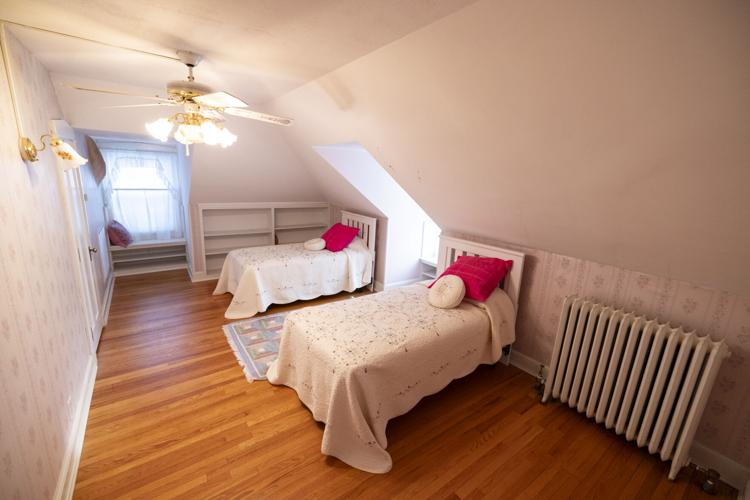
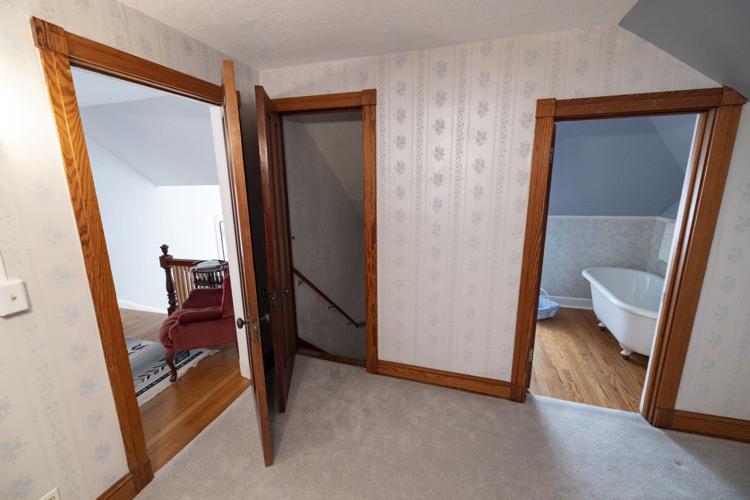
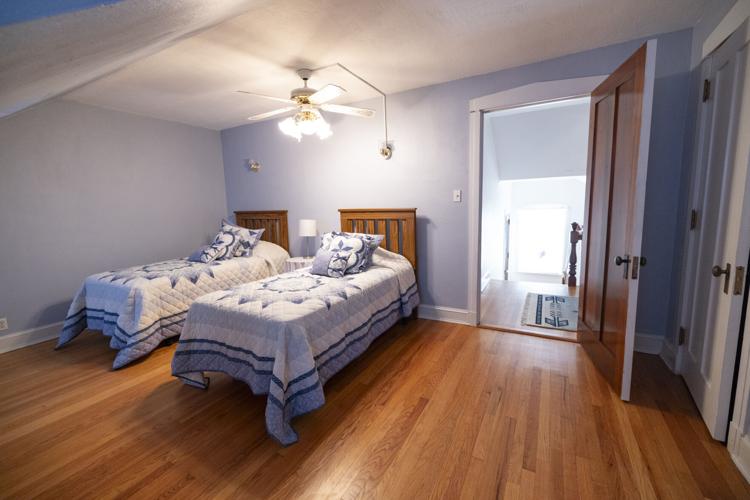
The third floor can be set up for kids' rooms.

The library features built-in bookshelves, a pool table, a fireplace and oak paneling.

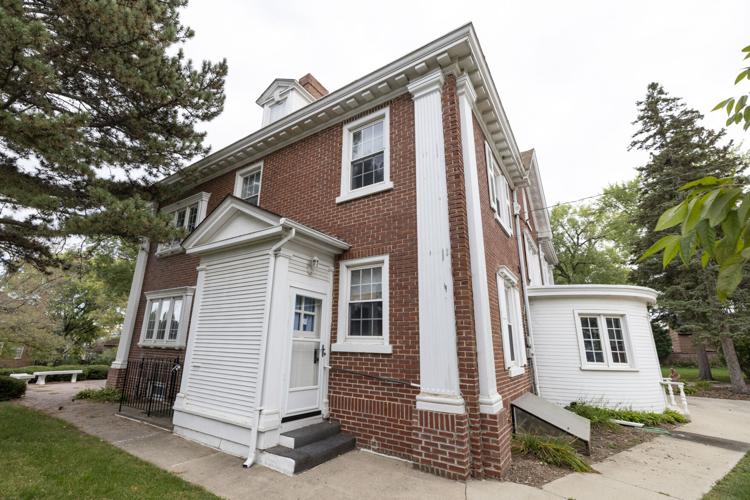
A side entrance leads into the kitchen and a staircase behind leads down to the laundry room in the basement.
ELEGANT AND UNCOMMON FEATURES
What Shaw designed and Marshal Field outfitted was one of the finer homes in Sioux City. The more elegant and uncommon features survive largely intact to the present day.
The exterior of the mansion is adorned with large white pilasters at the corners and prominent dentil moldings around the eaves and above the first-floor windows. The recessed grand entrance at the front is refined but a little ostentatious, with Doric pillars supporting a finely detailed entablature. Above the entrance is a Palladian window.
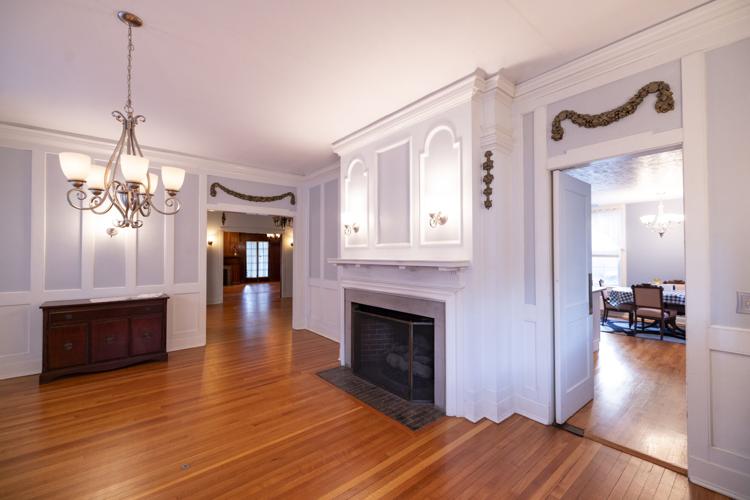
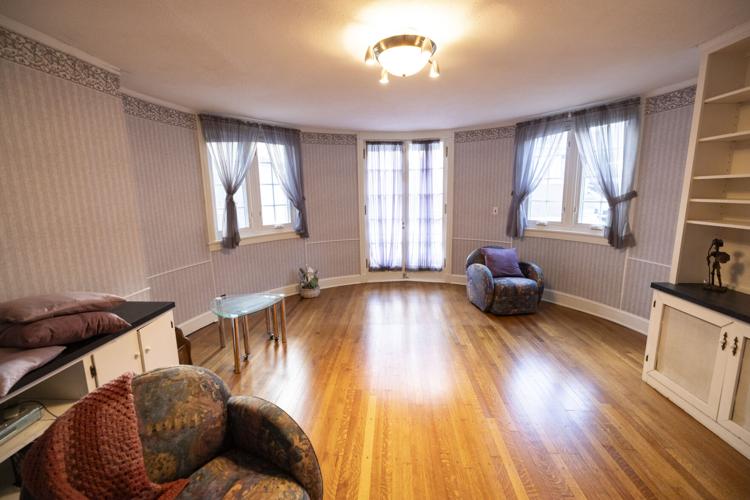
The walls in the foyer, formal dining room and in other places and are embellished with plaster moldings in the shape of fruit-garlands and lions with fruit draped from their mouths. The so-called family room on the first floor is encased by a circular wall, in somewhat the style of a small Oval Office.
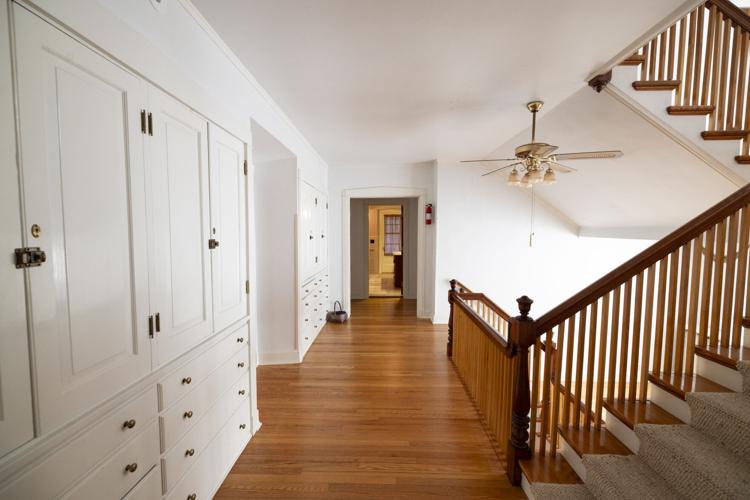
Storage shouldn't ever be an issue, with built-ins galore. The sprawling basement offers another 2,000-or-so square feet of storage space.
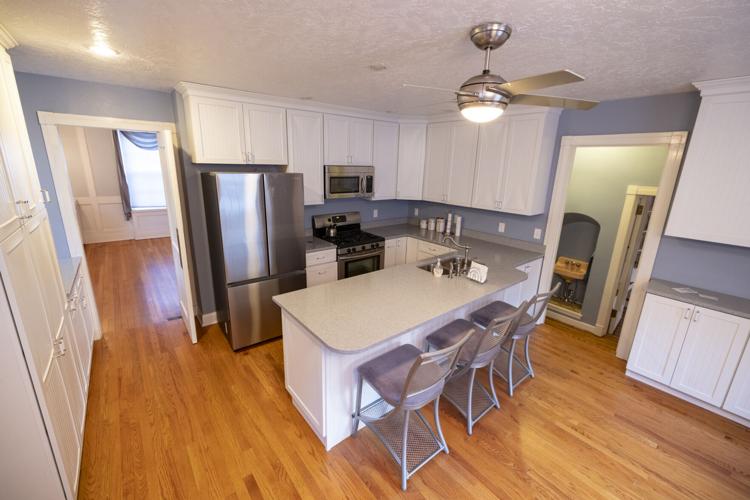
The updated kitchen has stainless steel appliances. All the windows in the mansion have been replaced, which Maxon said was a major investment.

The third floor servants quarters can be set up for kids' rooms.

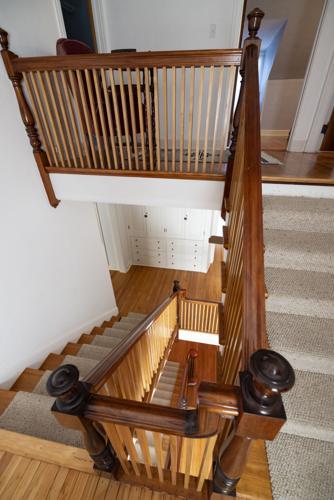
A servant's staircase, center, provides private access to all three levels and leads directly to the kitchen downstairs.

The entryway opens up to the main staircase, with a round room at the back of the house visible through leaded glass doors and the library to …
BIG BEDROOMS
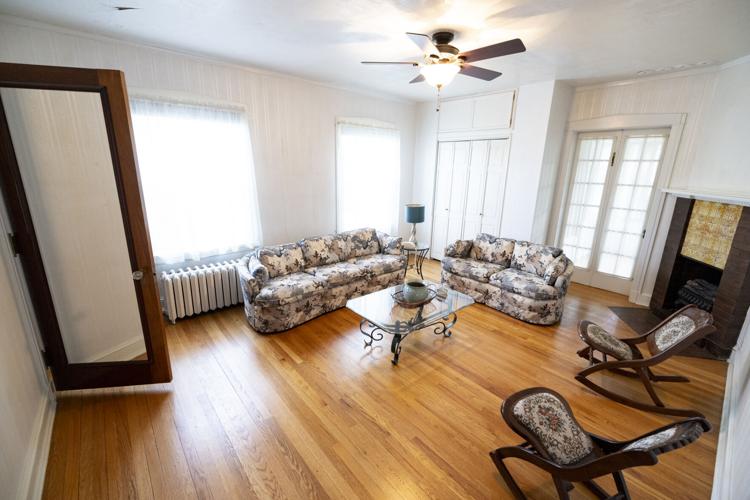
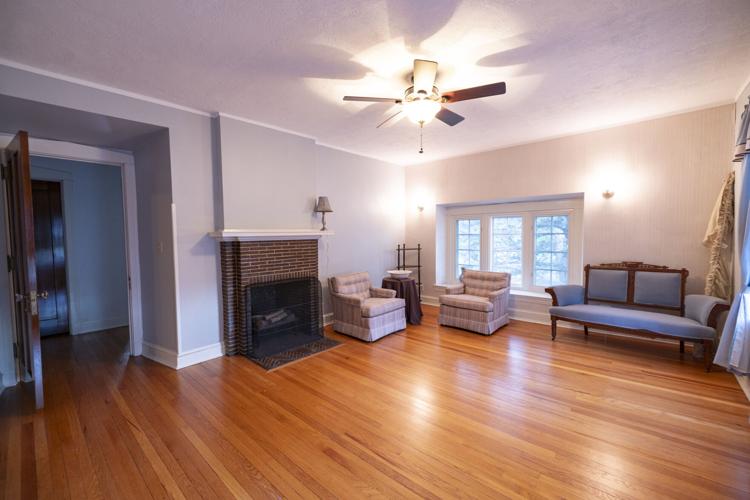
Five of the mansion's eight bedrooms and two of its bathrooms -- the ones intended for the owner and his family and guests -- are on the second floor. Several of these bedrooms are quite large: one is 12-feet-by-17-feet with two closets, and another is 14-feet-by-18-feet. Like the entire mansion, these all have wood floors and special flourishes, including a decorative fireplace and pocket doors that, for their age, work remarkably well.
"I can't get a builder to make a bedroom this big nowadays!" Maxon said.
Attached to two of the larger bedrooms is the second-floor sleeping porch; though these are little-remembered today, sleeping porches were a common escape for rest and fresh air during oppressive summer nights, before air conditioning was invented. The semi-patrician character of George F. Babbitt in Sinclair Lewis's iconic 1922 novel "Babbitt" habitually spent his nights on the sleeping porch of his fictional home: "It is not known whether he enjoyed his sleeping–porch because of the fresh air or because it was the standard thing to have a sleeping–porch."
(The second floor of the mansion now has central air, but even if the original purpose is obsolete, the sleeping porch is still an attractive feature.)
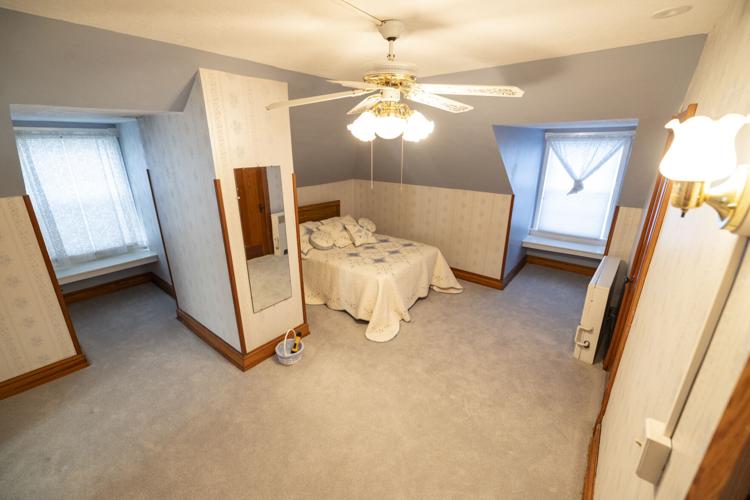
The other three bedrooms, likely intended for servants, are on the third floor; the woodwork in these bedrooms is far plainer than in the rest of the house, and, because they are directly beneath the roof, they have sloped ceilings and dormers. The Knotts were prolific employers of domestic servants, frequently placing advertisements seeking a "competent cook" or, in the terminology of their era, "a competent girl for general housework."
The hidden staircase near the grand staircase was for them; in that era, wealthy homeowners frequently built their homes with the assumption that their hired help would remain more-or-less out-of-sight and would use separate, less-glamorous parts of the house.
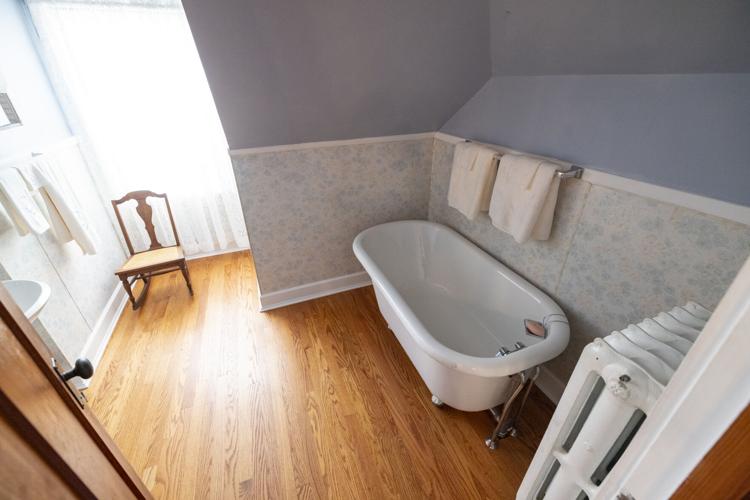
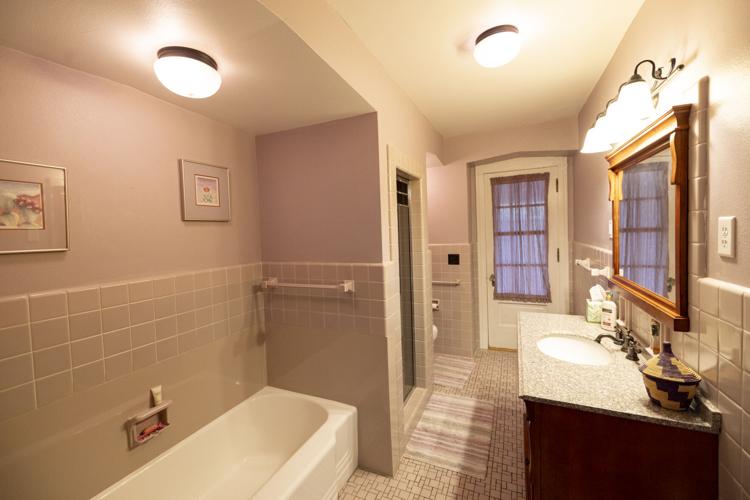
Though they are spare, the third-floor bedrooms nevertheless have generous floorplans -- one is 18-feet-by-11 feet, and another is 16-feet-by-13 feet; due to the sloped ceilings, a modern resident might find the bedrooms on the third floor best suited as kids' bedrooms. The third-floor bathroom has a clawfoot bathtub, often a treasured fixture in homes where they remain in service.
'AN UNUSUAL AND BEAUTIFUL OLD HOUSE'
The mansion has long been a subject of fascination. Maxon said she's received inquiries from parties wishing to see the interior (only serious buyers get that privilege).
In 1979, a group of Sioux Cityans spent hundreds of hours constructing a roughly 4-foot-by-5-foot, highly elaborate and precise scale-model dollhouse -- complete with more than 3,000 miniature shingles, real walnut floors, electric wiring and tiny pieces of furniture -- representing the mansion. The dollhouse was auctioned to support the Sioux City Symphony Orchestra.
"It just looks like a Holiday House, like there should always be a wreath on the door," Pat Van Bramer, one of the visionaries behind the dollhouse replica, said in 1979; she and Dave Paulsrud had come under the spell of the mansion while driving around taking Polaroids of Sioux City houses. Van Bramer and Paulsrud, with help from a group of others, studied the blueprints of the mansion and built the dollhouse in its image.
The actual mansion was opened up that year for the Symphony's Holiday House fundraiser.
"This really is an unusual and beautiful old house, and it's been well-preserved," Ann Jordan, the then-owner of the mansion along with husband Alf, said in 1979.