

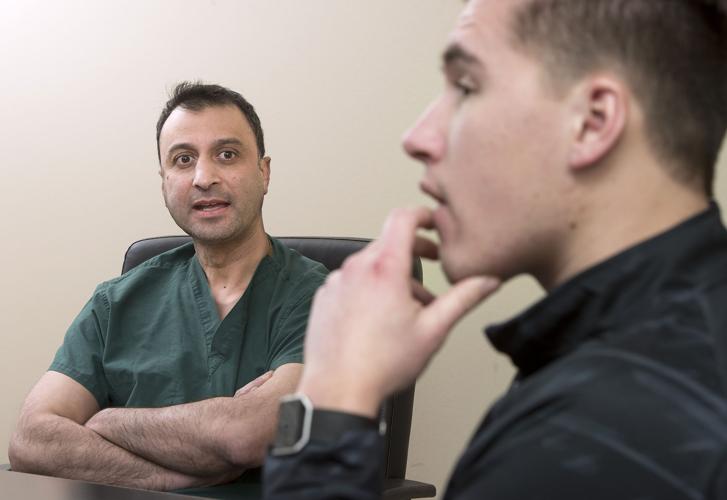
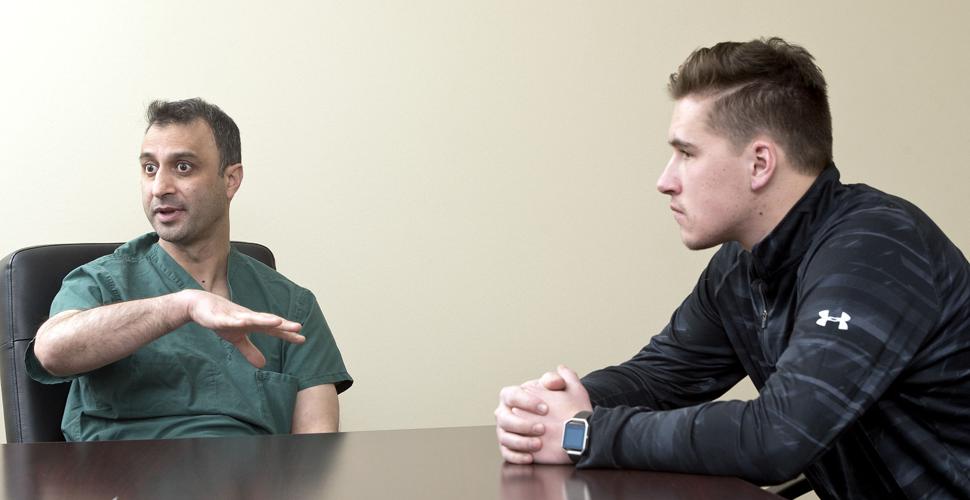
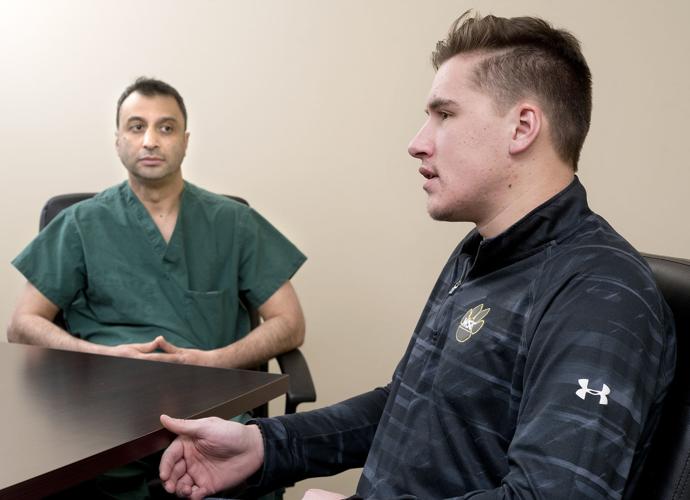
SIOUX CITY | Sam Simon loves to play sports, but a rare heart condition sidelined the 23-year-old for life last year.
The Wayne State College sophomore was playing basketball in 2012 when he began to feel dizzy. He closed his eyes for what he thought was 10 seconds, but two or three minutes had actually passed.
A slew of tests followed at the hospital in Kearney, Nebraska, where Simon was diagnosis was epilepsy.
For a year and a half, Simon took anti-seizure drugs and didn't have another episode. He joined the football team at Wayne State as a kicker, but the day after the season ended in November 2015, trouble struck again on the basketball court. The dizzy feeling returned.
"My heat rate was getting over 300 beats a minute. I couldn't stop it. I couldn't move my body because my heart was pumping so fast. I wasn't getting feeling into my feet and hands," Simon said. "They used the paddles on me twice. That's the last thing I remember about being in Wayne."
People are also reading…
A doctor in Wayne suspected something was wrong with Simon's heart and he was rushed by ambulance to Mercy Medical Center in Sioux City where he underwent an electrocardiogram, a test that records the heart's electrical activity as a series of waves, and an echocardiogram, or ultrasound of the heart.
Cardiologists decided Simon needed a defibrillator implanted in his chest. The small battery-powered device detects abnormal heart rhythm and delivers an electric shock when the heart is beating too fast to restore a normal heartbeat.
After receiving the defibrillator, Simon tried to play soccer in March. Five minutes into the game, the defibrillator delivered a shock to his heart that failed to get it back into a regular rhythm.
"I got shocked about 11 times in about a five-minute span," he said. "It's like being kicked in the chest by a horse."
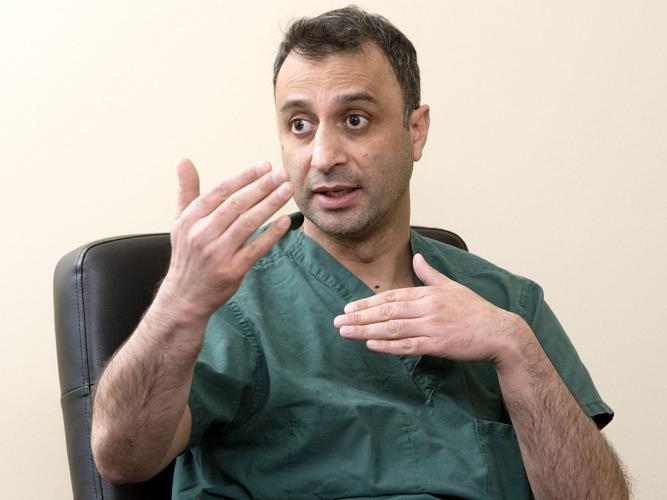
Simon was airlifted from Wayne to Mercy Medical Center. Cardiologists initially thought his defibrillator wasn't working correctly and scheduled a procedure at the University of Nebraska Medical Center in Omaha. But the day before, cardiologist Fayaz Hakim called Simon and told him he suspected he was suffering from arrhythmogenic right ventricular dysplasia/cardiomyopathy (ARVD/C).
ARVD/C is a rare form of congenital heart disease that occurs when the muscle tissue in the right ventricle dies and is replaced by scar tissue. This disrupts the heart's electrical signals and causes abnormal heart rhythms or arrhythmia.
"It's a very rare genetic disorder that runs in families," Hakim said. "I think this was the first case to be reported from this part of the state."
Hakim said Simon is the second or third patient with the condition he's come across; and he's not sure whether he will see another. He said people living on Naxos, a Greek island, are known for having a variant of ARVD/C.
"Those people have kinky hair and they've got thickening of the soles and the palms and that is much more a malignant form of it," he said. "I think people have migrated from those places to the United States of America."
Hakim said ARVD/C can be autosomal dominant, meaning many family members are affected, or autosomal recessive, where only some family members are affected. Simon said there is a history of heart issues on his dad's side of the family. His aunt has a form of cardiomyopathy.
"It's not uncommon for these conditions to be missed because they may be the rare, benign form of the conditions," Hakim explained. "Someone has to have a very high degree of suspicion."
Hakim said such a diagnosis needs to be confirmed with a cardiac MRI -- a capability Mercy Medical Center doesn't have. He referred Simon to the Mayo Clinic in Rochester, Minnesota, where he received training.
Unfortunately, Simon couldn't get an appointment until August. Simon's mom, Michele Meisenbach, contacted a woman on Facebook whose son had the surgery her son needed at Johns Hopkins Hospital in Baltimore, Maryland. Within two weeks, Simon was on his way to Baltimore.
Hakim said Johns Hopkins Hospital is the only hospital in the nation with an ARVD/C clinic staffed with doctors who specialize in treating the condition.
"Luckily there is a new approach called ablation where they can actually go in and cauterize that part of the heart where these arrhythmia are coming from," he said. "He went to Johns Hopkins, they did the cardiac MRI, they confirmed the diagnosis and at the same time they did the ablation."
Simon and his mom founded the nonprofit group Northeast Nebraska Sports Screenings to support cardiac screenings for high school and college athletes.
Hakim said shortness of breath, passing out, fluttering in the chest, intermittent heart palpitations and decreased exercise tolerance shouldn't be ignored.
"I played college football and had a physical before the season started and nothing was seen on that," Simon said. "I had all of these symptoms and I just attributed it not playing soccer after high school and I thought I was just getting out of shape. I didn't really think much of it."