




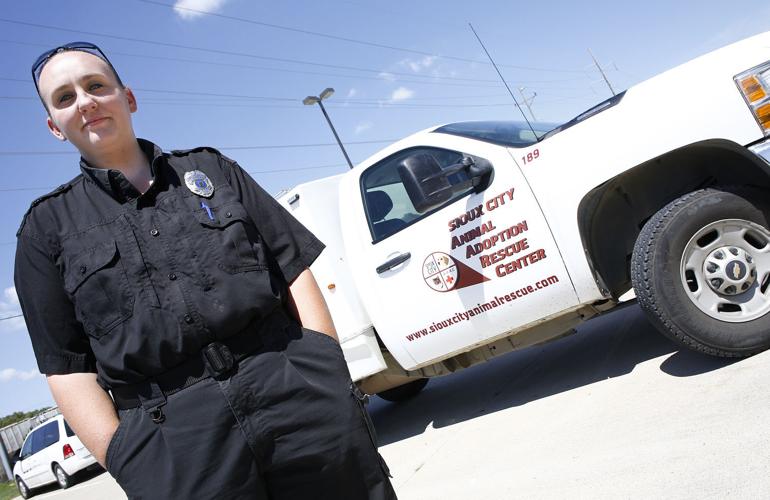
SIOUX CITY | Animal control officer Megan Lalk steps into the lobby of Sioux City’s Animal Adoption and Rescue Center and asks fellow officer Kenna Anderson if anything needed to be checked on that afternoon.
“We got a call about someone hoarding illegal snakes at an apartment in Morningside,” Anderson responds.
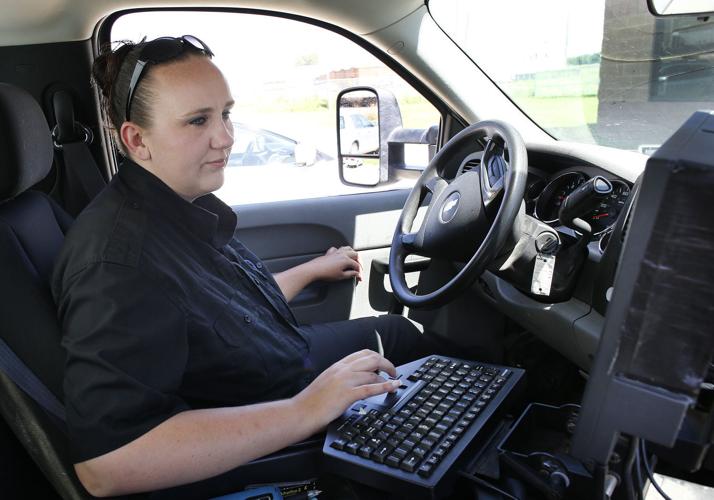
And with that, Lalk gets in the rescue center’s Chevy truck and heads off. After arriving and knocking on the door, it was apparent the renters weren’t home, so Lalk called the landlord and left a message explaining the situation.
“Unfortunately, things usually don’t get sorted out quickly,” she says, as she drives away to patrol the neighborhood.
There are two officers patrolling every day and one every night, 365 days per year. The 12-hour shifts are split among six officers, including Lalk.
People are also reading…
Summer is the busy season, says Lalk, with about nine out of the 12 hours of her shift spent in the truck driving around to empty live traps, catch stray animals and other miscellaneous jobs.
“As soon as kids get out of school, the busy season starts,” she says. “Kids are out walking their dogs, letting dogs out and they get away. Dog bites go up.”
Despite a large amount of time spent in the truck, Lalk helps out at the shelter caring for the animals, as well.
“You work wherever you’re needed,” she says. “If you’re called on the street, you’ll do that, but you might also work in the shelter.”
Being called out on a job can mean many things, and it’s hard to know what to expect.
“It can be someone with 50 cats or someone with four or five dogs,” she says. “You just never know until you get there.”
Lalk, who has been an animal control officer for eight years, took a week-long training seminar through the National Animal Care and Control Association in order to be certified for her position.
“I like working with people, but I love animals,” she says. “I’d much rather work with the four legged than the two, especially in this business.”
This is because people that get animal control called on them aren’t typically happy about it, often because there is some type of infraction taking place.
“People aren’t typically happy to see you pull up,” Lalk says. “If someone called you out there on someone else, when you leave you will have upset someone depending on if action needed to be taken or not.”
There are dangers to the job, most of which have to do with the animals.
“We’ve had a lot of people get bit,” she says. “When you’re dealing with unfamiliar dogs or cats or taking animals out of traps, it’s always a risk.”
Despite this, Lalk says she enjoys her job because she gets to be there for animals that really need it.
“It feels good knowing you are helping them out.”


