








“Fame is like a shaved pig with a greased tail, and it is only after it has slipped through the hands of some thousands, that some fellow, by mere chance, holds on to it!”
So said folk hero Davy Crockett, a famous man in his day and beyond who gained immortality at the Alamo.
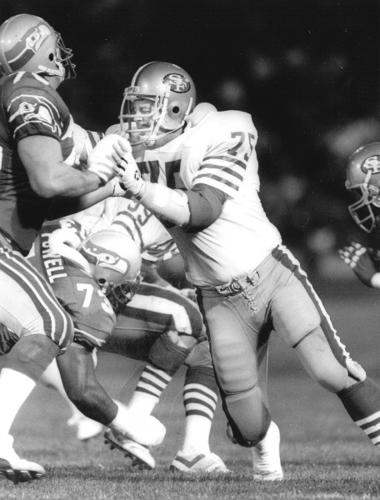
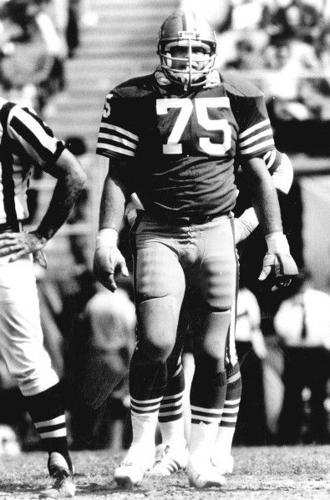
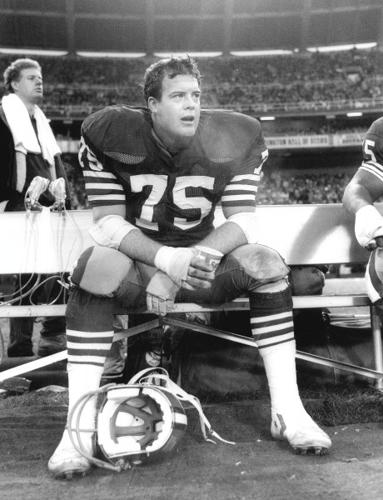
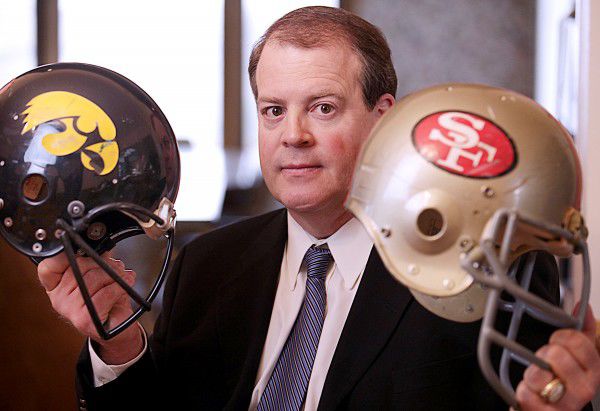
Working with an unshaved pigskin, John Harty of Sioux City held on to a certain measure of fame in his earlier days as an All-Big Ten defensive tackle for the Iowa Hawkeyes (1977-1980) and, more famously, as a tackle for the Joe Montana-led, Bill Walsh-coached, Super Bowl-winning San Francisco 49ers, the NFL dynasty of the 1980s.
His first football success came at Heelan High, playing on a state championship team for Dave Triplett. He has always had good coaching.
Today, at 51, Harty still lives in Sioux City. It's where he moved with his wife, high school sweetheart Monica, and their three children when his playing days were done. He still bears a striking resemblance to the 6-5, 275-pound gridiron star of 30 years ago.
People are also reading…
And he still insists that, well, he was never really that famous. “But I'd be lying if I said that it's not nice for people to recognize you. I mean it's got its advantages,” Harty said.
The other side of it is, if you get too famous or maybe have some success like the 49ers did, well, he was a lineman and he didn't have to deal with the kind of recognition that went the way of his quarterback.
For a short time, Montana was able to do what he wanted to do and nobody bothered him. But as his fame grew, it got to the point where he could no longer stop at the store on his way home from work to pick up a gallon of milk because everybody wanted to talk to him. “And if he doesn't stop and talk to everybody, he's a jerk and stuck-up,” Harty said.
At a reunion of the 49ers' five Super Bowl teams in Las Vegas a few years ago, Harty and a bunch of linemen, “just big schmucks with rings,” were hanging out in the lounge when Joe Montana entered. “You can just watch the people converging on the area and the cell phones. They're up there to take pictures of the guy,” he said.
Harty has complimented Montana on how he has handled that level of fame with such elegance. “He's just really nice to people and he's, if anything, a humble guy,” he said. “The patience that it takes to deal with that all of the time. Now you say it's the famous part of it. So now I don't really feel famous, but I don't want to be either.”
His first taste of fame at the University of Iowa left him disgusted with the attitude of some athletes and the people who wanted to treat them as royalty. “I wanted people to respond to me and want to be around me because of the person I was and not because I was a football star or something,” he said. “It was really a good lesson at an earlier age. It taught me right then, and I had no desire to be famous because I'm probably too private a person.”
Harty's most memorable brush with fame came in Super Bowl XVI when he helped tackle Bengals running back Pete Johnson near the goal line to help preserve the 49er victory. It was one of the most famous defensive stands in Super Bowl history.
“When you're playing in a playoff game or you're in the Super Bowl, that's a pretty unique experience,” said the man with two Super Bowl rings.
Though football, with its brutal training camps, had lost a little of the fun in the NFL that he experienced in high school and college, being on a winning team was rewarding. “I mean we won all the time. It was the place to be,” he said. “We had a great bunch of guys and awesome coaching. But we had a lot of schemes on both sides of the ball, and every week, they would change. So big stunts, situational analysis, statistical probability, the calls that are coming out that you have to react in a blink, on the field, on the go a lot of times. It was a business.”
He still misses the camaraderie on a team as classy as his 49ers, which he considers a sort of forerunner to today's equally classy New England Patriots.
Harty has no regrets about his football days, even playing for a struggling Hawkeye team. Bob Cummings was the Hawkeye coach Harty's first two years there, yielding the reins to the legendary Hayden Fry. “He was trying to change the culture and basically get people to believe that they could win,” Harty said of Fry. “At the end of the day, he found a way to win, and that's what it's all about. Everybody remembers a winner.”
Unfortunately for Harty, it was the year after he left Iowa that the Hawks went to the Rose Bowl.
“I always joke that I was an impact player,” he said. “The year after I left, they went to a bowl game. But it ended up that we were in the Super Bowl. So ... a better ring and it paid better. It all worked out, I guess.”
Harty's pro career ended early, the result of too many injuries, operations and rehabilitations. “I had about seven operations my last three years, four on a foot, one an ankle, an elbow, strange things,” he said.
And unlike today's better-paid athletes, Harty had to find a job, post-football. As a non-star player, even though he was a second-round draft pick, his base salary his first year as a pro was around $50,000. “These guys today make considerably more than that for wearing shoes,” he said. “ I mean today you have a signing bonus that will set you for life before you put a helmet on probably.”
He was just starting to make good money when injuries derailed his career.
“I would have liked to have played a couple more years. But I also wanted to be able to walk,” he said.
So that meant moving home to Sioux City. Also, he didn't care much for the value system he found in California (“It was kind of like Disneyland”) and he knew he had to go back to school somewhere to earn the degree he never completed at Iowa. So Morningside College seemed a likely choice. He earned a bachelor's degree there, then went for an master's of business at Wayne State College in Nebraska.
The big guy got funny looks at first from some of his fellow students at Morningside.
“You'd feel the eyes and stuff; but at the same time, I think other people were nice to see that I realized that education was the way,” he said. “When I went back to school, I went with a real zest. It wasn't like a wanted to get a degree, it's like I don't want to miss any question. I just took the same approach, the intensity level that you have for one thing and throw it in another direction. I think if you're willing to work hard and apply a work ethic and the discipline and get up out of bed every day and go after it, good things happen to you.”
His business career took him to such places as Long Lines, MCI, Morningside College, Westmar College (as its last president), Prince Manufacturing and Kind and Knox Gelatine. Today, he's a vice president of sales and marketing at Eastman Gelatine, working out of Sioux City. Where he wants to be.


