


In elementary school, all eyes turned to the only black child in the classroom when the teacher talked about slavery. Why did they have to look at her? It was humiliating.
It was the ‘60s, and the Civil Rights Movement was gaining ground. But not fast enough. When the same little girl wanted to go down to Foley, Ala., and meet her grandparents, she couldn’t. Civil unrest and violence kept her away, supposedly, safe in Sioux City. But not sheltered from the sorrow.
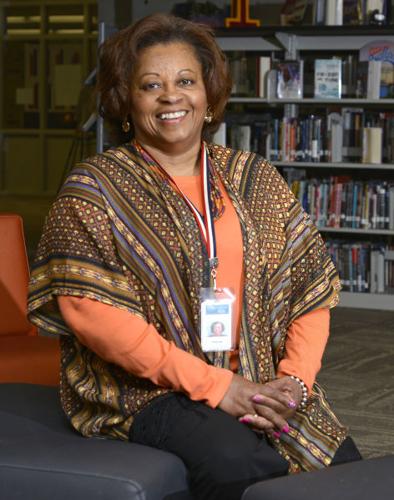
In her formative years, Flora Lee felt the pangs of injustice and that shaped who she would become in this community: an activist for equality.
“Just the pain and the hatred, I didn’t want to see that,” she said, her voice cracking and eyes welling with tears. “I didn’t want to live like that. And I didn’t want my children to have to live like that. So, that’s what pushed me here, and I continue to fight for it today.”
People are also reading…
Lee, 61, was recently recognized for her efforts to improve civil rights in Sioux City. The Human Rights Commission honored her and two other community leaders with its annual award.
Among her accolades, she was the first woman of color to be elected to office, sitting on the Sioux City Community School Board for 12 years. She volunteers, serves on committees and remains an active member of Mt. Zion Baptist Church.
The wife and mother of three also works as a special education strategist with the Northwest Area Education Agency, going into schools to offer equity training, conduct poverty simulations, develop anti-bullying initiatives, monitor individualized education programs and carry out other responsibilities.
In the halls of East High School, staff members light up when they see her infectious smile. Students eagerly greet her and chatter about countdown to graduation. Lee asks what’s next for them – just like a mentor once did for her.
Perhaps, most notably in recent years, she has risen up as a voice for disenfranchised members of the community.
Shortly after stepping down from the school board in 2003, she became president of the local NAACP and a driving force behind a visible project, started in partnership with sculptor Mark Avery.
His bronze bust of Martin Luther King Jr., installed outside the bus station, inspired the Celebrating Community Project. The sculpture park in progress pays tribute to 13 outstanding Siouxland citizens, who have selflessly helped marginalized populations.
One of the honorees happens to be a woman who was an influential figure in Lee’s life.
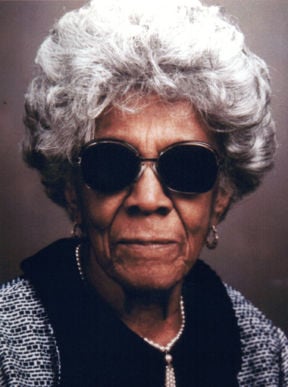
Beulah Webb, an activist for the aging, founded the senior citizen’s center. She also helped start the Booker T. Washington Club, which later became the Sanford Center.
She left a lasting impact on the community despite feeling alienated at first. When she arrived in Sioux City in 1924, she recalled, “I was a stranger within the gates here. No one put out their hands to welcome me. I think I cried for a whole year.”
She faced discrimination and unkind words directed at her because of the color of her skin. Eventually, she would be recognized time and again for the content of her character.
Webb, who lived to be 102, credited her love of service to her family, her mother in particular, according to Journal archives from 1979. The importance of education was instilled in her, and she passed that on to countless young people, Lee being one of them.
Lee shared her successes with Webb, who was her neighbor. When she earned her bachelor’s degree in sociology as a nontraditional student, Webb urged her to get a master’s degree. Lee did, and Webb encouraged her to go for a doctorate.
“She was always pushing people to do their best,” Lee said. “I think she saw something in me that maybe I wasn’t seeing in myself.”
Because of Webb, she’s able to recognize what she has to offer: ambition, empathy, kindness.
Her influence, along with that of her family who gave her a sense of working hard, love much and giving more, made her the woman she is today.
A fighter for justice, friend to all. Now, that’s something to see.


