


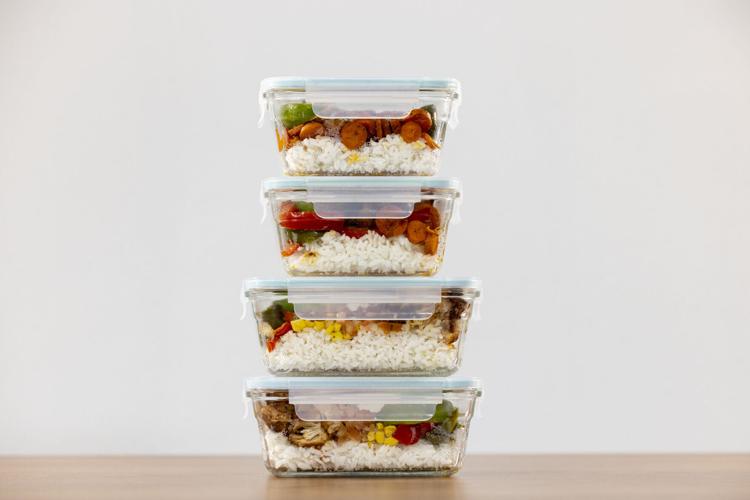
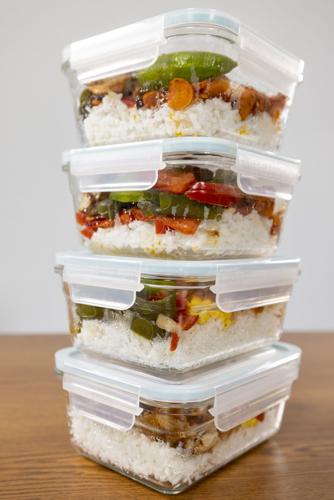
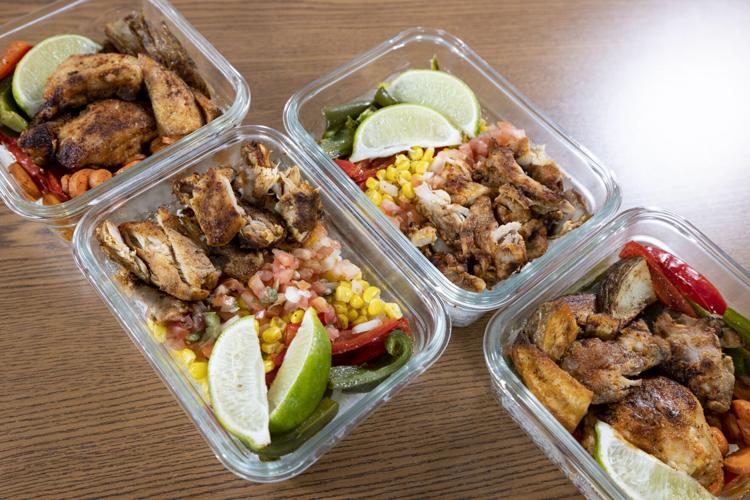
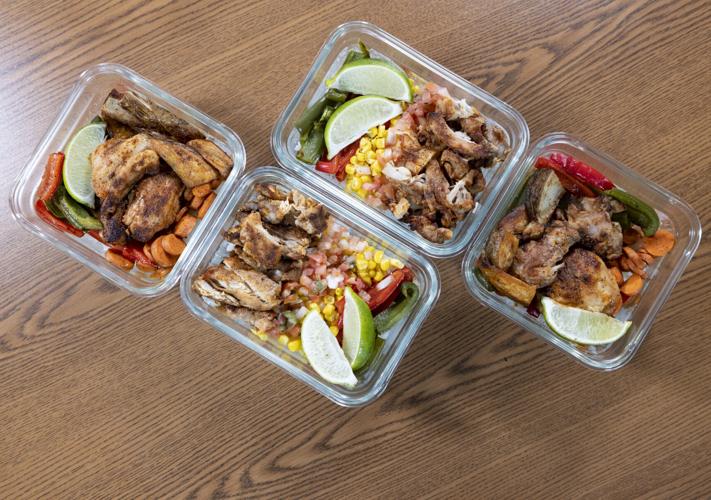
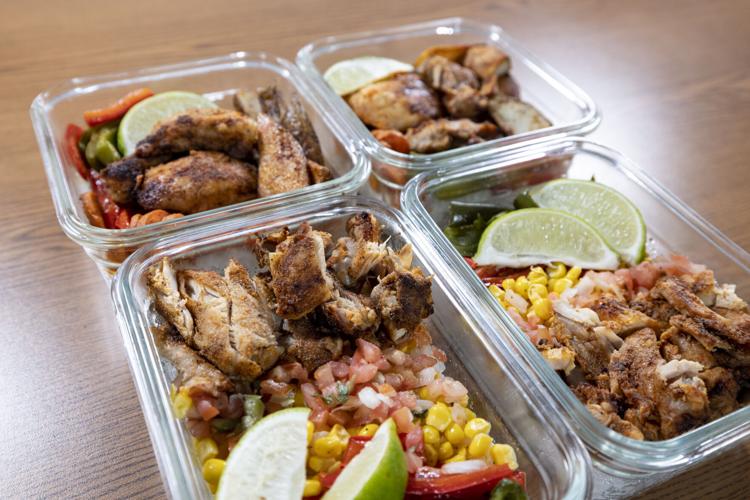
SIOUX CITY — As grocery prices rise nationwide, it's getting harder to make cost-efficient, delicious, nutritional meals every day.
Meal-prepping has become more popular as people’s lives become more on the go. It provides a way to eat meals that are cheap, healthy and ready to go when needed.
“It’s great to have something prepared that’s ready to go,” Andrea Parman, a dietitian with UnityPoint Health-St. Luke's.
Meal-prepping is versatile, and it's done differently by every practitioner. It's generally defined as preparing a meal or multiple meals in bulk and portioning it out into single servings.
Parman said meal prepping is not one-size-fits-all. For some people that can mean preparing snacks for the workweek or preparing lunches for the week. It can also mean preparing all the ingredients for the week’s meals at once.
People are also reading…
Meal-prepping saves time and money, reduces stress and food waste, and manages hunger, said Haley Strait, a clinical dietitian with MercyOne Medical Center.
Strait said she believes all dietitians are pro- meal-prepping. She said patients are bringing it up to her more because there are many videos on social media sites like Instagram and TikTok that celebrate and promote meal-prepping.
As consumer prices continue to increase, some may think it cheaper to eat out than cook at home.
Strait said it is very cost-efficient to meal prep. For example, the price of a commercially prepared meal at a restaurant is around $13 and the price of a fast food combo meal is around $9 to $10 in Sioux City.
Making homemade burgers with roasted vegetables and potatoes costs around $3 each.
“You could save $6 to $7 on one meal, and if you’re doing that five days a week … it equals up to around $2,000 a year you’re saving,” she said.
Food prices next year are predicted to increase between 2.5 and 3.5 percent. At-home food is predicted to increase between 2 and 3 percent, and restaurant prices are predicted to increase between 3 and 4 percent, according to the U.S. Department of Agriculture Economic Research Service.
Prices for at-home food and restaurant meals have trended separately for several years. The cost of food cooked at home actually went down in 2016 and 2017, while the the cost of restaurant meals has increased more or less consistently.
Casey Johnson, a dietitian with UnityPoint Health - St. Luke's, said cooking at home offers a chance to buy things in bulk and pursue sales on certain items. Using frozen fruits and vegetables and using cuts of meat that are on sale are a few ways to save.
Taking more time and planning can save money, she said. For example, buying a whole watermelon and cutting is cheaper compared to buying the more expensive pre-cut watermelon. Another example is meal prepping lunches instead of going out and buying a lunch daily -- the convenience of which is priced in.
Strait said research also shows people who consume less than one take-out meal a week live longer.
Another advantage to meal prepping is controlling what ingredients go into the food, and adjusting it to one’s dietary needs or personal tastes.
At a restaurant, consumers don’t know how much salt, sugar or oil is going into the meals. Cooking at home allows you to control what is going into the meal, Johnson said. Parman said restaurants tend to use a lot of salt and the side options are not typically nutrient-dense.
“At home, you could do a side of some steamed broccoli or maybe a side salad and those would pack a lot more different vitamins and minerals that would benefit our overall health better than a plate of fries would,” Parman said.
Strait said meal prepping is linked to weight loss and obesity prevention because it is a portioned meal.
The dietitians who spoke with the Journal said the best way to start meal prepping is by making a list of meals and foods they enjoy. There are hundreds of cookbooks and websites dedicated to healthy meal prep recipes, but if you don’t enjoy them, you won’t stick with meal prepping.
“If you’re picking out really healthy recipes and they’re not your favorite foods, you won’t feel satisfied after eating them,” Strait said. “It might cause you to not eat them and waste the food or you’ll probably not want to meal prep again because you’ll feel like you failed.”
You are also then able to choose meals that work within your specific budget or cooking experience. Another way to decide what meals to make is to look at what ingredients are already in your kitchen.
Johnson recommended the “Spend Smart Eat Smart” website through the Iowa State Extension and Outreach. The site provides recipes, a budget calculator and meal-planning guidance.
It's important to focus on a balanced meal with variety, meals that consist of proteins, carbohydrates, healthy fats, and fruits and vegetables for fiber, Strait said.
“If you’re building a meal with these kinds of foods it does help satisfy our hunger and it makes us feel full and provides us with the nutrients our bodies need to function properly,” Strait said.
Strait also said to avoid restrictive meals or low-calorie meals.
Starting small can make the task seem a little less daunting. Small daily snacks or a few lunches a week are a few starting points, instead of trying to do all the meals for the week.
Johnson and Parman recommended making meal prepping fun by involving friends and family.
“There are ways to make it fun and make it part of your life,” Johnson said.


