


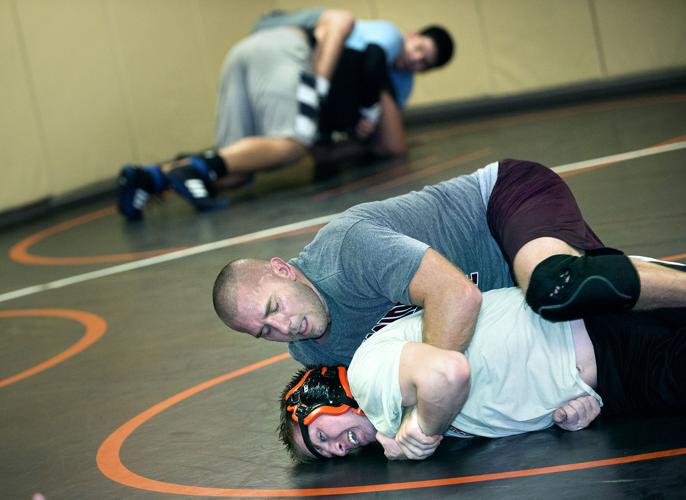

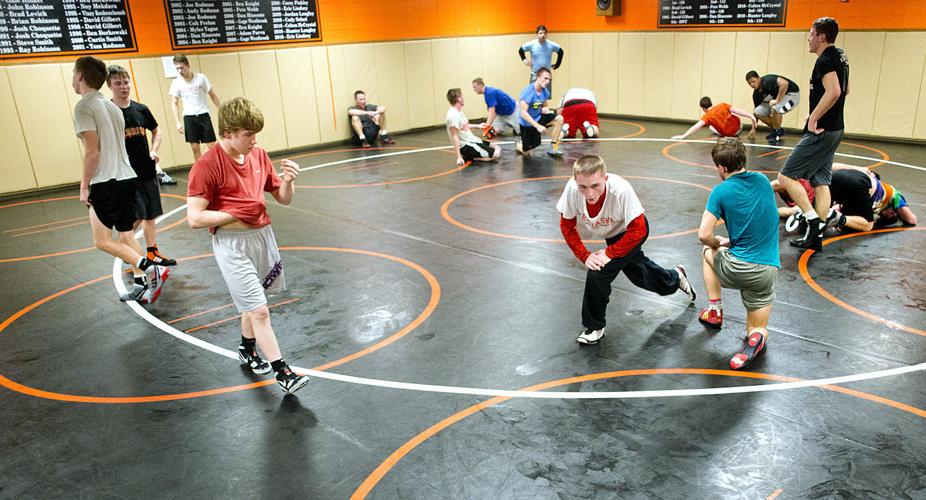
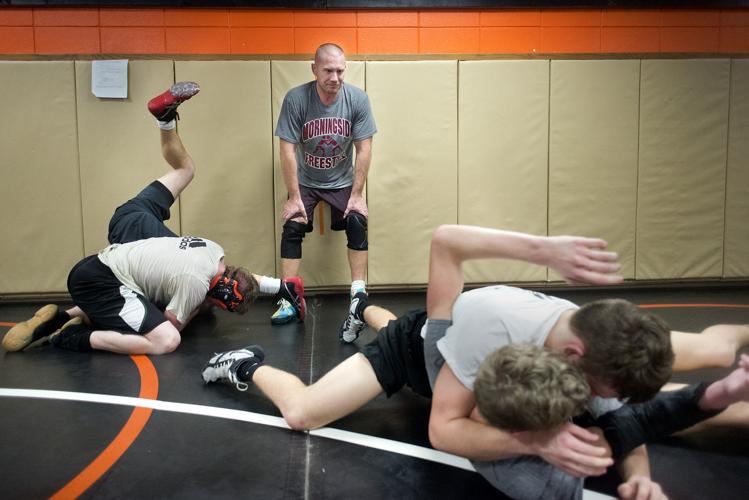
SERGEANT BLUFF, Iowa | After Clint Koedam talks about practice schedules and the varsity letter policy in a preseason wrestling meeting each fall at Sergeant Bluff-Luton High School, he hands out a grocery list and covers shopping ideas with parents.
Koedam, a veteran coach, spends one-third of his preseason talk focused on nutrition.
Eating habits in this sport, and probably all sports, is likely more important than take-downs, escapes and pinning combinations.
With wrestling, however, there is a stigma associated with weight-loss, a sport that, in the past, has sometimes seen participants in their teens cutting then adding weight in short-term bursts that arise around matches.
"We want to create healthy lifelong habits," Koedam says. "We don't just want a young person to be here competing for four years just to hang a meal around their neck."
People are also reading…
Instead, Koedam wants healthy student-athletes who work and compete and one day become healthy adults. He comes by this mindset honestly, as he didn't cut dozens of pounds during his prep wrestling days at West Lyon High School. His coach at the time, Ty Seaman (currently the activities director at Storm Lake High School) worked in the early 1990s to educate Wildcat grapplers on proper diet.
"Ty Seaman would talk to us about what to eat, what to drink and how to manage weight before the season began," Koedam says.
Because of his weight-maintenance regimen, Koedam never looked forward to the end of the wrestling season, either in high school or at Buena Vista University, where he earned a berth in the NCAA Division III national meet at 158 pounds in 1997.
"There are some guys I know who cut weight the wrong way (years ago) and they still remember those days and they still overeat and over-drink," says Koedam, who finished third at state in his high school senior season.
At Sergeant Bluff-Luton, parents are advised about weight maintenance and healthy eating habits. Parents learn quickly they might have to alter their family shopping and dining habits to benefit their child who dons the Warrior wrestling singlet.
Koedam remembers his family eating with him during his prep days at West Lyon. The Koedams would dine on lean meat and fresh fruits and vegetables during the season, rather than dining on pizza and fast food frequently.
Grocery lists Koedam pushes feature whole-grain breads and fruits and vegetables that are either fresh or frozen. "The peaches in a can? There's a lot of sugar in there," he says.
Additionally, lean meat is suggested, such as lean hamburger. Steak is fine, but Koedam proposes cutting the fat from the steak.
After SB-L wrestlers weigh in for a meet, they join for a meal. Those competitors open their coolers to find items like a turkey sandwich on whole-grain bread, Greek yogurt and a banana, foods all spelled out in what's termed a Competition Fuel Plan. At SB-L, there's a Fuel Plan for both dual meets and tournaments.
"We do have an assistant coach who watches for things like the foot-long sub that one of the guys might sneak in," Koedam says. "We know we are still dealing with 14- to 17-year-olds."
That said, a pleasure like the occasional sub sandwich, or a Snickers bar, is OK. Moderation is key.
"For me, it's always been ice cream," Koedam says. "I have ice cream three nights per week. It's important to allow yourself a little cheat like that. It calms your brain."
Koedam doesn't eat a gallon, of course. He advises against the king-size Snickers, too.
"A bad diet impacts how you perform," says Koedam, whose team recently won its second Missouri River Activities Conference dual-match wrestling title in the past three years. "You cannot maintain your mental stability on a bad diet. You need to keep your wits about you, and a bad diet, or improper weight loss gets in the way of that."
This wrestling coach, and many others in the sport, encourage wrestlers to be bigger, stronger and more energetic. That occurs through natural foods, regular eating and lots of hard work, both in the weight room and on the mat.


