

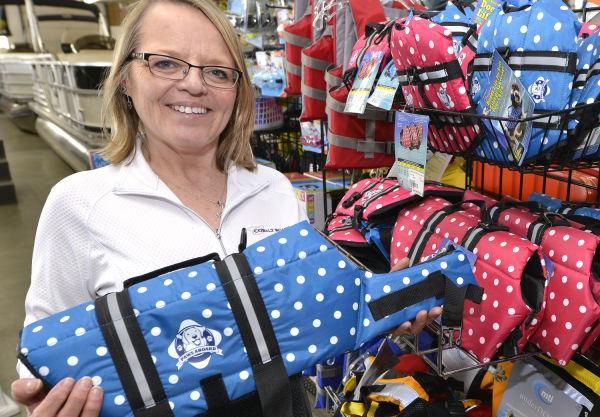
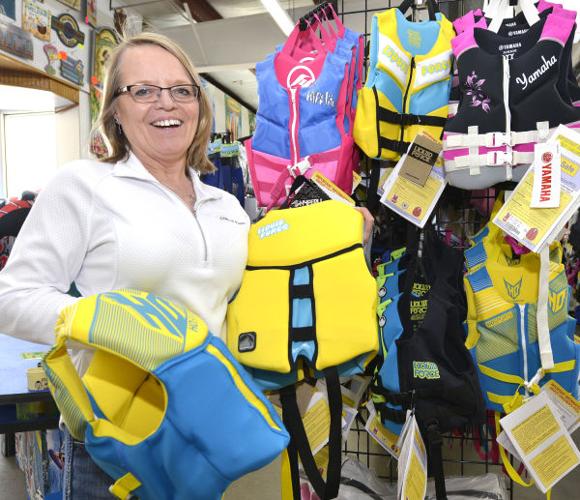
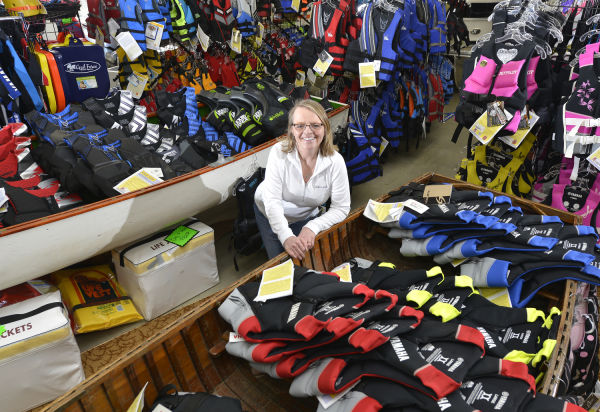
OKOBOJI, Iowa | Jean Schmidt's favorite task as floor manager at Parks Marina in Okoboji is helping customers try on life jackets, which she likens to shopping for a pair of jeans.
"The guys always think that they'll stay that size, that it will always be the same. (Life jackets) are made to fit differently," she explained. "A woman's style is cut shorter. Some of the other life jackets are longer. Some of the chest sizes aren't quite the same. Some of them are straight up and down. Some of them are a little bit wider."
Schmidt said more people are zipping and buckling up life jackets before hitting the water in a boat or a jet ski because the life-saving apparel is more comfortable to wear. Over the years, the material life jackets are made from has changed from nylon to neoprene, a versatile synthetic rubber.
According to the United States Coast Guard's 2012 Recreational Boating Statistics report, among the 459 drowning deaths in 2012, approximately 83 percent (379) of the individuals were reported as not wearing a life jacket.
People are also reading…
"Now they make the neoprene better, it's not quite as thick," Schmidt said. "There are a lot more panels to them, so they're a lot easier to move around and the neoprene breathes easier so lots of people are wearing them all the time, which is good."
Life jackets are sized by weight and chest size. Parks Marina, 24457 178th St., sells life jackets for infants, youth and adults up to size 5X. Schmidt said it's best to try one on before making a purchase.
"You want it to fit nice and snug," she said. "When you pull up on the shoulders, it shouldn't come up at all. It should lift you up out of the water."
Prices range from $19.95 up to $135. Life jackets that have more panels and are packed with a high-quality foam that isn't as thick, Schmidt said, will be more expensive.
You don't have to skimp on style while being safe. Neon colored-life jackets are popular with all ages. Ladies, Schmidt said, tend to prefer light purples and pinks, while men might opt for a life jacket with striping. Kids like bright reds and oranges. "Safety yellow" is Schmidt's favorite color.
Teen vests, which fit those weighing 90 to 100 pounds -- the same as an adult extra small -- are cut a little shorter for a child and come in a variety of designs.
Life jackets with frayed seams, mold or mildew spots, damaged buckles and foam that piles upshould be discarded, Schmidt said.
Children, she said, usually get a year or two out of a life jacket before it doesn't fit them anymore.
"They also have a thing called flex zone in the back, that way if you get a child who just went from the child to the youth -- where it goes 50 to 90 (pounds), that will actually tighten up in the back to fit that little one that just turned 50-55," she said.
A life jacket shouldn't rise over a child's ears or face, but fit snugly, according to Schmidt. She said parents shouldn't advance their children to the next size just because they complain it's too tight.
"The best life jacket is the one they're going to leave on. Make sure it fits them and is comfortable for them and they like it," she said.