

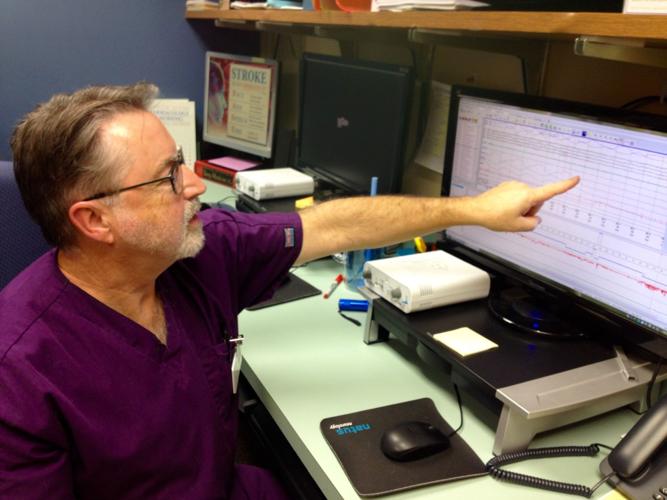
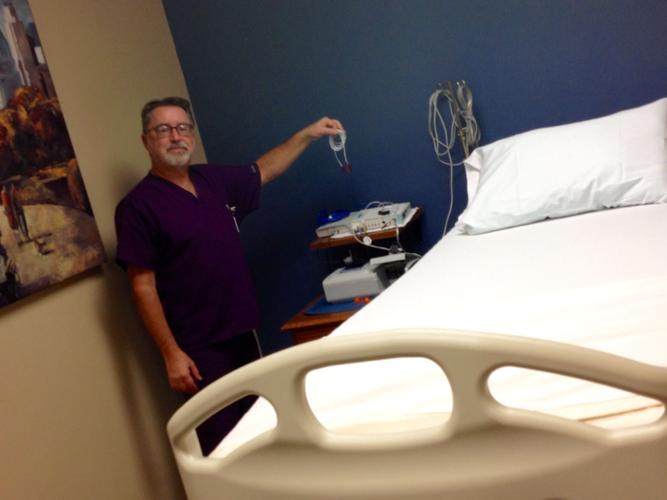
SIOUX CITY | When he started Mercy Medical Center's Sleep Lab in 1988, Mark Raymond struggled staying awake while he drove the five miles from the hospital to his home after a night of monitoring patients' brain activity, breathing, leg movements and heart rhythms while they slept.
"I'd try to sleep before (work) and adjust my schedule, but my biological clock was just too strong," Raymond, a neurophysiology technologist, said. "Some mornings I just had a heck of a time getting home."
Sleep is the foundation of wellness. Seven hours of good quality sleep is recommended for adults. Teenagers should get at least nine hours. Most people aren't getting the sleep that they need, leading to a spike in incidents of drowsy driving, which Raymond said is like drunk driving.
"If you are chronically sleep deprived -- if you miss out of sleep for a period of one to two hours chronically, or say you're awake for 18 hours at a time, that can be like having a blood alcohol limit of .08, which is legally drunk," he said.
People are also reading…
Driving while tired could actually carry a felony charge in some states if the behavior causes injury or death.
Kevin Roper, 35, of Georgia, struck Tracy Morgan's limo on June 7, 2014, on the New Jersey turnpike, critically injuring the comedian and killing one of his writers, James McNair. The Walmart truck driver is facing charges of vehicular homicide and assault by auto. The National Transportation Safety Board's investigation concluded that fatigue made Roper slow to react, which resulted in the crash. Roper had been awake for more than 28 hours.
Commercial drivers, people who change their shifts often or work long shifts, people with untreated sleep disorders such as sleep apnea and males age 16 to 29 are at greatest risk of driving drowsy, according to Raymond.
"At that age guys think they're invincible," he said of the latter group. "They sacrifice their sleep to do other things and they're out later."
Raymond said you could probably add in a fifth category of drowsy drivers -- people who take sedative medications to help them sleep. The effects of the medication, he said, could linger into the morning hours. While alert enough to get ready for work, Raymond said they could become sleepy while driving.
Head bobbing, he said, is the most obvious sign you're falling asleep at the wheel. Microsleeps, brief, unintended episodes of loss of attention, are the least obvious.
Patients referred to Mercy's Sleep Lab for a sleep study, Raymond said, have admitted falling asleep during the day while driving and driven into the ditch. In one survey, he said 60 percent of people admitted to driving drowsy and 30 percent have admitted to falling asleep at the wheel.
"Over 100,000 car crashes -- 16 percent of crashes -- are attributable to drowsy driving," he said. "About 5,000 or 6,000 of those end up in fatalities -- either the person falls asleep or injures or kills somebody."
Most drowsy driving occurs during midnight and 6 a.m., according to Raymond, especially for young males and truck drivers. People 65 and older often fall asleep at the wheel in the mid-afternoon.
"About 2 in the morning and 2 in the afternoon, if you've got a normal biological clock, that's when drowsiness is stronger," he said.
If you absolutely have to drive, but you feel sleepy, Raymond said turning up the radio or opening the window won't help you stay awake. He said consuming a cup of coffee or an energy drink is a better option.
"If it's overwhelming, a short 10 to 20-minute nap can be all it takes to refresh you and get you on your way," he said.