

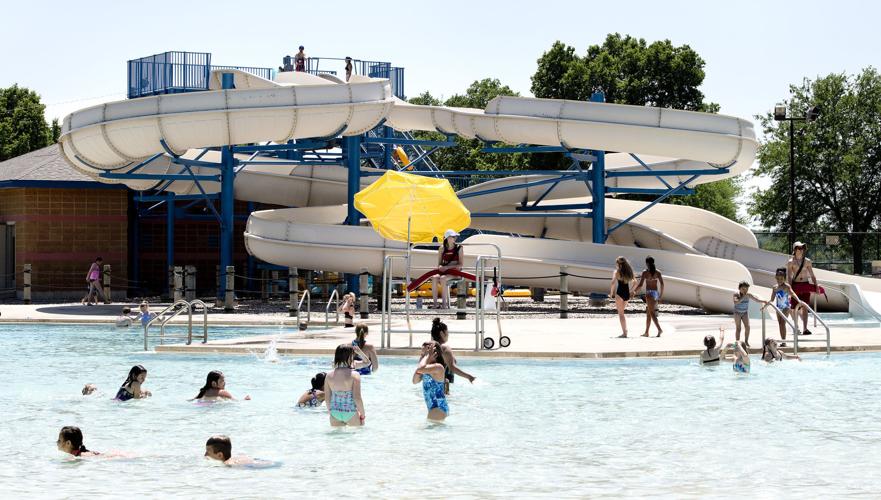
SIOUX CITY -- Don't swallow the water -- it's a warning visitors to swimming pools, lakes and other recreational bodies of water should heed this summer.
Microscopic parasites and pathogens could be lurking in the water, even if it's treated with chlorine or spraying from a spout.
Cases of recreational water illnesses (RWIs), which affect a person's stomach and intestines, skin or respiratory system, have risen over the past 20 years, according to the U.S. Centers for Disease Control and Prevention, with reports of of diarrhea-causing RWIs increasing by as much as 200 percent since 2004.
Tyler Brock, District Health Department deputy director, said there's "some risk" of contracting an RWI at a splash pad. Brock said public swimming pools are required to conduct bacteria testing once a month, but he said splash pads don't have the same requirements.
People are also reading…
"There have been outbreaks that have occurred at splash pads, even though there isn't necessarily standing water on the surface," he said. "It kind of depends on how that water gets recirculated; and a lot of splash pads it just goes down the drain and then gets spouted back out again, so it's a lot of the same water."
Matt Salvatore, Sioux City Parks and Recreation director, said water at all of the city's splash pads isn't recirculated and goes directly to the sanitary sewer. He said this method is more cost-effective than recycling the water.
"If you recycle the water for a splash pad, you've got to chlorinate it. Basically you're treating it as a swimming pool at that point," he said. "All of our splash pads are on a 10-minute timer system, so if they're not being utilized, the water's being conserved."
Healthy swimming
Public health officials from 32 states and Puerto Rico reported 90 recreational water-associated outbreaks for 2011 and 2012, the most recent years data was available, to the CDC's Waterbourne Disease and Outbreak Surveillance System.
People become infected with cryptosporidium, escherichia coli, shigella -- a contagious bacterial disease -- and giardia, a germ that can survive up to 45 minutes in properly chlorinated pools, when open wounds come into contact with infected water or if they swallow or inhale the water.
Sixty-nine of the outbreaks involved treated recreational water. Of those cases, 36 were caused by cryptosporidium; and 21 were caused by escherichia coli, a rod-shaped bacterium. In total, 1,788 people were sicked, 95 were hospitalized and one person died.
"Cryptosporidum and shigella are common. I would say shigella is actually probably a little bit more common than cryptosporidum," Brock said of RWIs, which cause abdominal pain, diarrhea, nausea and vomiting.
Chlorine doesn't always kill bacteria. Cryptosporidium, a microscopic parasite, is very resistant to chlorine and a common cause of RWIs. In 2018, 27 confirmed and probable cases of cryptosporidum were detected in Woodbury County. So far in 2019, the county has tallied 9 cases. The most common symptom of cryptosporidiosis is watery diarrhea. Other symptoms include, nausea, dehydration, fever and stomach cramps.
Brock said the vast majority of the cryptosporidium cases tallied in Woodbury County are not related to splash pads or swimming pools.
"Most of these cases we had before it was swimming weather at all. There's a variety of ways people can get cryptosporidium. People get it through animals, too," he said.
Keeping children out of the pool or splash pad when they have diarrhea or vomiting and closely monitoring babies and toddlers who wear diapers is key in preventing RWIs, according to Brock.
"Just preventing those kinds of things from getting in the water is really important. The biggest thing is, just try to really avoid swallowing the water," he said.