
SIOUX CITY — Traditional soaps materialize from two key ingredients: A kind of oil or fat (olive oil, hempseed oil, castor oil, animal fats, whatever it may be) and the highly caustic and toxic substance known as lye, or alkali metal hydroxide.
Other components may be added to improve the scent or other properties, but the workhorse of soap is lipid and lye.
"A lot of people don't realize this, but soap -- all soap -- starts off by being made with lye," said Jennifer Cooper, the "Crazy Soap Lady" who makes soaps and other personal care products in her Sioux City apartment. "The process, you have to be pretty careful with it, because if you get any of it on your skin or anything like that, it can burn you. So, it involves wearing gloves, wearing eye-safety goggles, a mask."
In the distant past, when soap-making was done at home and the product itself was often rather crude, lye was obtained by combining water and wood ash, creating potash lye, while cooking grease and tallow made up the oil/fat component.
People are also reading…
The process today isn't quite so labor-intensive and filthy, but the components are fundamentally the same.

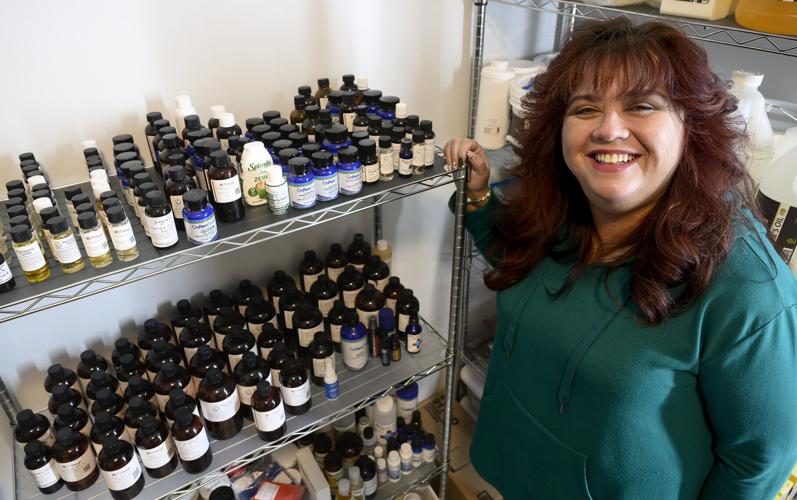
Jennifer Cooper is shown with shelves of fragrances and supplies.

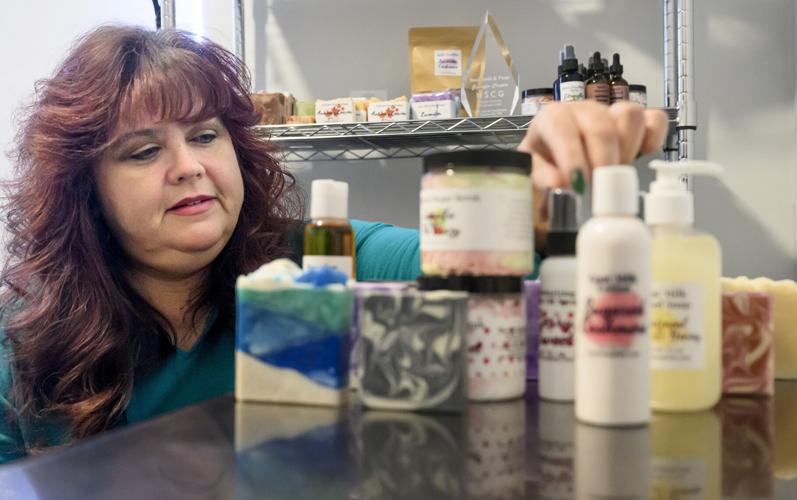
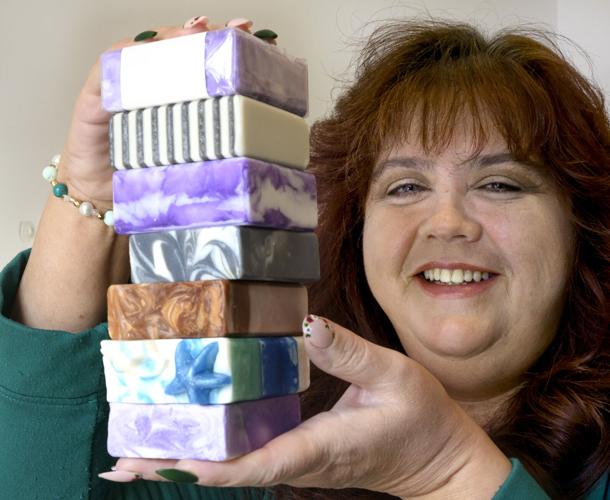
Jennifer Cooper makes numerous variety of soap, as well as lotions that she sells at the Sioux City Farmers Market.
And while lye is harmful to any living tissue, soap is not. That's because the lye and the oil/fat undergo a mixing-and-transformation process called saponification; they are, in a word, soap-ified.
"Within 24 hours, generally, the lye saponifies," said Cooper, a Georgia transplant to Sioux City. "So the lye is no longer lye. It actually becomes soap."
Though the soap is safe to use after only a day, Cooper goes the extra mile and allows her cold-process soap to "cure" for six weeks. "So basically, after I make my soaps, I have to let them just sit there on a shelf, so that way they'll harden up more. The longer they sit, the more moisturizing they are for your skin," she said.
Cooper (whose husband is Journal Circulation Director Tommy Cooper) has made soap since 2017, initially as Christmas gifts. It was a hit. "They really liked it, and I realized that I really enjoyed doing it," she said.
She got the "Crazy Soap Lady" sobriquet from her youngest daughter, who exclaimed, upon seeing her mother with all of her soap-making supplies, "Oh, my gosh -- crazy soap lady!"
The name stuck.
"People usually just kind of giggle at my name," she said.

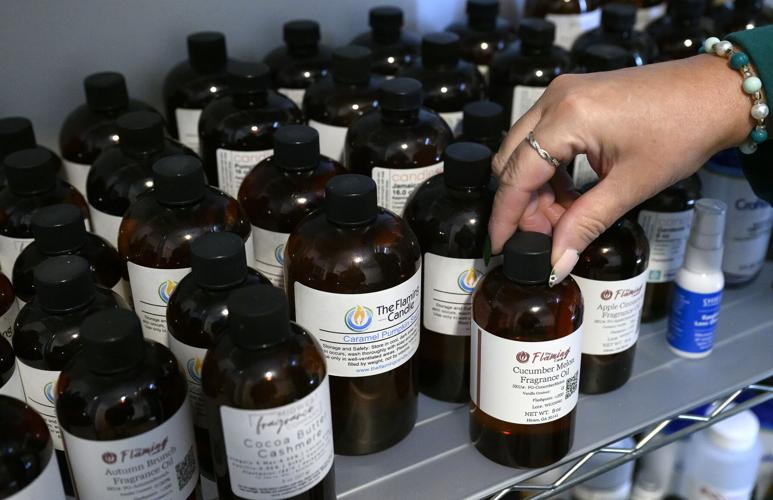
Countless fragrances result in endless possibilities for the Crazy Soap Lady.

Soap stacks up at Jennifer Cooper's home before the selling season begins.
Her product line expanded from melt-and-pour glycerin soap to cold-process soap and hot-process soap, lotions, lip balms, body oil, foaming sugar scrubs and soy candles. (The latter she makes "generally in the fall and winter, not so much necessarily in the summer when it gets real hot.")
Cold-process and hot-process soaps are differentiated by the time it takes for the soap to fully saponify and cure; cold-process soaps aren't fully ready until they've had their weeks of rest, while the hot-process soaps don't require such a long curing process, though soap-makers can opt for a longer curing. As the name implies, there is more heat in the hot-process soap production process than in cold-process.
Most of Cooper's soaps are scented with essential oils and skin-safe fragrances, though she is able to make unscented soaps for those who prefer it.
Cooper sells her Crazy Soap Lady products at the Sioux City Farmers Market, which opens for the season May 4; this will be her third year at the Farmers Market.

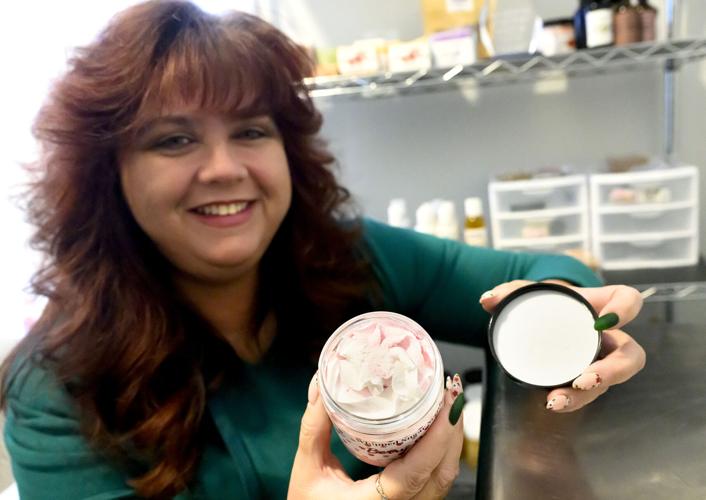
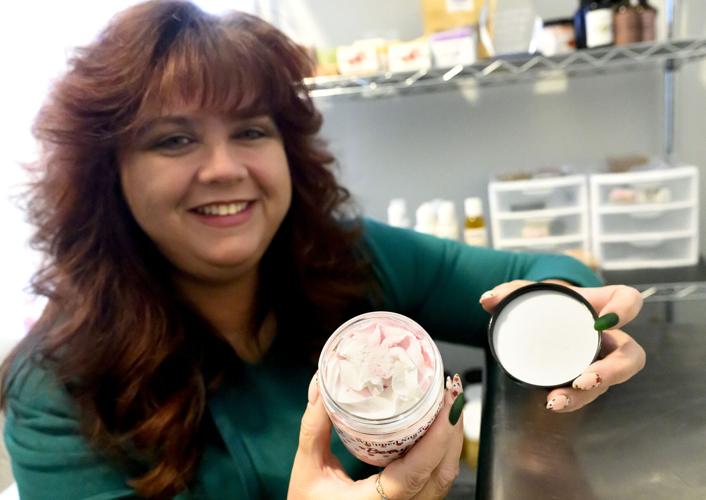
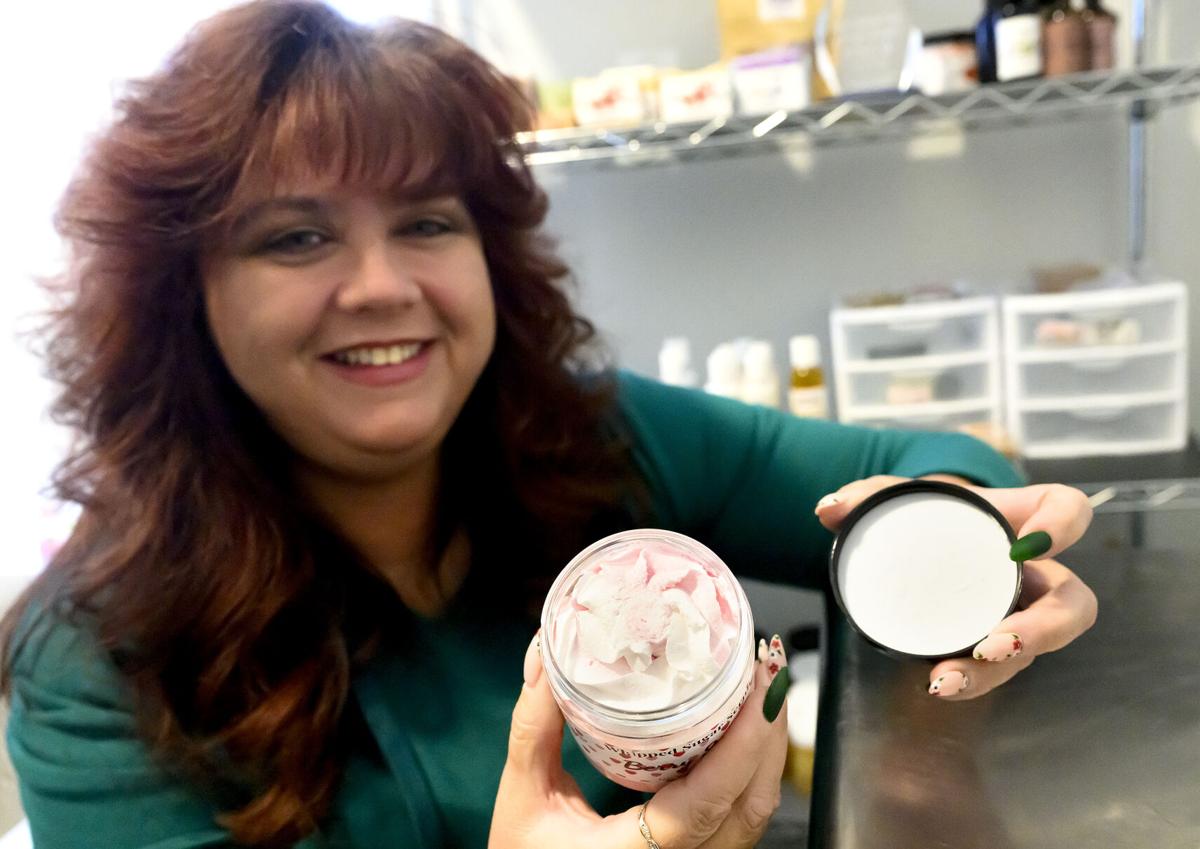
Jennifer Cooper displays a jar of lotion at her home-based business, Crazy Soap Lady.
Though she said she usually makes soap year-round, the Crazy Soap Lady took a break after the Farmers Market closed last fall.
She spent this spring in soap-production mode, to get her inventory rebuilt and ready for market, where she's a regular.
"I like being out at the market, I do really well out there," Cooper said. "And I'm generally there every Saturday."