

SIOUX CITY | The chili at UnityPoint Health - St. Luke's cafeteria was a staple meal for Leslie Heying, until she found out how many calories were in it.
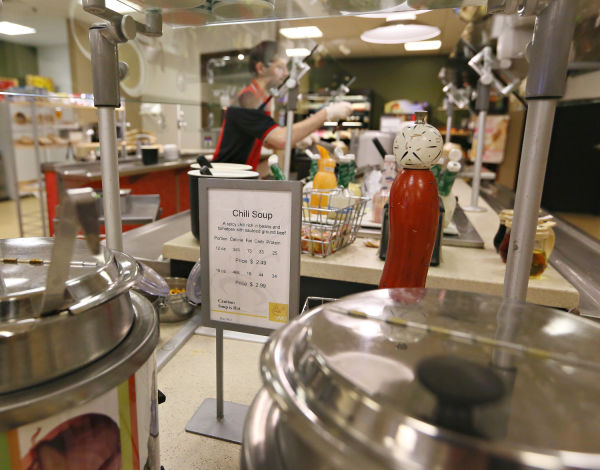
With the number 349 starring back at her for a 12-ounce bowl, the hospital's public relations coordinator opted for turkey and rice soup instead.
"In comparison to the chili, it's a lot healthier," Heying said. "I think I've changed my choices because of these numbers."
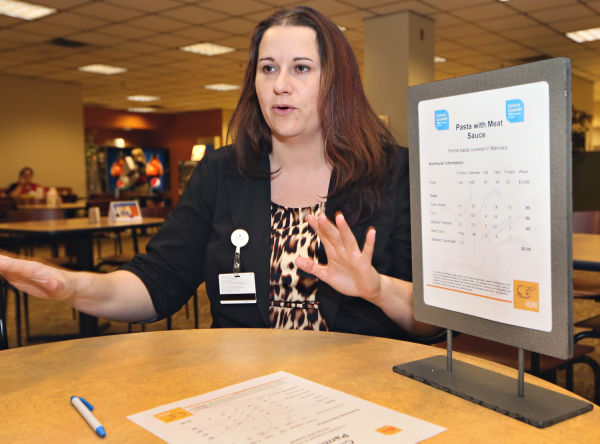
Since late September, nutrition/food service operations manager Christy Johnson said signage displaying the calorie, fat, carbohydrate and protein content of soups and entrees has been on display in the cafeteria to help employees, students and patients' family members make better choices.
Every day, new nutritional information printed on paper is inserted into metal holders that sit at the food stations. Color-coded icons help patrons easily identify items that are 500 calories or less or contain zero trans-fat.
People are also reading…
"Customers ask us a lot, 'What's in that? Is it good or bad for me?" Johnson said. "It was kind of in response to their questions."
She said the "eye-opening" information was also released to support for the Blue Zones Project. UnityPoint Health - St. Luke's was named a Blue Zones worksite in July. To qualify for the designation, employers must create a healthier work environment.
Nearly 10 days had passed before Johnson said she heard customers comment about the signage. Then, she said, the conversations spread like "wildfire."
"There's been a lot of interest around it," she said. "So far they've been very complimentary, and I've heard that it's helped them make better choices."
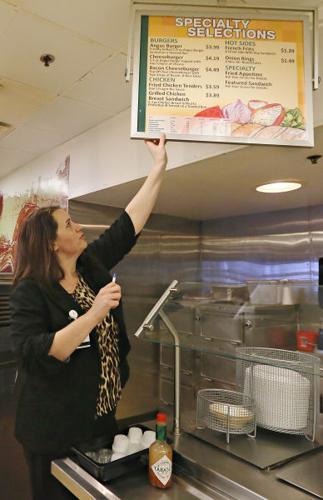
The cafeteria's "hot zone" offers three entrees. Customers can also build their own panini, make a salad at the salad bar, or choose between two soups.
"I haven't had the chili since you put those signs up," Heying said to Johnson. "And I love the chili!"
"Don't eat the crabby Swiss," Johnson countered. "I don't even know if we should put it out anymore."
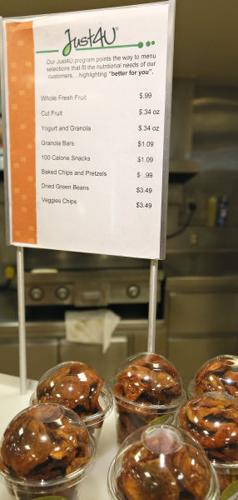
There are many healthy options available at the cafeteria, according to Johnson. She said vegetables are steamed and free of butter and salt. Potatoes are homemade, and the salad bar, she said, is packed with beans for protein. A yogurt bar with dried fruit is a hit, as well as humus, a Middle Eastern dip composed of chickpeas.
"Although it's high in calories it's chock full of nutrients," Johnson said.
Patrons will continue to see healthy changes being made at the cafeteria. Johnson plans to roll out a Blue Zones-themed food station by the end of January.