
Weeding out “clutter” from cupboards, closets, drawers and bookshelves is getting easier for me.
That juicer I haven’t used for years? Somebody else can probably use it. That set of salmon-and-black fabric placemats? What was I thinking? Even some of the cookbooks that crowd my bookshelves are open to consideration. Do I really need that many holiday cookie titles?
But some areas of the bookshelves are off limits when it comes to clearing out. Near the top of the list are precious vintage recipe booklets that serve up slices of food history and kitchen appliance marketing trends. Each offers a precious glimpse into where we’ve been, what was cool and why it no longer fits our lifestyles.
Chafing dishes, for example, were stars of home entertaining in the 1960s when the likes of Beef Stroganoff, Lobster Newburg and flaming desserts were all the rage. Sterno-fueled versions gave way to electric buffet appliances about the time we started hiking up our hemlines and teasing out our hair.
People are also reading…
Other nostalgic recipe booklets show us that some products never really leave. They adapt to our changing ways, but the essential product endures. Such is the case of Jell-O. A recipe booklet titled “Joys of Jell-O” published by General Foods Corporation is a prime example of product staying power.
There’s no copyright date in “Joys of Jell-O,” but the introduction holds a clue. It takes readers back to 1897 when Jell-O Gelatin first “grandly shimmered its way into American dining rooms... Just how many brands in your kitchen go back 65 years?” That makes this 95-page recipe booklet an early 1960s consumer piece. It followed many other Jell-O driven recipe booklets which started appearing early in the 1900s.
Today, Siouxland isn’t likely to deny or even downplay its Jell-O heritage. Jell-O is part of our food past and present. We serve it plain, buy it packaged in its most basic form or as single-serve products. More and more, we scoop it up as a deli “salad” ready for the table.
Back 25 years ago, Jell-O was less widely acknowledged. The 1986 Journal Cookbook called on two of the top food authorities in the nation to comment on the pervasive food “snobbery” of that time. Foods with genuine social roots, including Jell-O, weren’t getting much respect as we were trying to distance ourselves from a meat-and-potatoes heritage.
Authors and food anthropologists Jane and Michael Stern served as our 1986 Journal Cookbook judges. They embraced the opportunity to learn more about what people really ate rather than European-influenced trends that would never take hold in Siouxland.
“The difference between Europe and America is that in America when traditions get old, we throw them away. Europeans would sooner die than change anything they do. Americans are almost embarrassed about our meat-and-potatoes cuisine.” Jane said that in a 1986 Journal Cookbook story. She was quoting another food writer with whom she agreed.
The Sterns’ “Real American Food” (Alfred A. Knopf; 1986) had come out about the same time as our annual cookbook. That accomplishment followed at least 10 other books, including “Roadfood” and “Square Meals,” by the same publisher. The authors crisscrossed the nation in their Volkswagen, always looking for food people really ate. In the Hawkeye State, they found Jell-O in a rainbow of jiggly versions. “When you buy cookbooks in Iowa, every little town has 100 different ways of making Jell-O,” Jane said.
It’s likely many of those ways were inspired by General Mill’s collection of Jell-O recipe booklets, including “Joys of Jell-O.” It’s no surprise that the bulk of the early ’60s recipes were molded affairs complemented by several pages of illustrated directions on the delicate art of unmolding Jell-O. Additionally, “Joys” told readers how to whip, cube, flake, layer, scallop and crown Jell-O.
As for recipes in the vintage booklet, there’s plenty of familiarity with the likes of Cherry Waldorf Salad with diced apples and bananas. Jell-O “ambrosias” tell us that some things never change. Other recipes are more curious. Herb-Glazed Sandwiches, for example, go like this:
Lemon Jell-O, salt and cayenne dissolve in a simmered mix of water, peppercorns, bay leaf and dried dill. Next, vinegar is added to the hot liquid. After chilling, the syrupy mixture is poured over luncheon or tea sandwiches of your choice. “Your luncheon or tea sandwiches stay fresh and flavorful under a glaze,” according to the vintage recipe.
Among the suggested sandwiches for this Jell-O herb glaze? Pumpernickel bread, spread with mustard and topped with Swiss cheese, sauerkraut and corned beef.
Just as intriguing are Jell-O recipes for Old-Fashioned Cole Slaw; Barbecue Salad; Chicken Salad Surprise; and even Easter Eggs. Perhaps the most nostalgic of them all is Creamy Freeze – an illustrated frozen treat molded in the type of metal ice cube tray I haven’t seen for decades.
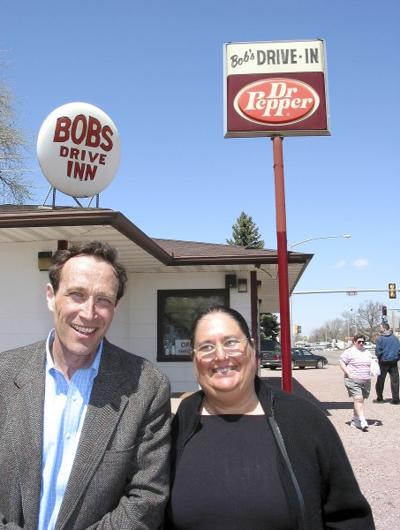
The Sterns’ participation in the 1986 Journal Cookbook hasn’t been their only link to Siouxland. Their visits have kept them in touch with some of our longest-running authentic Siouxland food establishments, including Tastee Inn and Out; Miles Inn; The Green Gables; Milwaukee Wiener House; Bob’s Drive Inn, and Archie’s Waeside both in Le Mars, Iowa.
In our most recent reconnection, Michael reiterated his feeling that our meals – wherever we eat them – are about much more than something delicious to eat. They’re about our “food, community, heritage, cultural touchstones and values.”
As the judges for the 1986 Journal Cookbook, Jane and Michael chose Caramel-Apple Ladder Loaf as the grand prize. No Jell-O in these warming rolls, but plenty of comfort. Hattie Johnson, of South Sioux City, baked the winning entry.