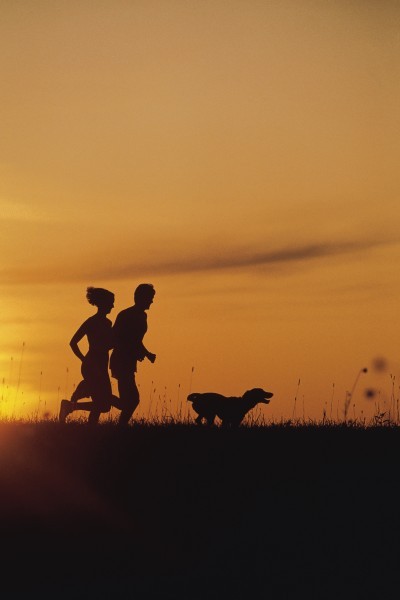

Getting out of bed, lacing up your shoes and pounding the pavement can sometimes feel like a chore.
Inject a little joy back into your run with an exuberant canine. The wag of a tail and the spring in his or her trot may be all the motivation you need to get out the door or go that extra mile.
Although dogs make great running partners, Brooke Gilbert, a veterinarian at South Sioux City Animal Hospital, said there are some things you should know before you take your beloved pooch on a run.
KNOW YOUR DOG'S ABILITY
Each breed has different abilities, Gilbert explained.
Yorkshire Terriers and Chihuahuas are capable of accompanying you on power walks or short, slow jogs. Leave them at home if you're planning a long run.
People are also reading…
Although Jack Russell Terriers are small dogs, Gilbert said their energy makes them good runners.
"They're a little bit of a tripping hazard, so you have to be careful," she said.
Golden Retrievers and Labrador Retrievers are generally obedient, Gilbert said, which makes them an optimum choice for road running.
"If you do trail running the Border Collies or the herding breeds (German Shepherd Dog, Collie, Belgian Malinois) are really good for that," she said. "If you're doing long, slow runs, Standard Poodles or Dalmatians are good."
Running could negatively affect the health of breeds that have certain traits or are predisposed to certain conditions.
Extra large breeds like the Great Dane, Gilbert said, can develop hip dysplasia. She recommends that these dogs be evaluated by a veterinarian before beginning a running regimen.
Dachshunds are prone to developing Intervertebral Degenerative Disc Disease; and breeds with broad and short brachycephalic skulls, like the pug and bulldog, have respiratory problems.
"They have a hard time breathing as it is," Gilbert said. "When they get really excited then they have an even harder time."
STARTING OUT
Although you should wait until your puppy is at least 9 months old before you take him or her running with you, conditioning can start early on in life.
Walking your puppy and training it to obey commands is essential for making your dog a good running partner, according to Gilbert.
Once the dog is old enough and well-mannered, she said you can start running.
Gilbert recommends outfitting your dog with a harness that goes around the body rather than a collar because it could strain your dog's trachea if it pulls on the leash. A gentle leader head collar may also be a good choice for a dog that is just learning to run or is known to chase squirrels or rabbits, she said.
To keep your dog hydrated, Gilbert said you should bring a dish with some water along on your run. If your dog is well conditioned and you are only going a short distance, she said you can leave the water at home.
Sidewalks or trails are fine for dogs to run on, Gilbert said, but she urges owners to check their dog's paws afterward for blisters or snowpack and watch for any signs of lameness.
Running half a mile with with your dog at a comfortable pace is a good place to start, according to Gilbert. From there you can build up your dog's mileage, depending on its breed.
Before taking off on your run, she said it's a good idea to warm your dog up with a short walk.
"They can pull muscles just like we do and stretching them out and conditioning them is great," she said.
Lagging behind and laying down, are also signs that you are going too far or too fast, according to Gilbert.
Even if they're laboring, she said some dogs will keep running.
"They get endorphins like we do and it can mask their pain," she said.
If your dog's tongue is hanging outside of its mouth, the corners of its mouth are pulled pack and it is panting deeply, Gilbert said it's time to stop running.