
Back in the day, high school business classes were humdrum and filled with stuff that wasn't always applicable to many students.
Now, high school seniors are becoming financially literate with information which will be important for the rest of their lives.
Indeed, the state of Iowa requires high school seniors to take a personal finance course before they graduate.
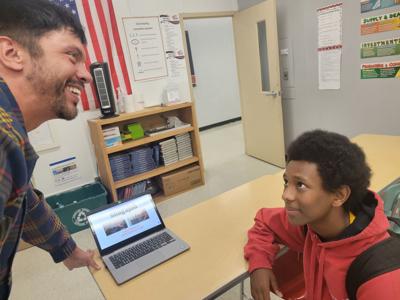
Yet the course Sioux City's North High School teacher Daniel Duncan offered students info that was more in-depth than starting a saving account and maintaining a checkbook.
During his Next Gen Personal Finance class, Duncan taught user-friendly lessons on everything from types of credit, maintaining a budget and, most important, how to pay for college.
"By the time students are in their senior year of high school, personal finance is the first thing on their minds," he explained. "They begin the semester with some fear. Then, the lightbulb starts going off and the kids see how everything they do today can affect the rest of their lives."
People are also reading…
This was the case with Abudi Safi, a 12-grader who had concerns over college.
Interested in attending either the University of Iowa or the University of Minnesota, he was taking the personal finance class to see how he could apply for scholarships and grants.
Safi also wanted to be able to play for tuition, fees and books without facing years of debt.
"That's a big concern for many seniors," Duncan admitted. "Some may even think college isn't an option due to the expense. If they knew about the wide variety of grants and scholarships available to them, things may appear less daunting."
OK, what can you do after college? Specifically, how should students position themselves when entering the workforce?
Duncan said the Next Gen curriculum offers instruction on finding the right career path, creating resumes, cover letters and LinkedIn profiles that get results.
Lesson plans also include everything from mock job interviews and learning how to dress for success.
Such skills are especially relevant for Safi, who will be the first person in his family to attend college.
"I always knew I had to plan for my future," he said. "Then it hit me that the future is now."
Duncan can appreciate where Safi is coming from.
"There are some required courses that aren't relevant to all students," he explained. "A personal finance class is relevant to everybody, no matter where your future will take you."
Duncan doesn't simply teach Next Gen. He admitted he's learned a thing or two from the curriculum.
"It's pretty common to hear teachers say 'Boy, I wished they offered a class like this when I was a kid,'" he said, shaking his head. "That is definitely true here."
However, Duncan said it is never too early or too late to start on the path of financial literacy.
"I'm just happy that my students are getting a bit of a head start when it comes to their own personal finances," he said.