


ORANGE CITY, Iowa -- Sometimes referencing your house as a "barn" is a good thing.
It's also a reality for Clayton and Deb Korver.
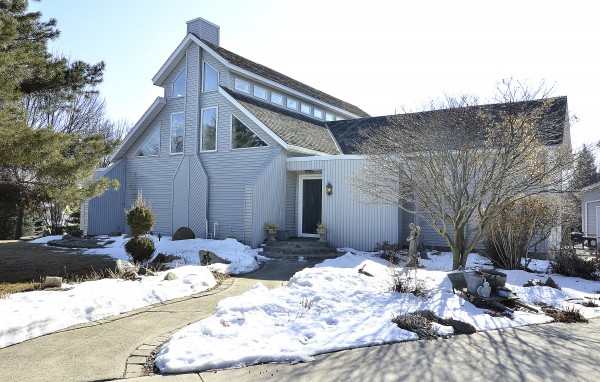
Although from the curb, the Korvers' home in this Sioux County burg looks like any other neighborhood house, its heritage is quite different -- as is its decor.
"I like to call it 'Indiana Jones meets Architectural Digest,'" Deb quipped.
Everything in the Korver home is a glimpse into who these Orange City residents are, because if reflects the history of their lives, including the structure itself.
Clayton purchased a 100-year old barn near Ashton, Iowa, in 1988 and spent 10 days dismantling it.
Clayton put an ad in the paper looking for barns.
"I had planned to use one as an art studio," he said.
People are also reading…
But after meeting and marrying Deb later that year, those plans changed and the barn was on its way to becoming the couple's future home on a cul-de-sac.
"With the help of family, we laid a basement foundation in the spring of 1989," Deb said. "It was covered for the winter and work began again he following spring."
With his own small crew, Clayton finished the exterior of the home during the summer of 1990.
"However, we ran out of funds and the house sat empty until 1992, when we finished part of the interior and moved in," Deb added.
Work continued for the next seven years, with siding added in 1994, a master bath in 1998 and the piece de resistance -- a back patio/garden room, completed in the summer of 1999. The home's exterior designer was Bob Visser of Sioux Falls, S.D.
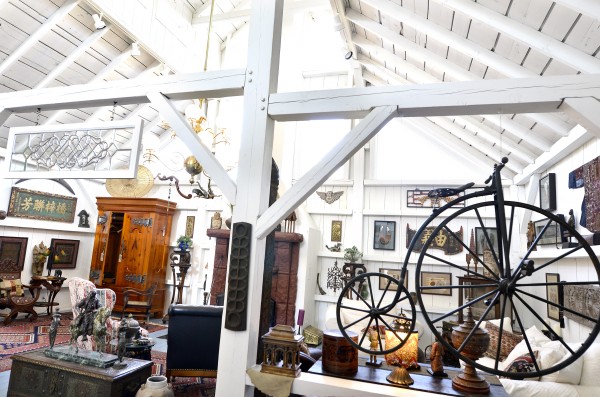
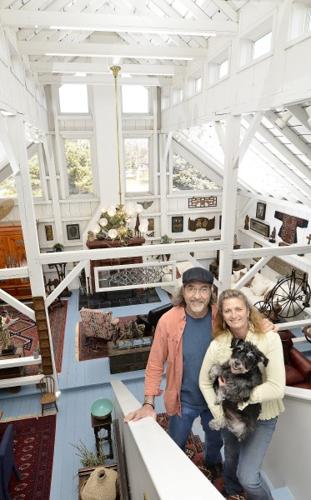
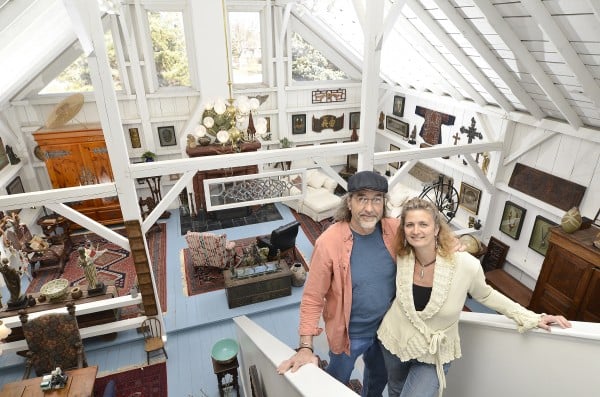
The original timber barn forms the centerpiece of the 4,500 square-foot home as a great room, dining area and kitchen.
Two contemporary additions on either side form the garage and the master suite. And in the loft area of the house, hay has been replaced with a studio/office area.
Adding to the home's Old World style is a special collection of art and antiques from throughout the Midwest and the world. Many of the pieces have personal meaning for the Korvers, making this barn-turned-house a place to call home.
Entering the Korvers' home, one is struck by the sensory aspect of the decorations. Under one's feet is a blue-hued wood floor.
Off the entryway is an oversized armoire made from remnant barn wood, designed by Clayton with Ironwork by George Shimek of Waterloo, Iowa, who did the iron work for the movie "Amistad" and built by Irwin De Jong.
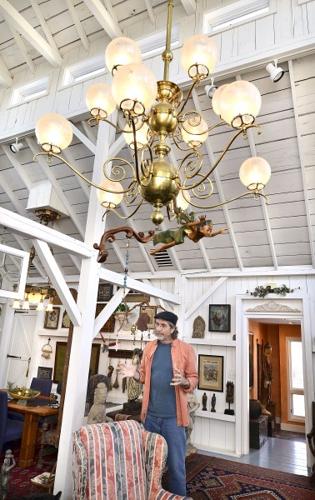
Many of the items were held in storage until the house was ready for them. For example, a very large light fixture which hangs from the ceiling in the great room came from an old theater.
"I found the hanging stained glass window at Frank's Folly Antique Shop," Clayton said, referring to Frank Bogenrief, the longtime Hinton, Iowa, collector.
Another focal point is a cozy sitting area with a brick chimney that literally goes from the basement to the rafters.
"I think it's about 26 feet high," Clayton estimated. "And it's a brick chimney with a ceramic interior which allows fires to burn much hotter."
Hanging from one of the rafters is an unusual boy's size "bone shaker," a two-wheeled bicycle crafted of wood and steel in the early 1870s.
The home's master suite sports Indonesian hand-carved artwork which blends with a bright, relaxing Caribbean ambiance. A marble and glass block master bath was designed by another friend, Larry Leslie, to be a welcome respite.
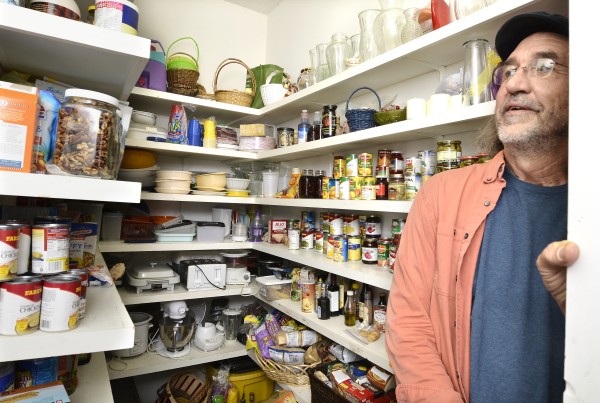
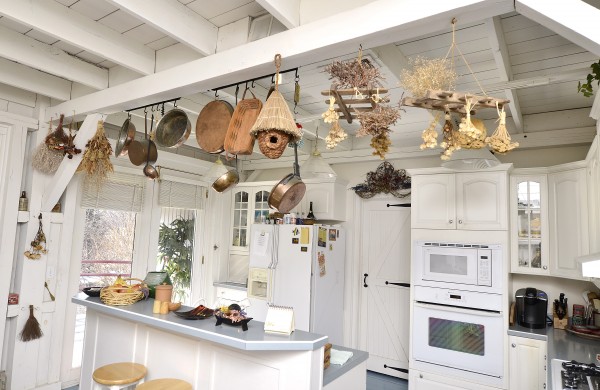
The kitchen continues the home's eclectic style with an island countertop that mirrors the color of the hardwood floor. Baskets and decorations hang from the barn's rafters, while contemporary white appliances accent the advertising art. A huge walk-in pantry serves as a holding area for nonperishable items and small appliances. The dining area features many Dutch pieces.
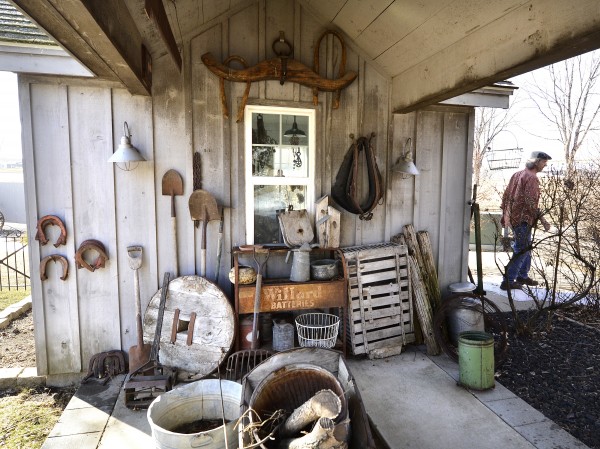
Outdoors is a Garden Room, which reflects Deb's passion -- gardening. The back patio room was completed in the summer of 1999 through "lots of sweat and creativity," Deb said.
Friend and artist Anne Plageman, along with Larry Leslie's inspiration and Irwin De Jong's hard work, helped with the design and construction of this inviting backyard spa.
"We both love gardening," Deb pointed out. "We prefer it to spending time in front of the TV."
The lower level of the house was previously inhabited by the couple's three sons. It features Mission style furniture reminiscent of the early decades of the 20th century, simple and rugged.
"Since the basement was intended to be the family home for the first few years, it was built to be warm and comfortable with a full kitchen, heat-in floors, high ceilings and a walk-out to the back garden patio for easy access to the pool and hot tub," Deb said. "It was a great space for the boys while they were growing up."
Every room in the Korver house has art, antiques and artifacts which enliven the living spaces. Clayton began his "collection" days in college at Southern Methodist University when he started an antique business.
Born and raised in Dallas, Texas, the 6'9" center was drafted by the Philadelphia Eagles of the NFL after college, but ended up playing for a Hawaiian team. His desire to explore and see the world led him to Africa, where he considered a career in leading tours.
Those plans were set aside when Clayton met Deb. After marrying, the couple decided to settle in Orange City, following Clayton's dad and his business, MED-TEC, from Dallas to Paul Korver's hometown of Orange City in 1989.
"Dad wanted to retire so he sold the business to me in 1996," recalled Clayton, who served as CEO of the company until "retiring" in 2003. "I must have traveled to more than 100 countries as a distributor and that allowed me to get many items to add to my collection."
At that time Clayton and Deb, also an executive with MED-TEC, announced they wanted to pursue other projects and passions and thus, their restaurant business, Blue Mountain Passport Club, Smokehouse Grille and Lodge was born.
Another work of art is the Korvers' boutique resort Hermosa Cove in Jamaica where each villa is again filled with art and antiques and eclectic style.


