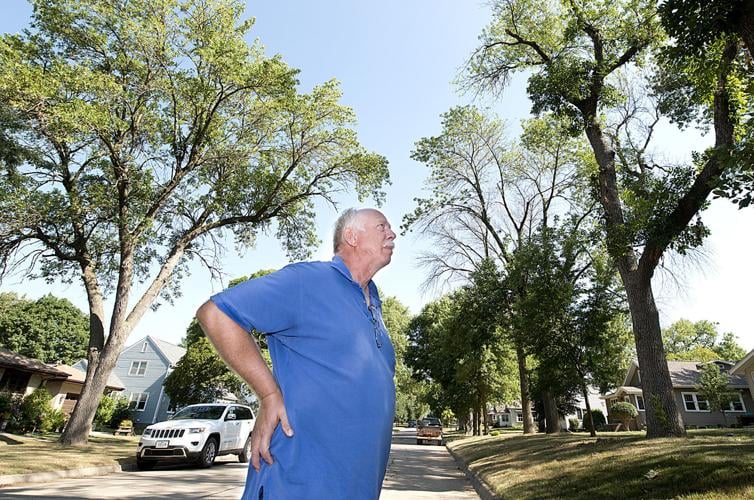

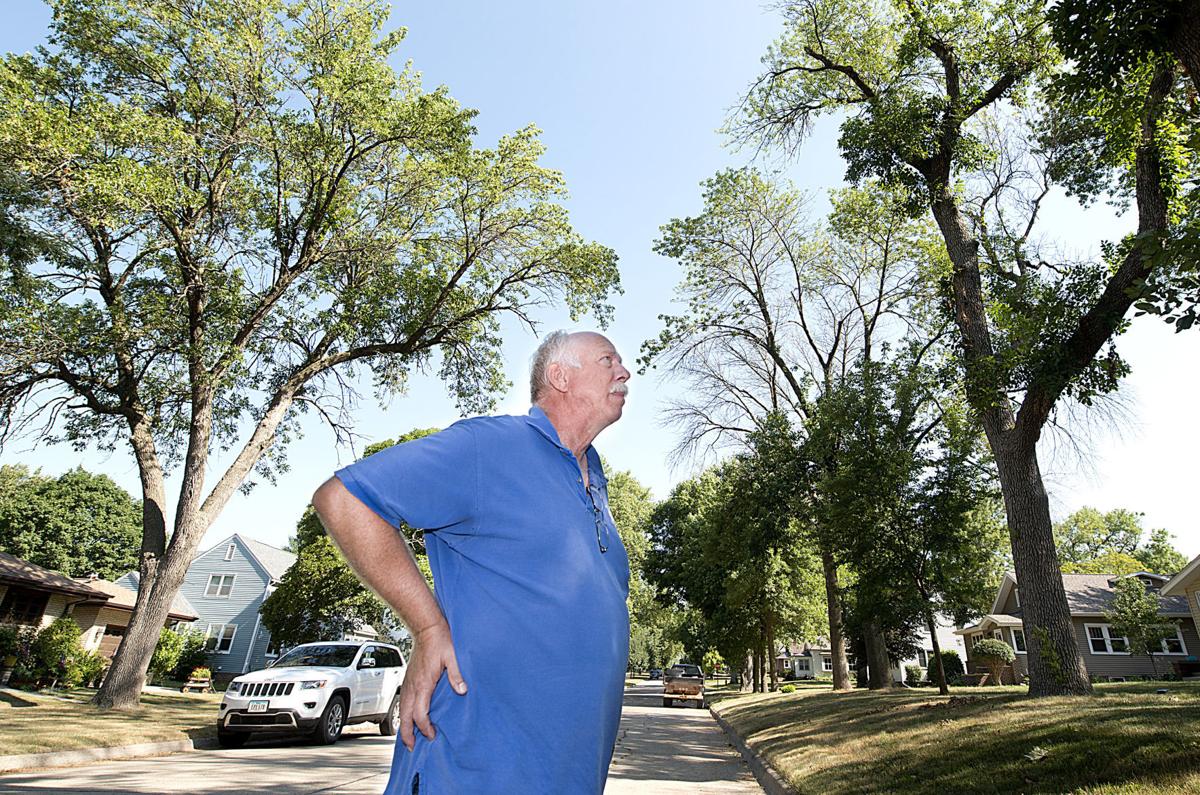
STORM LAKE, Iowa -- There are so many benefits to having a lawn full of trees.
Financially, trees could add hundreds or thousands of dollars in value to a property. Aesthetically, they can improve the look of of a home, said Jerry Kahl, proprietor of Jerry's Tree Service.

"There's also the shade benefit -- if you plant deciduous trees on the south, southwest side of your house, you can get shade benefit, which can reduce your cooling costs," he said.
But not all trees are created equal -- the threat of pestilence (like the notorious emerald ash borer and Dutch elm disease) looms large. And not all trees are suited to Iowa's climate of bitterly cold winters.
People are also reading…
With that in mind, here are a few trees that Kahl would recommend Siouxland residents plant:
Norway maple
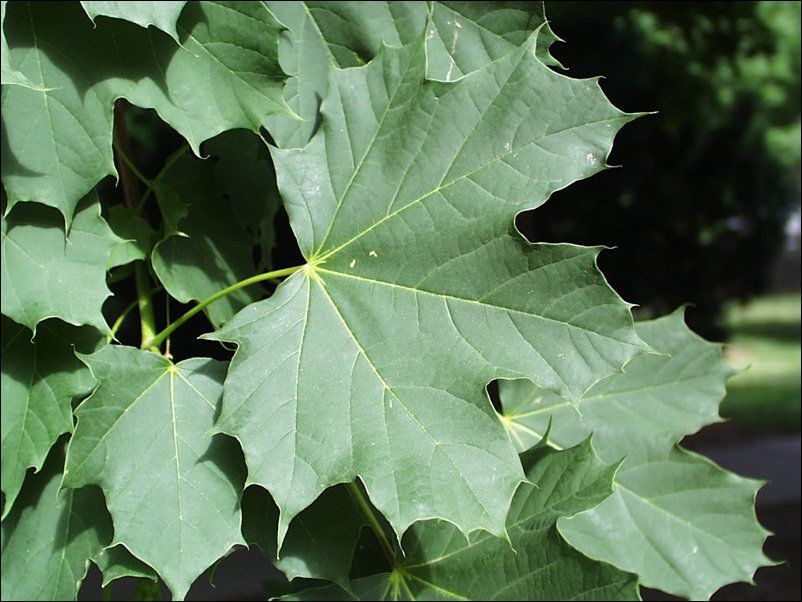
Norway maple trees can grow to a height of 40 to 60 feet.
According to the Iowa State Forestry Extension, Norway maples generally grow to be 40 to 60 feet tall, though they could be as tall as 100 feet. The tree is sometimes used in urban landscaping due to its tolerance of pollution.
Sugar maple
As its name would suggest, sugar maple has been used to produce maple syrup. In a landscaping context, the tree is noted for its beautiful, red and orange fall foliage and would likely grow to 80 feet tall. The ISU Extension describes the sugar maple as "one of our largest and finest forest trees."
"They add a lot of color to your landscape," Kahl said.
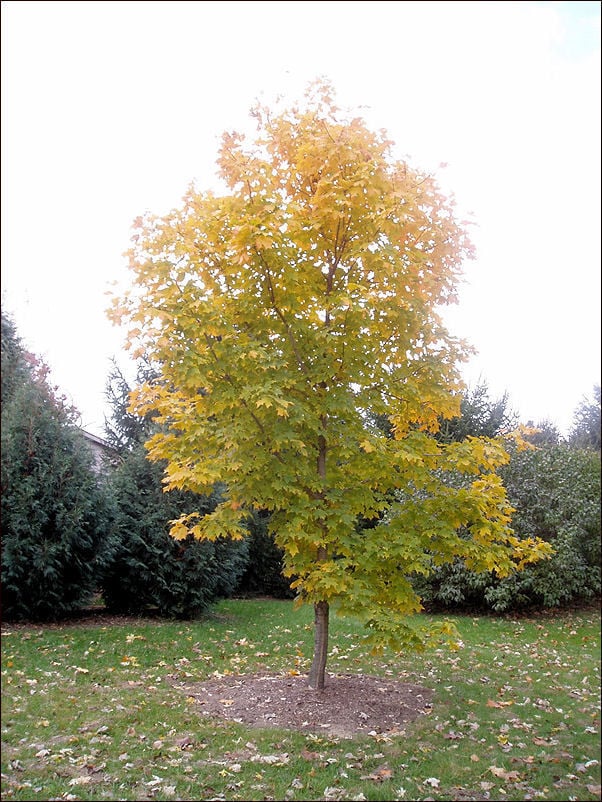
Sugar maple trees are notable for their beautiful fall foliage.
Gingko
Ginkgo trees were popular way back when. Way, way back when -- like back when dinosaurs still breathed.
"The Gingko has grown on this planet for millions of years, and been a very successful tree," Kahl said. "And it's a good landscape tree, also."
Gingkoes, being flexible in their soil and climate demands, can thrive in Iowa despite being native to China. They have broad, fan-like leaves somewhat reminiscent of geranium leaves.
Hackberry
The hardy and long-lived hackberry tree is well-suited to life in an Iowa lawn. Rather majestic-looking in old age, the hackberry gets its name from the chokecherry-sized berries that appear on its foliage in the fall. The ISU Extension notes that the tiny fruits are eaten by birds, including robins, cardinals, brown thrashers and cedar waxwings.

Hackberry trees get their name from the small berries, similar in appearance to chokecherries, the trees produce.
Hackberry trees are willing to put up with a lot -- too-dry or wet soils likely won't overwhelm a hackberry. Expect a hackberry to reach a height of 40 to 60 feet, "without virtually any pest or disease problems," Kahl said.
Honey locust
The elegant honey locust does well throughout much of Iowa, and could grow to a height of 70 to 80 feet. Its leaves grow in a distinctive, olive branch-like pattern. The honey locust also produces long, dark-brown seed pods.
According to the ISU Extension, honey locust grows fairly quickly and is tolerant of urban environments. Though honey locust in the wild often has sinister-looking thorns, thorn-less varieties are available.
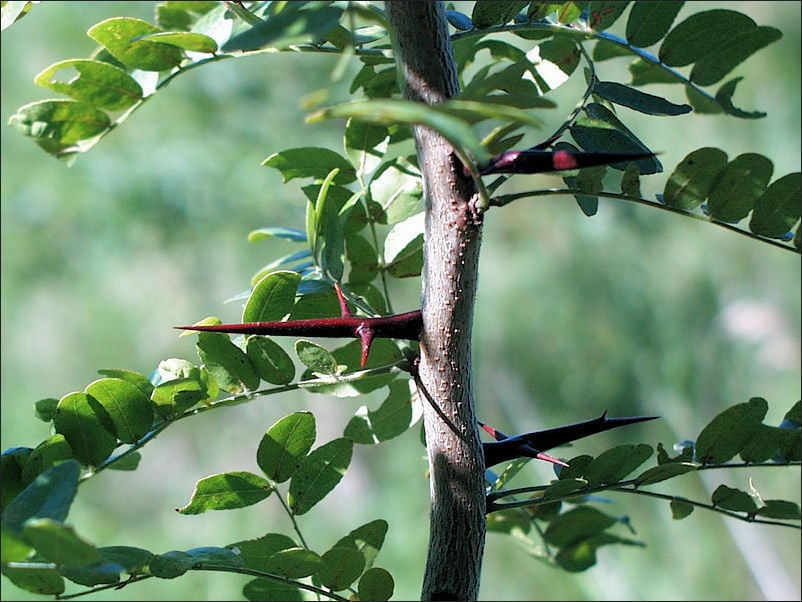
Honey locust trees can have sinister-looking thorns on their branches, but thorn-less varieties have been developed.
Honey locust is susceptible to a handful of pests (what tree species isn't?), including Mimosa webworm, borers and cankers.
Kentucky coffee
Similar to honey locust, Kentucky coffee is a member of the legume family, which also includes peanuts and beans. The tree grows to a height of some 60 to 75 feet, and grows brown seed pods somewhat similar to the honey locust.
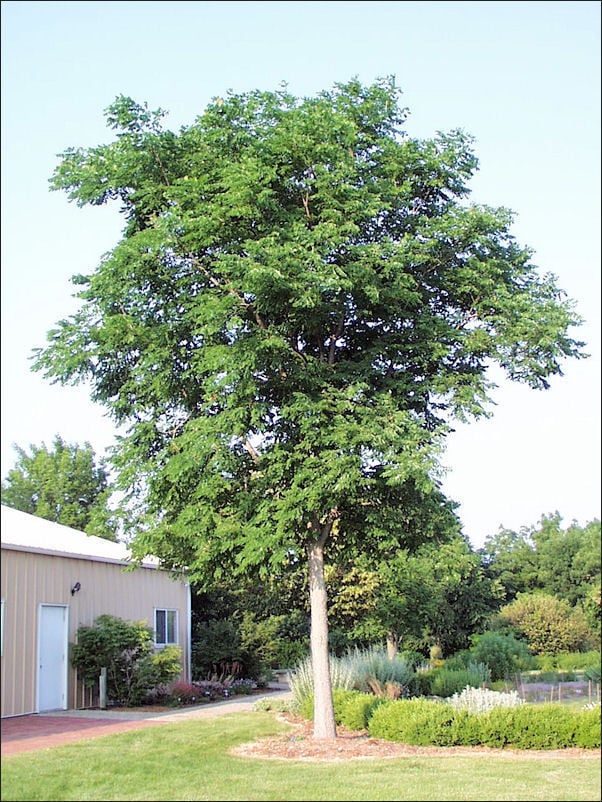
The seeds of the Kentucky coffee tree, according to legend, were once used as a coffee substitute by pioneers.
According to the ISU Extension, the seeds of the Kentucky coffee tree were used by early settlers as a substitute for coffee (in a desperate, no-coffee situation, who wouldn't turn to ridiculous substitutes?) Though the Kentucky coffee is at home throughout Iowa, in nature it is found largely in the drainage areas of the Mississippi, Big Sioux, Skunk and Des Moines Rivers.
Kentucky coffee is fairly pest-free tree that is willing to tolerate a variety of soils -- though its prefers rich, moist soils, it can handle limestone and clay soils and soil prone to drought.
American linden
Known by several names, including basswood and Tillia, American linden is the only species of its genus native to Iowa, and is native to the entire state.
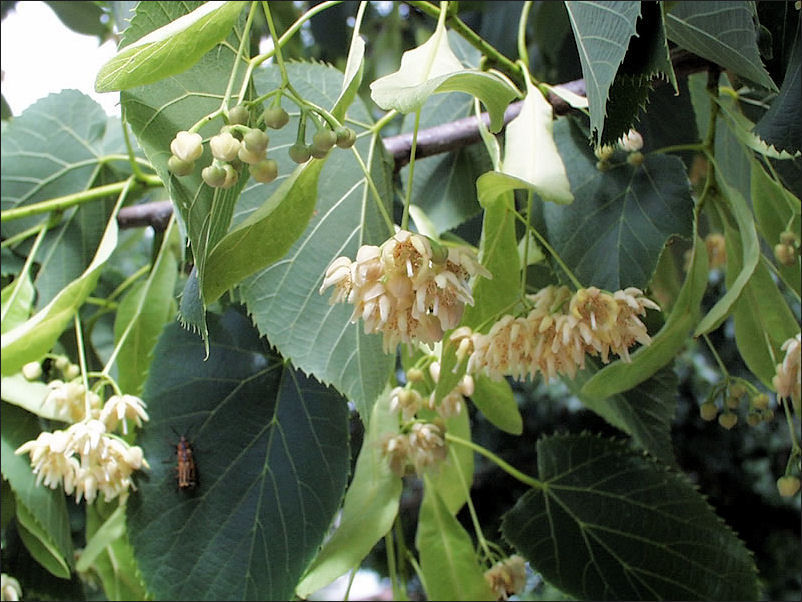
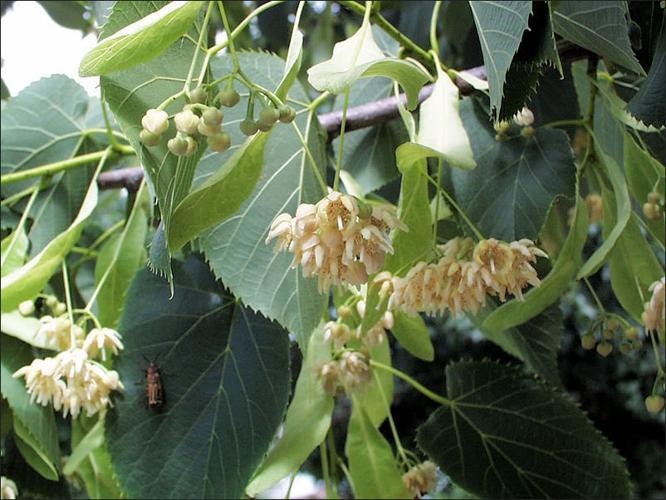
Linden trees feature broad leaves and tan-colored flowers that bees enjoy.
American linden grows quickly, and sports leaves that are rather broad and round-ish in shape, as well as tan-colored flowers that appear in the late spring. These flowers make the tree a favored bee hangout.
Disease-prone trees and future diseases
Virtually all trees, Kahl cautioned, can get infected. But certain trees are far more susceptible than others.
"I mean they can still have some problems with, oh say, Verticillium wilt, there's a couple things," he said.
Though Kahl notes that "they've come out with Dutch elm disease-resistant elm trees now," most people are wary of planting elms because of the notorious disease, which first arrived in the U.S. around 1930 and spread across the country in the ensuing decades, killing elms.

Dutch elm disease, which first arrived in the U.S. circa 1930, has wiped out all but a hardy few of Iowa's elm trees.
Some oaks have begun to be impacted by a fungal disease called "oak wilt."
"That's increasingly becoming a problem -- in areas where the oaks are concentrated, where there's large populations of oaks, there are problems with oak wilt," Kahl said. Still, there are a few recommendable oak species, like red oak and swamp white oak.
Conifers are falling victim as well -- pine wilt nematode has been killing off Scotch pines and the ISU Extension does not recommend planting them.
"The conifers -- there are some very significant problems with the pine trees, a lot of the conifers are having very serious disease problems," he said.
"Colorado spruce is having major disease problems, even though they've been widely planted here, I probably wouldn't recommend planting Colorado spruce anymore. That's maybe a bit of a controversial statement."
Among conifers, Kahl said the larch remains "virtually pest and disease-free," and the Douglas fir and Norway spruce are still recommendable.
And then there's the emerald ash borer, which was spotted in Siouxland last summer.
"That's present here now, we just discovered that over in Alta here this summer, and that is going to be an enormous issue with the ashes, probably going to take the ash trees," he said. "So obviously we don't want to plant ashes anymore."
Finally, there is one insidious tree pest that hasn't arrived here yet but could someday -- the Asian long-horned beetle. According to the USDA's Animal and Plant Health Inspection Service, several tree species including maples, willows, poplars, birches, ash and elm are vulnerable to the beetle, which has so far spread to Massachusetts, New York and Ohio.
The beetle could cause far more damage than Dutch elm disease -- potentially billions of dollars' worth of trees are at risk.
"That's still off, but it probably, you know at some point in the future, will probably be a problem here," Kahl said.