


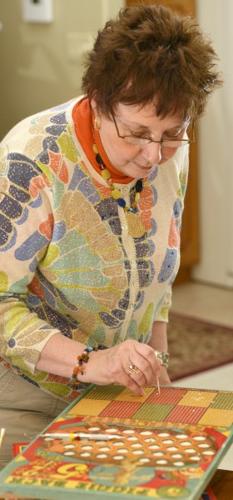
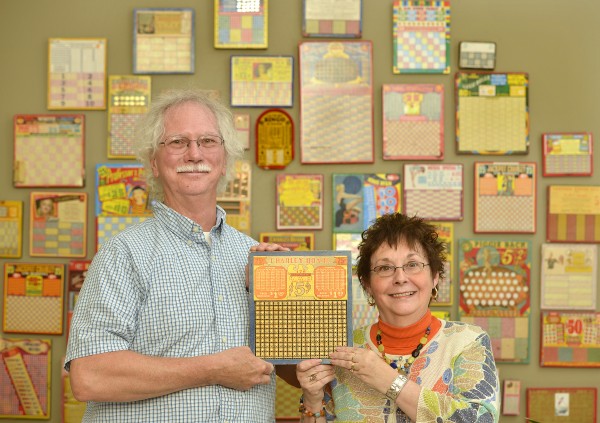
Paula Crandall's grandparents did more than just operate a restaurant in Lawton, Iowa.
They provided "gambling" entertainment for customers in the form of punchboards.
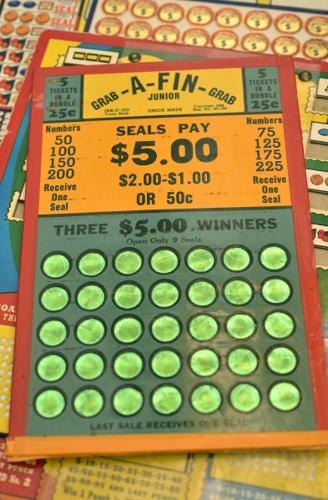
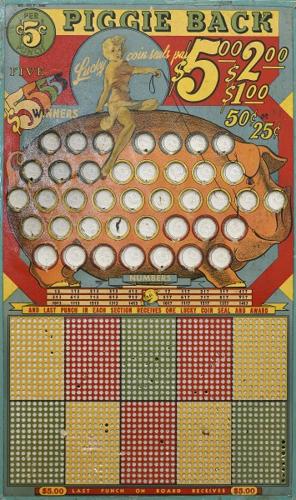
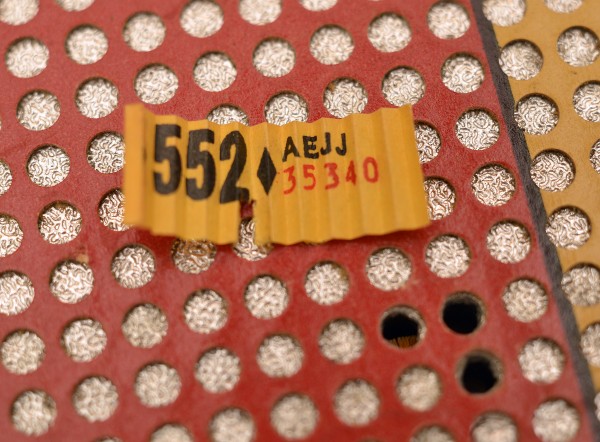
Punchboards originated in the 18th century. A bar owner would construct a game board out of wood, drill small holes in it and fill each hole with a numbered, paper ticket. The holes were then covered with paper. A patron would buy one of the "holes," then, puncture the paper to reveal a possible winning number for a prize.
Gambling author John Scarne estimated 30 million punchboards were between 1910 to 1915 and 50 million punchboards were sold in 1939 alone, during the peak of their popularity.
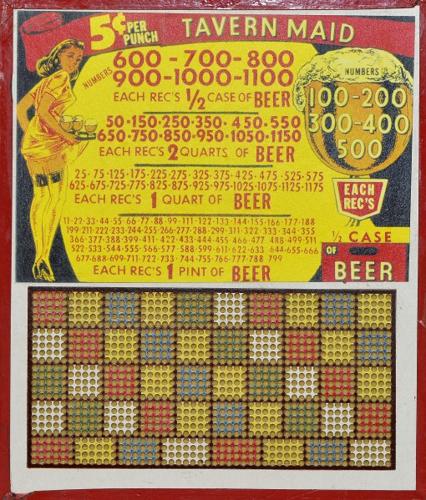
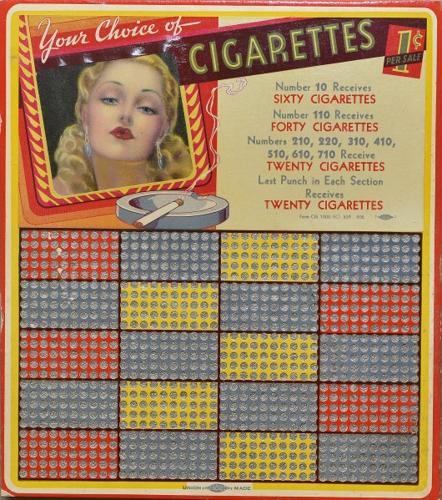
"Older punch boards indicated the prizes would be money," Crandall said. "Then, in the 1940s, it was cigarettes and pinup girl pictures."
People are also reading…
With the advent of other games of chance after World War II, use of the punchboard not only declined but was outlawed in many states.
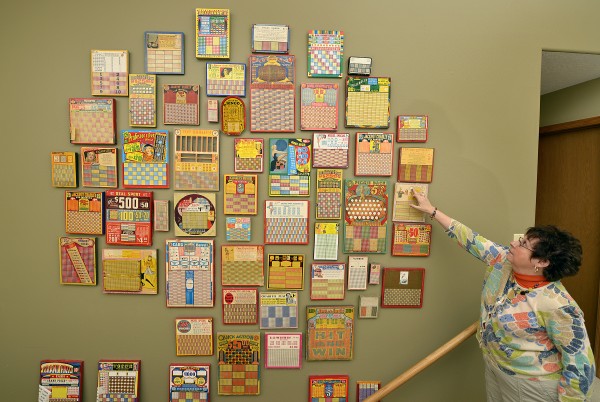
Currently, Paula and her husband Paul have accumulated almost 75 punchboards.
"Our biggest find was in Ottuma, Iowa," Paul said. "It's where I grew up and one day, visiting an antique store, I found boxes with them. I bought them all."
Q. When did you get your first punchboard?
A. When my grandmother, Ethel Quintard, passed away in 1970, each grandchild got to pick a punchboard. Mine was a Charley Board.
Q. Growing up, did you know what they were?
A. It was somewhat hush-hush, my mom was told. We were always told if a stranger came into the cafe and asked if we had punchboards, we were instructed to say, "We don't have those here."
Q. How do the punchboards work?
A. Players would pay for the opportunity to punch open a hole in the board. Behind the hole was a small numbered slip. If the numbered slip matched the number printed on the front of the board, then you won whatever prize corresponded with the number.
Q. The holes are pretty small. How does a player punch it out?
A. You have to be careful, otherwise you tear the paper. My recollection is those "keys" you used to open coffee cans with were used. Probably, toothpicks as well.
Q. What kind of odds would a player get?
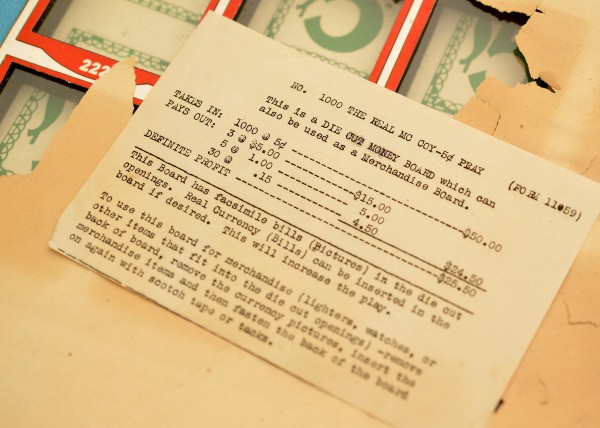
A. The owner makes a profit. One of the forms that accompanied a punchboard explained on a $50 board, the owner would pay out $24.50 and earn $25.50. It was designed just like any game of chance, to make money for the house.
Q. It looks like they're also used to advertise products.
A. Yes. You can see Planters Peanuts are promoted. Queen Anne Candies.
Q. What made you decide to add to that first one you inherited?
A. My husband Paul and I would do some "antique-ing" and every now and then, I'd find one.
Q. What was the appeal?
A. I found them interesting and there seemed to be so many different varieties.
Q. It's rare to see them in any kind of establishment nowadays.
A. They still do make them. I found that out on the Internet.
Q. What criteria do you use for adding punchboards to your collection?
A. At first, I just bought whatever I wanted because they were cheap. Maybe $10 each.
Q. What about price?
A. You just don't find them all that often. I think if I really wanted one, I would buy, it no matter what the price. I found an unusual, round one and paid $200 for it. But it was really neat.
Q. Which one is your favorite?
A. Probably the one from my grandmother.
Q. What prompted displaying them on the wall over the stairs?
A. We had this huge area with nothing on it. We could have put pictures, but the punchboards just seemed to fit there. Now, when people visit, they always comment on them and we can tell their story.


